
Bank of England Holds Interest Rates Steady Amid Inflation Concerns Linked to Iran Conflict
What happened
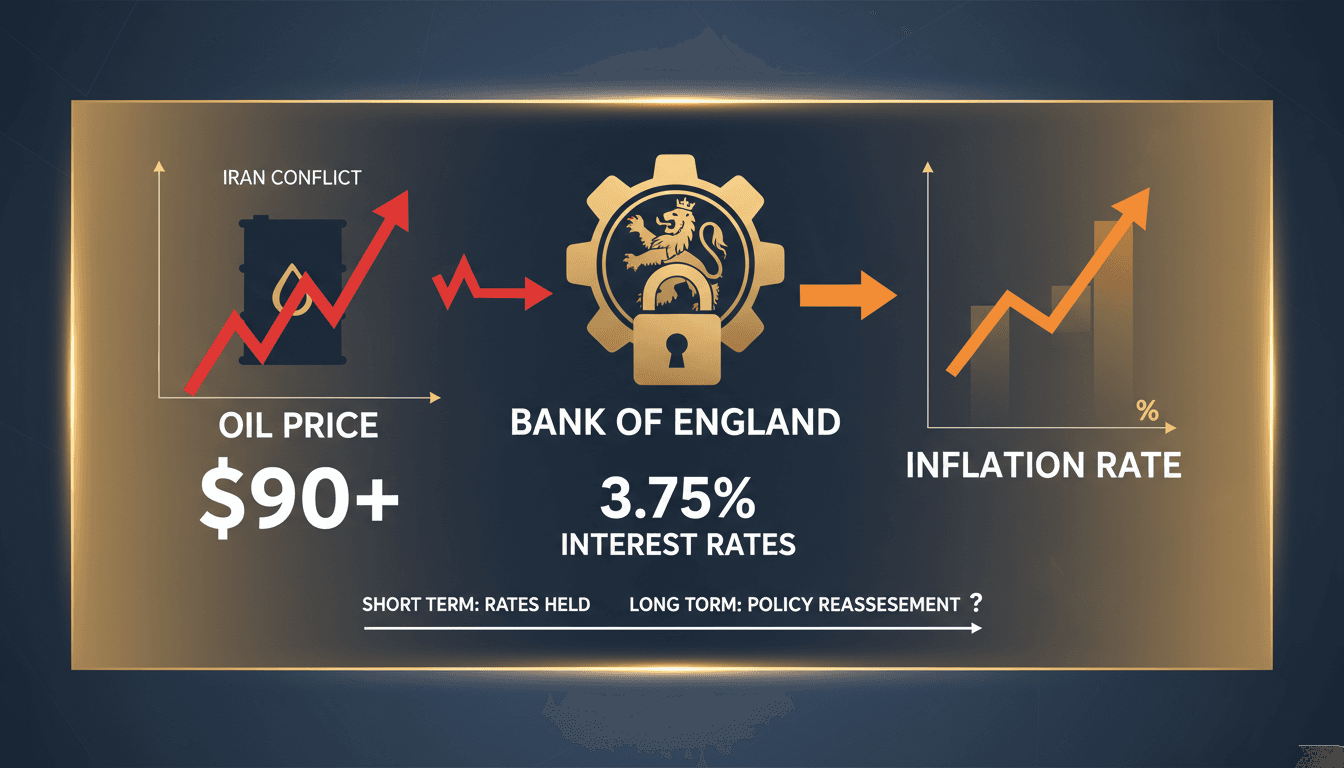
The Bank of England has opted to keep its interest rates steady at 3.75%, reflecting growing concerns over inflation linked to the ongoing conflict in Iran. This decision was reached by a split vote of six to three, highlighting differing opinions among policymakers regarding the best course of action. The Bank's monetary policy committee is particularly worried that escalating tensions could push inflation above 4% in the coming year.
The backdrop of rising oil prices has contributed significantly to this economic uncertainty. As oil prices exceed $90 a barrel, the potential for increased inflation looms large, prompting the Bank to adopt a cautious stance. This decision underscores the delicate balance the Bank must maintain in navigating both domestic and international economic pressures.
The Context
The Bank of England's decision comes at a time when geopolitical tensions are high, particularly due to the conflict in Iran. Policymakers are closely monitoring the situation, as any escalation could have far-reaching implications for inflation and economic stability. The split vote reflects a divergence of views within the committee on how best to respond to these challenges.
With inflationary pressures already evident, the Bank's cautious approach is designed to mitigate potential risks. The decision to hold rates steady indicates a recognition of the volatile economic environment, particularly as oil prices continue to fluctuate. Stakeholders, including businesses and consumers, will need to remain vigilant as the situation evolves.
Takeaway
Looking ahead, future monetary policy decisions by the Bank of England may hinge on developments in the Middle East and their impact on inflation. Analysts will be closely watching oil price trends, as these could significantly influence the Bank's next steps. Additionally, further statements from the Bank regarding the economic outlook will be crucial in shaping market expectations.
As the geopolitical landscape continues to shift, the Bank may need to reassess its strategies to ensure economic stability. Stakeholders should prepare for potential adjustments in monetary policy as the situation unfolds, particularly if inflationary pressures intensify.
UK and international business news, economics, and corporate coverage.
"The Guardian’s business section covers finance and markets with a progressive editorial tone."
— A47 Editor
Bank of England holds interest rates at 3.75% as inflation fears mount
The Bank of England has decided to maintain its interest rates at 3.75% for the fifth consecutive time, citing concerns over inflation driven by the ongoing conflict in Iran and rising oil prices. The Monetary Policy Committee voted six to three in f...
International coverage from The Guardian's global desks.
"The Guardian is known for its progressive editorial stance and in-depth analysis."
— A47 Editor
Bank of England holds interest rates at 3.75% as inflation fears mount
The Bank of England has decided to maintain its key interest rate at 3.75% amid rising inflation concerns, particularly due to the ongoing conflict in Iran, which has contributed to oil prices exceeding $90 a barrel. This decision was reached by a sp...
Arabic-language coverage of international news and geopolitics.
"RT Arabic is a Russian state-funded outlet often criticized for promoting Kremlin-aligned narratives."
— A47 Editor
بنك إنجلترا يبقي أسعار الفائدة عند 3.75% وسط تصاعد مخاوف التضخم
The Bank of England has decided to keep interest rates unchanged at 3.75%, citing concerns that any further escalation of the conflict with Iran could push inflation above 4% next year. This decision reflects the central bank's cautious approach amid...
Macro commentary, policy analysis, growth/inflation themes, and global outlooks.
"Contextual macro coverage that complements day-to-day market headlines."
— A47 Editor
Bank of England to keep rates steady while oil prices gyrate
The Bank of England has decided to keep its interest rates steady at 3.75%, maintaining a cautious stance amid fluctuating oil prices and ongoing geopolitical tensions, particularly related to the conflict in Iran. This decision reflects the central ...