
Turkish manufacturing sector contracts amid weak demand
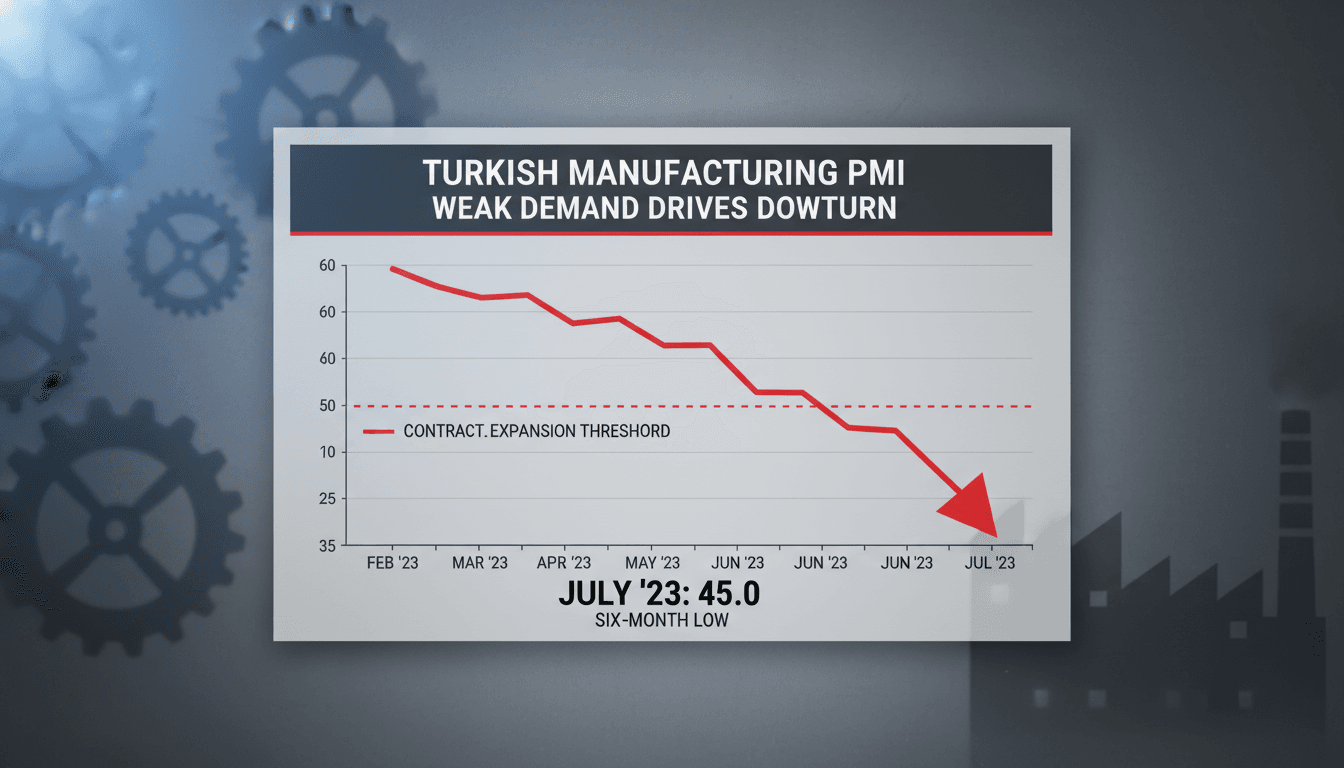
Here's what it means for you.
The contraction in Turkey's manufacturing sector signals potential challenges for businesses and investors alike. Weak demand may lead to reduced production levels, impacting employment and overall economic stability. Stakeholders should prepare for possible government interventions aimed at revitalizing the sector.
What happened
The Turkish manufacturing sector experienced a contraction in July, as indicated by the latest Purchasing Managers' Index (PMI) data. This decline reflects ongoing challenges in market conditions and reduced demand for manufactured goods. The PMI data serves as a crucial indicator of the economic health of the manufacturing sector, highlighting the severity of the downturn.
Weak market conditions have been identified as a significant factor contributing to this contraction. As the manufacturing activity continues to decline, concerns grow regarding the broader economic implications for Turkey. If this trend persists, the country may face prolonged economic challenges.
The Context
The contraction in the Turkish manufacturing sector is part of a broader trend of declining activity, raising alarms among economists and policymakers. The PMI data, which is closely monitored by investors, indicates that the sector is struggling to maintain momentum amid weak demand. This situation is critical as it can influence economic policy decisions and investor confidence moving forward.
As stakeholders assess the implications of this contraction, the focus will likely shift to government responses aimed at stimulating demand in the manufacturing sector. The timing of these measures will be crucial in determining whether the sector can rebound or if further declines are inevitable.
Takeaway
The ongoing contraction in manufacturing suggests that Turkey may face continued economic challenges in the near future. Stakeholders are advised to monitor upcoming PMI reports for signs of recovery or further decline. Additionally, government responses will be pivotal in shaping the sector's trajectory.
As the situation evolves, the outlook remains cautious, with potential for further contraction unless effective measures are implemented to stimulate growth. Keeping an eye on market conditions and government initiatives will be essential for understanding the future of Turkey's manufacturing landscape.
Regional and international reporting focused on Middle Eastern politics, diplomacy, and economics.
"Asharq Al-Awsat is a Saudi-owned international newspaper reflecting mainstream Gulf political perspectives."
— A47 Editor
Turkish Manufacturing Contracts Slightly in July, PMI Shows
Turkish manufacturing experienced a slight contraction in July, as indicated by the Purchasing Managers' Index (PMI), reflecting ongoing economic challenges. This downturn follows a significant contraction attributed to disruptions from the conflict ...
Pan-Arab news coverage spanning politics, business, sports, and regional affairs.
"Asharq Al-Awsat reflects a broad Arab editorial perspective with strong attention to regional geopolitics."
— A47 Editor
انكماش التصنيع التركي يتواصل في يوليو بفعل ضعف الطلب
A recent survey conducted by S&P Global revealed that Turkey's manufacturing sector continued to contract in July due to persistent weak market conditions. This ongoing decline indicates challenges within the industry as demand remains low, affecting...
Key macro releases (CPI, jobs, PMIs), surprise indexes, and market implications.
"Great for data-print awareness and instant read-through to rates and risk assets."
— A47 Editor
Turkish manufacturing contracts slightly in July, PMI shows
The latest Purchasing Managers' Index (PMI) data indicates that Turkish manufacturing contracted slightly in July, reflecting ongoing economic challenges in the sector. This contraction follows a previous downturn attributed to disruptions caused by ...