
U.S. manufacturing activity reaches four-year high in July
What happened
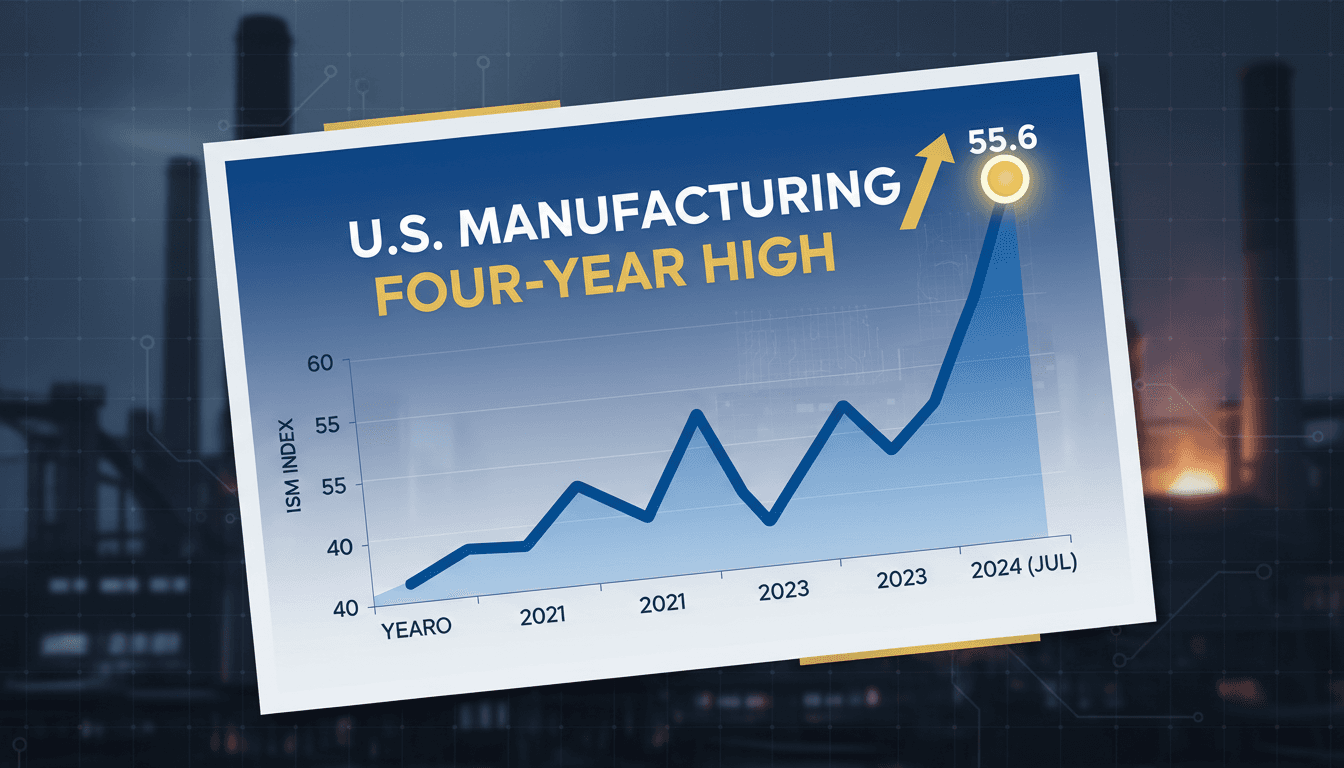
U.S. manufacturing activity reached a four-year high in July, with the ISM purchasing managers' index climbing to 55.6. This marks a significant increase from June's reading of 53.3, surpassing analysts' expectations of a more modest 54. The rise in the index indicates expansion in factory activity, primarily driven by strong demand for new orders.
The ISM index value of 55.6 suggests notable growth, as any reading above 50 signifies expansion in the manufacturing sector. This positive trend reflects a resurgence in manufacturing, which is critical for the overall economy.
The Context
The increase in manufacturing activity is a key indicator of economic health, particularly as it comes amid ongoing inflationary pressures. Stakeholders, including manufacturers and policymakers, are closely monitoring these developments to assess their impact on future growth. The strong demand for new orders is a promising sign, yet the elevated input prices present a challenge that could hinder progress.
The timing of this growth is significant, as it occurs in a period where economic recovery is a priority. Understanding the dynamics of the manufacturing sector will be essential for anticipating broader economic trends and making informed decisions.
Takeaway
As manufacturing activity continues to expand, it is crucial to monitor future ISM index reports for ongoing trends in the sector. Stakeholders should also keep an eye on the potential impacts of input price inflation on production costs, as these factors could influence the sustainability of growth. The current data suggests a robust economic environment, but vigilance regarding inflation will be necessary to navigate potential challenges ahead.
The outlook remains cautiously optimistic, with the manufacturing sector poised for further growth if demand remains strong and inflationary pressures are managed effectively.
Macro commentary, policy analysis, growth/inflation themes, and global outlooks.
"Contextual macro coverage that complements day-to-day market headlines."
— A47 Editor
US manufacturing activity hits more than four-year high; input prices elevated
US manufacturing activity has reached its highest level in over four years, indicating a significant recovery in the sector, as reported by Investing.com. This surge in manufacturing activity comes alongside elevated input prices, reflecting ongoing ...
Pan-Arab news coverage spanning politics, business, sports, and regional affairs.
"Asharq Al-Awsat reflects a broad Arab editorial perspective with strong attention to regional geopolitics."
— A47 Editor
النشاط الصناعي الأميركي يقفز إلى أعلى مستوى في أكثر من 4 سنوات خلال يوليو
The industrial activity in the United States surged to its highest level in over four years during July, driven by strong growth in new orders. This increase reflects a significant uptick in manufacturing and production capabilities within the countr...
Social/economic commentary and analysis relevant to business and markets.
"WSJ blends data-driven economic insight with commentary on policy and society."
— A47 Editor
U.S. Factory Activity Expands Again in July
U.S. factory activity showed positive growth in July, with the ISM purchasing managers' index rising to 55.6 from 53.3 in June, exceeding analysts' expectations of 54. This increase indicates a continued recovery in the manufacturing sector, reflecti...