
U.S. stocks and Treasuries rise after weak July jobs report
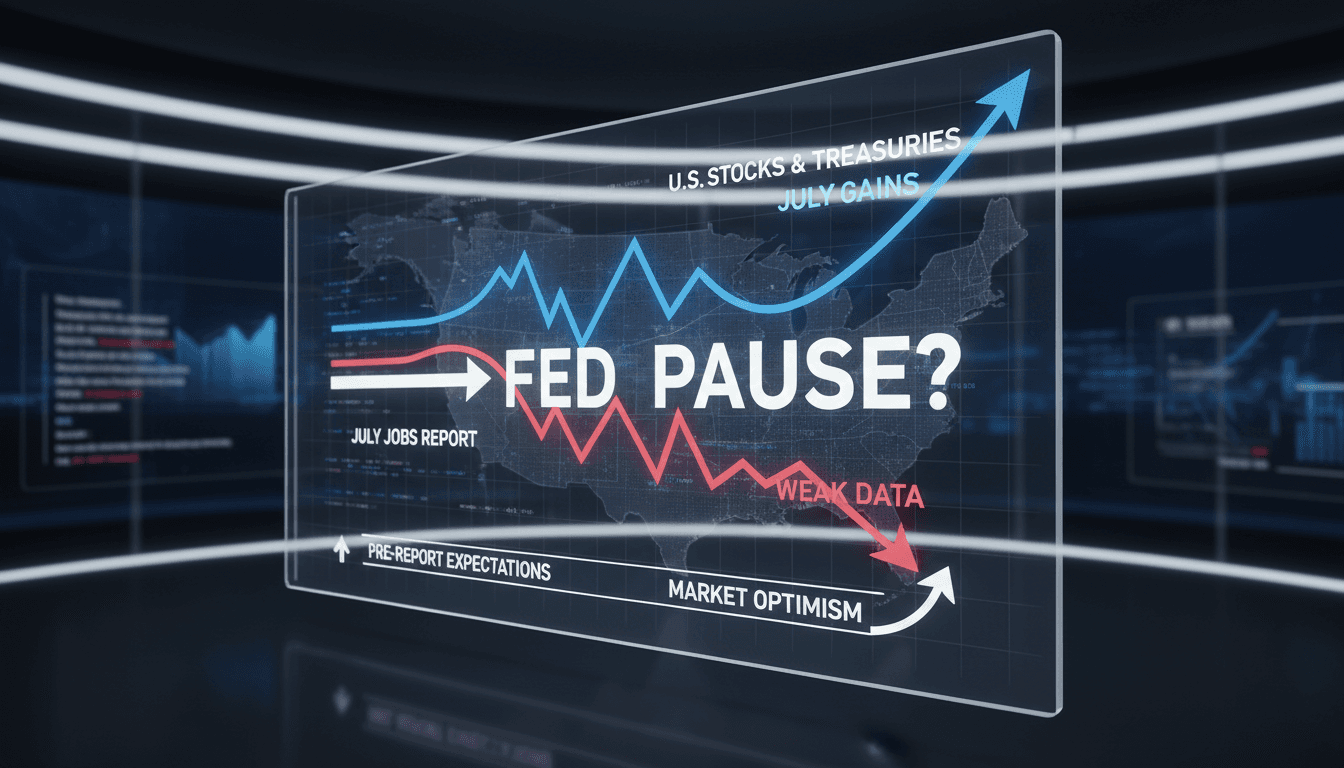
Here's what it means for you.
The recent weak jobs report for July has shifted market expectations, leading to gains in U.S. stocks and short-term Treasuries. Investors are now anticipating that the Federal Reserve will refrain from raising interest rates in September, which could stabilize market conditions. This development highlights the importance of employment data in shaping monetary policy and investor sentiment. As traders reassess their outlook, the focus will be on upcoming economic indicators and Fed communications that could influence future interest rate decisions. The current expectation of no rate hikes is significant for maintaining investor confidence and market stability.
What happened
A disappointing jobs report for July has resulted in a rise in U.S. stocks and Treasuries, as traders anticipate that the Federal Reserve will not increase interest rates in September. The payroll data released was significantly weaker than expected, prompting a reassessment of monetary policy. This shift has led to the largest weekly rally in short-term Treasuries since May.
Traders are increasingly betting against a rate hike by the Fed, reflecting a broader sentiment in the market. The positive response in financial markets indicates a growing confidence that the Fed will maintain its current interest rate policy in the near term.
The Context
The July jobs report revealed employment data that fell short of expectations, which has significant implications for the economy and monetary policy. Stakeholders, including investors and policymakers, are closely monitoring these developments as they assess the potential impact on market stability. The timing of this report is crucial, as it comes just ahead of the Federal Reserve's next policy meeting.
The response from U.S. stocks and Treasuries underscores the interconnectedness of employment data and interest rate expectations. A weak jobs report can lead to a more accommodative monetary policy, which is essential for sustaining economic growth and investor confidence.
Takeaway
Market participants will be vigilant in monitoring upcoming economic indicators that could influence the Federal Reserve's decisions. Statements from Fed officials regarding monetary policy will also be critical in shaping expectations for interest rates. As traders adjust their outlook, the focus will remain on how these factors will affect market performance in the coming months.
The current expectation of no interest rate hikes is pivotal for maintaining market stability and investor confidence. Future economic data will play a key role in determining the trajectory of interest rates and overall market sentiment.
Markets desk coverage, trading insights, and investor updates.
"WSJ’s markets reporting provides in-depth analysis and context for investors."
— A47 Editor
U.S. Stocks Rise as Rate-Hike Odds Fall on Weak Jobs Report
U.S. stocks experienced a notable rise on Friday, following the release of July payroll data that revealed unexpectedly weak job growth, which may prompt the Federal Reserve to reconsider its plans for interest rate hikes next month.
Global business headlines with AI angles.
"General business outlet that frequently covers AI."
— A47 Editor
A Weak Jobs Report Boosted Bets That The Fed Won't Hike Rates In September. Stocks Climbed.
Stocks experienced a notable increase on Friday, following an unexpectedly weak jobs report that raised expectations that the Federal Reserve will not raise interest rates in September. This development reflects traders' concerns about economic growt...
Global business headlines with AI angles.
"General business outlet that frequently covers AI."
— A47 Editor
The Jobs Report Surprised To The Downside. Bets That The Fed Won't Hike Rates In September Are Up
Following a disappointing jobs report, traders have increased their bets that the Federal Reserve will refrain from raising interest rates in September, reflecting concerns over economic growth.
Global markets, investing, and macroeconomics from a premier financial newsroom.
"Bloomberg is respected for in-depth financial reporting and data-driven analysis."
— A47 Editor
Short-Term Treasuries Cap Biggest Weekly Rally Since May on Data
US Treasuries experienced their largest weekly rally since May, driven by an unexpectedly weak July employment report that led traders to lower expectations for Federal Reserve interest rate hikes. This shift in sentiment reflects a cautious optimism...