
Reserve Bank of Australia Holds Cash Rate at 4.35%
What happened
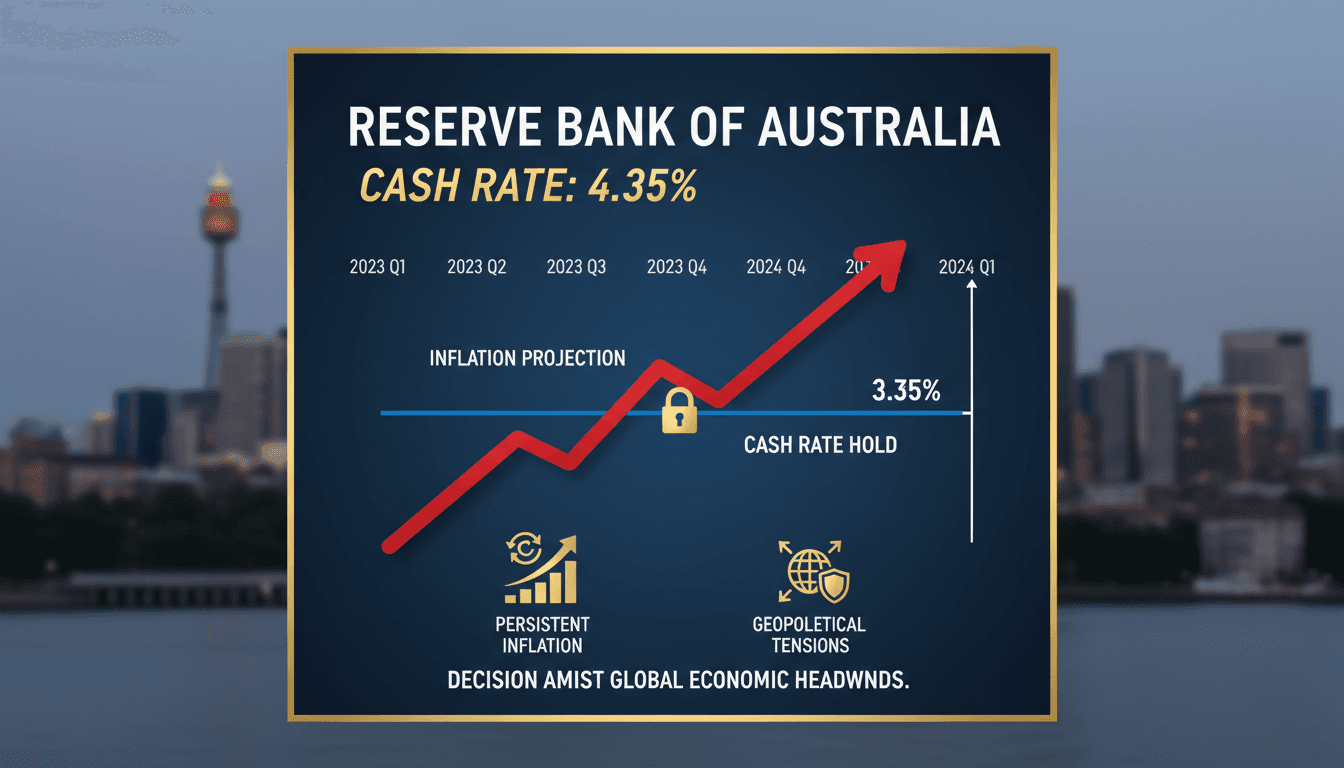
The Reserve Bank of Australia has opted to hold the official cash rate at 4.35%, a decision made on August 11, 2026. This follows a series of three rate hikes earlier this year, which have already impacted property values across capital cities. The RBA has signaled that further increases may be necessary if inflation remains elevated, particularly in light of ongoing global events.
Economists and financial markets had largely anticipated this decision, reflecting a consensus on the need for caution in the current economic climate. The RBA's commitment to monitoring inflation closely suggests that it is prepared to act if conditions warrant.
The Context
The RBA's decision comes amid persistent inflation concerns that have been exacerbated by geopolitical tensions. These factors contribute to a complex economic landscape, where the central bank must balance the need for growth with the risks posed by rising prices. The three rate hikes earlier this year were aimed at curbing inflation, which the RBA currently views as too high.
As the RBA navigates these challenges, its decisions will have significant implications for various stakeholders, including consumers, businesses, and investors. The stability of the cash rate at this juncture reflects a broader strategy to maintain economic equilibrium while remaining responsive to changing conditions.
Takeaway
Looking ahead, the RBA's future decisions will likely hinge on inflation trends and external economic indicators. Stakeholders should monitor these developments closely, as the potential for further rate hikes remains on the table if inflation does not decrease. The RBA's cautious approach underscores the importance of remaining vigilant in a fluctuating economic environment.
As geopolitical developments unfold, their impact on economic stability will also be crucial to watch. The RBA's actions in the coming months will be pivotal in shaping the financial landscape in Australia.
UK and international business news, economics, and corporate coverage.
"The Guardian’s business section covers finance and markets with a progressive editorial tone."
— A47 Editor
RBA interest rates: Reserve Bank holds cash rate at 4.35% but threatens more hikes if needed
The Reserve Bank of Australia (RBA) has decided to maintain the official cash rate at 4.35%, following three previous hikes earlier this year. This decision comes amid ongoing concerns about inflation and the potential impact of rising interest rates...
International coverage from The Guardian's global desks.
"The Guardian is known for its progressive editorial stance and in-depth analysis."
— A47 Editor
RBA interest rates: Reserve Bank holds cash rate at 4.35% but threatens more hikes if needed
The Reserve Bank of Australia (RBA) has decided to maintain the official cash rate at 4.35%, following three previous hikes this year, while indicating that further increases are possible if necessary. This decision aligns with economists' expectatio...
Social/economic commentary and analysis relevant to business and markets.
"WSJ blends data-driven economic insight with commentary on policy and society."
— A47 Editor
Reserve Bank of Australia Holds Rates Steady but Remains Worried About Inflation
The Reserve Bank of Australia (RBA) has decided to hold interest rates steady amid ongoing concerns about high inflation, particularly influenced by geopolitical tensions in the Middle East. This decision reflects the bank's cautious approach as it n...
Macro commentary, policy analysis, growth/inflation themes, and global outlooks.
"Contextual macro coverage that complements day-to-day market headlines."
— A47 Editor
Australia central bank holds rates steady, keeps hike on table
The Reserve Bank of Australia (RBA) has decided to hold the official cash rate steady at 4.35%, maintaining its position after three previous hikes this year, while signaling that further increases may be necessary if economic conditions warrant.
Macro commentary, policy analysis, growth/inflation themes, and global outlooks.
"Contextual macro coverage that complements day-to-day market headlines."
— A47 Editor
Australia’s central bank keeps interest rates at 4.35%
The Reserve Bank of Australia (RBA) has decided to maintain the official cash rate at 4.35%, following three previous hikes this year. This decision aligns with economists' expectations and reflects the bank's cautious approach amid ongoing inflation...
Macro commentary, policy analysis, growth/inflation themes, and global outlooks.
"Contextual macro coverage that complements day-to-day market headlines."
— A47 Editor
RBA leaves rates steady at 4.35%; warns of more hikes amid high inflation
The Reserve Bank of Australia (RBA) has decided to maintain its key interest rate at 4.35%, signaling a cautious approach amid ongoing high inflation. This decision reflects the RBA's assessment of the current economic landscape, where inflation pres...