
US government sells 30-year bonds at highest yield since 2001
What happened
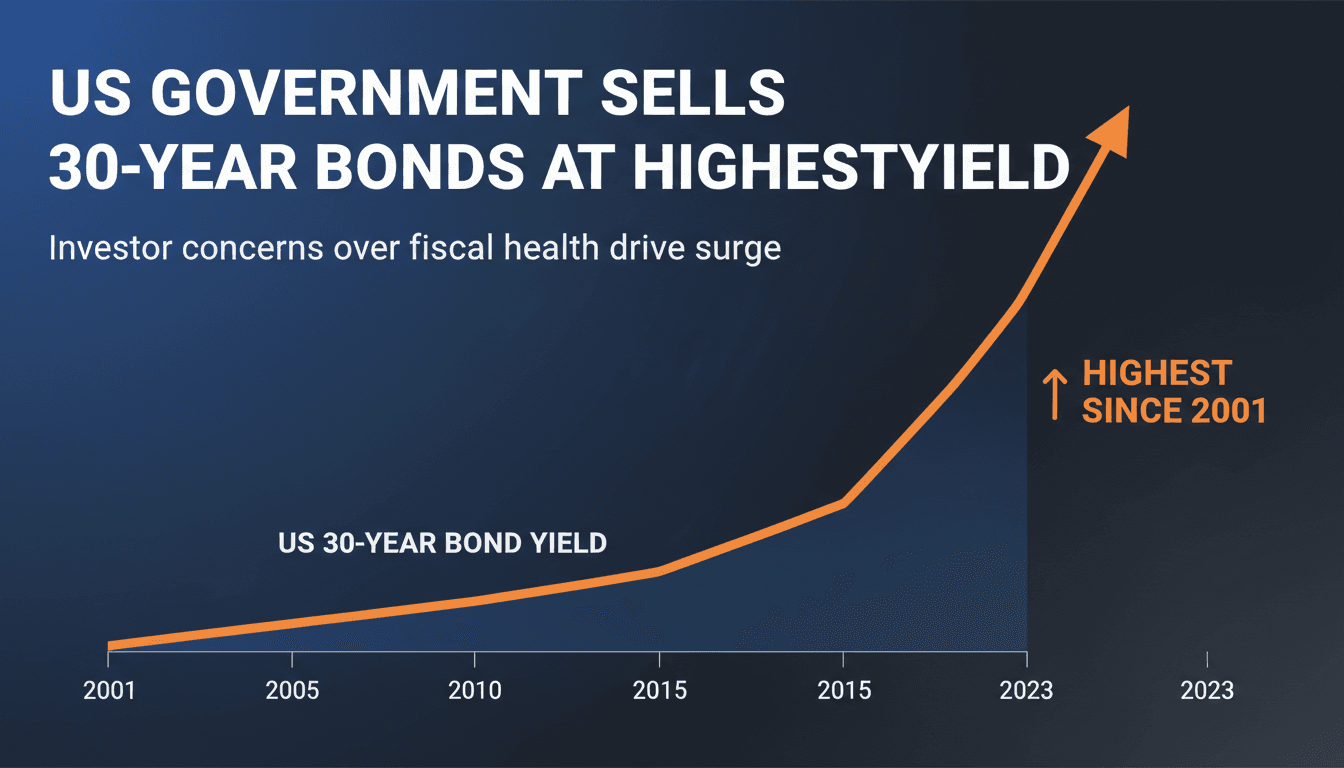
On August 13, 2026, the US government sold 30-year bonds at the highest yield since 2001. This bond sale reflects significant investor concerns about the nation's fiscal health, driven by rising public debt and inflation. The yields on these bonds have surged, indicating a shift in borrowing costs that could impact future government financing.
The high yield serves as a warning signal, prompting discussions about the need for government action on spending. Former Congressman Patrick McHenry has emphasized the urgency of addressing overspending to mitigate these fiscal challenges.
The Context
The backdrop to this bond sale includes mounting public debt and inflationary pressures that have raised alarms among investors. As the government grapples with these fiscal challenges, the demand for higher yields reflects a growing apprehension about the sustainability of current spending practices. Stakeholders are increasingly aware that the current trajectory may necessitate significant policy reforms.
This event is particularly relevant as it highlights the delicate balance between government borrowing and economic stability. The timing of the bond sale underscores the urgency for policymakers to respond to investor concerns and reassess fiscal strategies.
Takeaway
Looking ahead, the high yield on these 30-year bonds may lead to increased scrutiny of government spending and fiscal policies. Observers should watch for potential government responses to rising debt concerns, as these could shape future economic discourse. Market reactions to upcoming bond sales will also be critical in assessing investor sentiment and the effectiveness of fiscal policy changes.
As the government faces mounting pressure, future bond sales may continue to reflect investor apprehension, influencing both economic policy and public discussions on spending practices.
Editor-curated FT homepage stories spanning markets, business, world, and opinion.
"The Financial Times is a globally respected business publication with a centrist/center-left tone and strong markets focus."
— A47 Editor
US sells 30-year bonds at highest borrowing costs since 2001
The US recently sold 30-year bonds at the highest borrowing costs since 2001, reflecting rising yields amid concerns over increasing public debt and persistent inflation. This development highlights the challenges the government faces in managing its...
Global markets, investing, and macroeconomics from a premier financial newsroom.
"Bloomberg is respected for in-depth financial reporting and data-driven analysis."
— A47 Editor
US Pays Highest Yield on 30-Year Debt in Quarter of a Century
The US government recently sold 30-year bonds at the highest yield since 2001, signaling a significant shift in the market. Patrick McHenry, a former Republican congressman from North Carolina, described this bond sale as a 'wake up sign' regarding t...
Global markets, investing, and macroeconomics from a premier financial newsroom.
"Bloomberg is respected for in-depth financial reporting and data-driven analysis."
— A47 Editor
Costliest US Bond Sale Since 2001 Is Investor Warning to Bessent
The US government has conducted its costliest bond sale since 2001, selling 30-year bonds at the highest interest rate in 25 years, reflecting a significant demand from investors for higher yields amid concerns over the nation's growing deficit.