
Eurozone GDP contracts by 0.2% amid geopolitical tensions
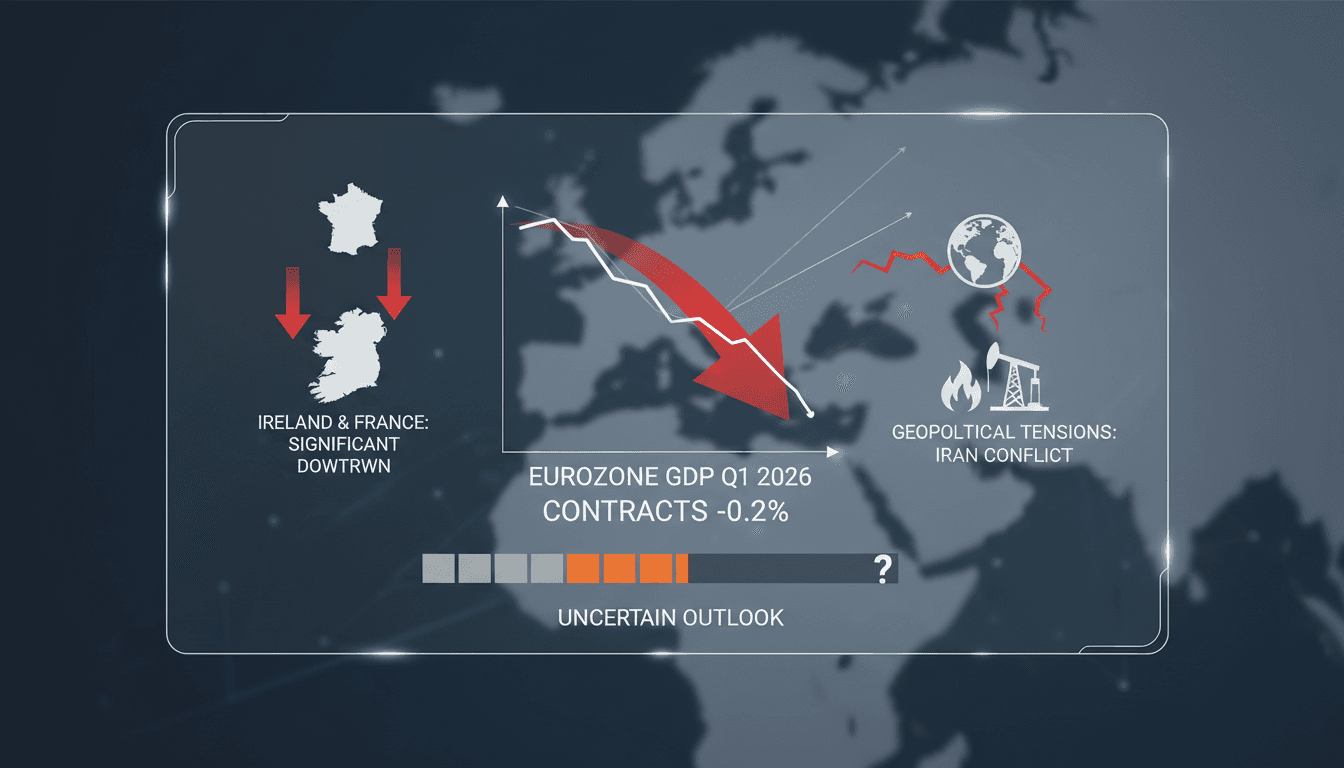
Here's what it means for you.
The Eurozone's recent economic contraction signals potential challenges for businesses and policymakers alike. With a 0.2% decline in GDP, stakeholders must reassess growth strategies in light of external pressures. The downturn, particularly influenced by Ireland's economic performance, may lead to tighter fiscal policies and a cautious approach to investment. As geopolitical tensions, especially regarding the conflict in Iran, continue to unfold, the economic landscape remains precarious. This situation necessitates close monitoring of economic indicators to gauge recovery prospects.
What happened
The Eurozone's GDP fell by 0.2% in the first quarter of 2026, marking a significant economic downturn. This contraction is largely attributed to unprecedented declines in output from Ireland and France. The ongoing geopolitical tensions related to the conflict in Iran have further complicated the economic outlook for the region.
Revisions to previous growth data were necessary due to the sharp downturn in Ireland, which distorted overall Eurozone growth figures. The contraction reflects broader challenges that the Eurozone faces as it navigates external pressures.
The Context
The economic challenges in the Eurozone are underscored by the significant impact of Ireland's performance on overall growth data. As the region grapples with the repercussions of geopolitical tensions, particularly from the Iran conflict, the uncertainty surrounding economic recovery is palpable. Stakeholders, including businesses and policymakers, are now tasked with adapting to this evolving landscape.
The timing of this contraction is critical, as it coincides with heightened global instability. The interplay between local economic performance and international events will be crucial in shaping future growth trajectories for the Eurozone.
Takeaway
The economic outlook for the Eurozone remains uncertain as geopolitical tensions continue to affect growth. Monitoring economic indicators from Ireland and France will provide further insights into the region's recovery efforts. Additionally, updates on the geopolitical situation in Iran will be essential in understanding potential economic implications.
As the Eurozone navigates these challenges, the focus will be on how local economies respond to external pressures and the strategies employed to foster resilience and growth.
Global business headlines with AI angles.
"General business outlet that frequently covers AI."
— A47 Editor
Eurozone Economy Shrinks In First Quarter Dragged By Ireland
The Eurozone's economy experienced a contraction of 0.2% in the first quarter of the year, primarily influenced by a significant downturn in Ireland's economic performance. This decline highlights the interconnectedness of the Eurozone economies and ...
Social/economic commentary and analysis relevant to business and markets.
"WSJ blends data-driven economic insight with commentary on policy and society."
— A47 Editor
Eurozone Economy Shrank in First Quarter as Iran War Darkens Outlook Ahead
The Eurozone economy contracted by 0.2% in the first quarter of 2026, primarily due to declines in output from Ireland and France, reflecting the adverse impact of ongoing geopolitical tensions, particularly the conflict in Iran.
Key macro releases (CPI, jobs, PMIs), surprise indexes, and market implications.
"Great for data-print awareness and instant read-through to rates and risk assets."
— A47 Editor
Eurozone contracts 0.2% quarter-on-quarter in January-March amid Iran headwinds
The Eurozone economy contracted by 0.2% quarter-on-quarter in the first quarter of 2026, primarily influenced by geopolitical tensions stemming from the ongoing conflict in Iran. This contraction reflects a decline in output from key member states, i...
Global markets, investing, and macroeconomics from a premier financial newsroom.
"Bloomberg is respected for in-depth financial reporting and data-driven analysis."
— A47 Editor
Euro-Zone Economy Shrank as Ireland Numbers Distort Picture
The euro-zone economy experienced a contraction at the beginning of the year, primarily influenced by an unprecedented decline in Ireland's economic performance, which necessitated a revision of previously reported growth figures.