
Global Bond Markets Experience Highest Yields in Decades Amid Debt and Inflation Concerns
Why it matters
The spike in bond yields signals heightened economic uncertainty, affecting everything from corporate financing to consumer loans.
What happened (in 30 seconds)
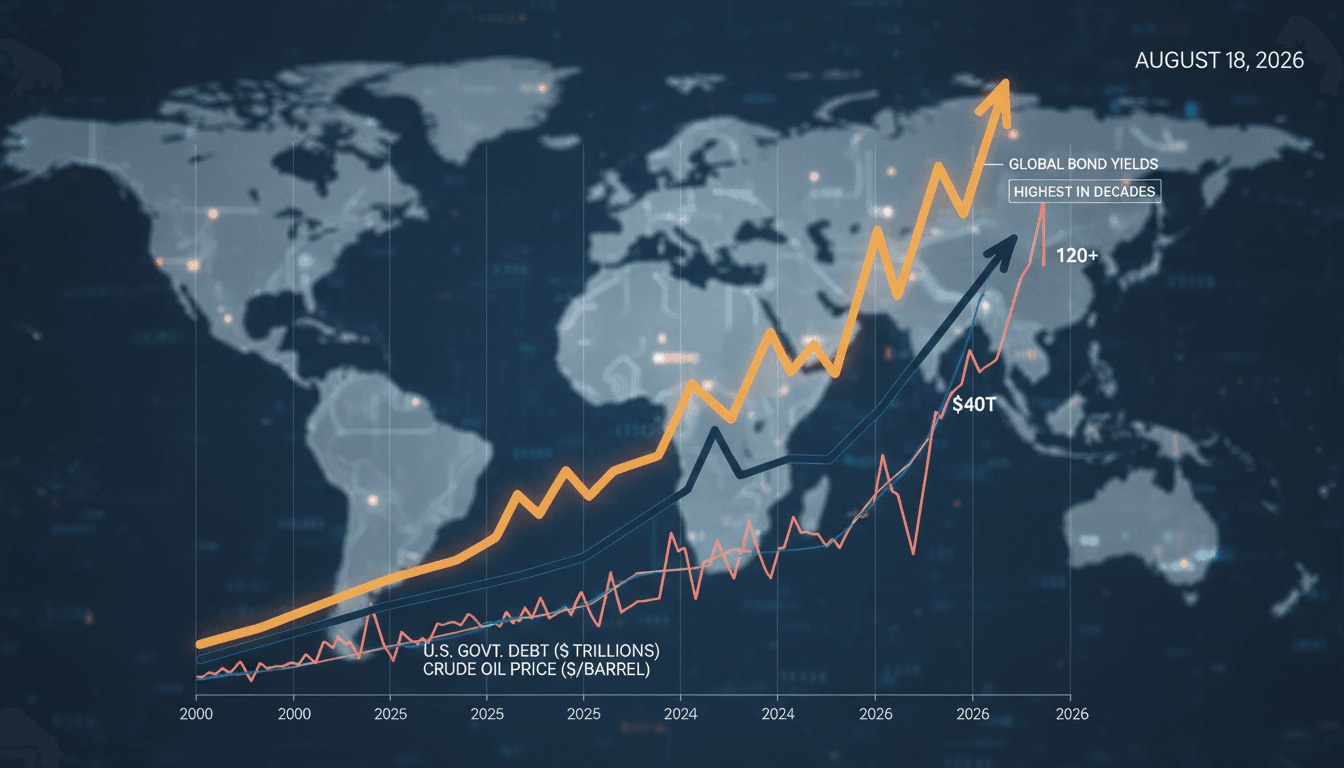
- Global bond yields surged to their highest levels in decades on August 18, 2026, driven by rising government debt and inflation concerns.
- U.S. Treasury yields reached peaks not seen since 2007, with 30-year bonds hitting 5.216% and 10-year notes at 4.683%.
- Equity markets declined as investors reacted to the bond selloff, indicating a broader market volatility.
The context you actually need
- Government debt levels in developed economies are nearing unsustainable thresholds, with U.S. debt approaching $40 trillion.
- Geopolitical tensions from the ongoing war in Iran have driven oil prices above $90 per barrel, exacerbating inflation risks.
- AI infrastructure investments are competing for capital, further complicating the borrowing landscape for both governments and corporations.
What's really happening
On August 18, 2026, the global bond market experienced a significant selloff, with yields on sovereign debt reaching levels not seen in decades. This surge was primarily driven by a combination of factors, including ballooning government debt, geopolitical tensions, and persistent inflation risks. The U.S. Treasury yields, for instance, saw 30-year bonds rise to 5.216%, marking a 25-year peak, while 10-year notes hit 4.683%, the highest in 19 years.
The backdrop to this volatility includes the U.S. government debt nearing $40 trillion, which raises concerns about debt sustainability. Investors are increasingly wary of the implications of such high debt levels, especially in an environment where inflation remains a pressing issue. Elevated oil prices, driven by the ongoing conflict in Iran, have further fueled inflationary pressures, complicating the economic landscape.
Additionally, the competition for capital has intensified due to massive investments in AI infrastructure. Technology firms are pouring resources into data centers and related technologies, which has created a scarcity of available capital for other sectors, including government borrowing. This competition has led to reduced foreign demand for U.S. Treasuries, further exacerbating the yield increases.
The implications of these developments are profound. Central banks, including the Federal Reserve and the European Central Bank, face challenges in managing monetary policy amid rising yields. Higher borrowing costs for corporations and households could lead to reduced spending and investment, potentially slowing economic growth. Furthermore, the selloff in equities, including major indices like the Nasdaq and STOXX 600, reflects investor caution and a shift in market sentiment.
As the situation evolves, market participants are closely monitoring the potential for further yield increases, which could undermine confidence and complicate monetary policy across various jurisdictions. The ongoing volatility in bond markets is likely to have ripple effects throughout the global economy, impacting everything from consumer loans to corporate financing.
Who feels it first (and how)
- Investors: Higher yields mean increased borrowing costs and potential losses in bond portfolios.
- Corporations: Companies relying on debt for expansion may face higher interest expenses, impacting profitability.
- Homebuyers: Rising mortgage rates could make home financing more expensive, affecting housing demand.
- Governments: Increased borrowing costs could strain budgets, limiting public spending and investment.
- Consumers: Higher interest rates on loans and credit could reduce disposable income and spending.
What to watch next
- Central bank responses: Watch for any policy adjustments from the Federal Reserve or European Central Bank as they navigate rising yields and inflation.
- Foreign investment trends: Monitor changes in foreign demand for U.S. Treasuries, as reduced interest could signal broader economic concerns.
- Oil price fluctuations: Keep an eye on oil prices, as sustained high levels could further drive inflation and impact global economic stability.
Global bond yields have surged to multi-decade highs, impacting borrowing costs.
Central banks will face increasing pressure to adjust monetary policy in response to rising yields.
The long-term effects of these yield increases on economic growth and consumer behavior remain uncertain.
Frequently Asked Questions
- Why it matters?
- The spike in bond yields signals heightened economic uncertainty, affecting everything from corporate financing to consumer loans.
- What happened (in 30 seconds)?
- Global bond yields surged to their highest levels in decades on August 18, 2026, driven by rising government debt and inflation concerns. U.S. Treasury yields reached peaks not seen since 2007, with 30-year bonds hitting 5.216% and 10-year notes at 4.683%. Equity markets declined as investors reacted to the bond selloff, indicating a broader market volatility.
- What's really happening?
- On August 18, 2026, the global bond market experienced a significant selloff, with yields on sovereign debt reaching levels not seen in decades. This surge was primarily driven by a combination of factors, including ballooning government debt, geopolitical tensions, and persistent inflation risks. The U.S. Treasury yields, for instance, saw 30-year bonds rise to 5.216%, marking a 25-year peak, while 10-year notes hit 4.683%, the highest in 19 years. The backdrop to this volatility includes the
- Who feels it first (and how)?
- Investors: Higher yields mean increased borrowing costs and potential losses in bond portfolios. Corporations: Companies relying on debt for expansion may face higher interest expenses, impacting profitability. Homebuyers: Rising mortgage rates could make home financing more expensive, affecting housing demand. Governments: Increased borrowing costs could strain budgets, limiting public spending and investment. Consumers: Higher interest rates on loans and credit could reduce disposable income a
- What to watch next?
- Central bank responses: Watch for any policy adjustments from the Federal Reserve or European Central Bank as they navigate rising yields and inflation. Foreign investment trends: Monitor changes in foreign demand for U.S. Treasuries, as reduced interest could signal broader economic concerns. Oil price fluctuations: Keep an eye on oil prices, as sustained high levels could further drive inflation and impact global economic stability.
Global coverage of politics, crises, and international affairs.
"HuffPost provides progressive-oriented reporting on international developments, often focusing on humanitarian and social justice issues."
— A47 Editor
Global Bond Markets Put Governments On Notice Over Fiscal, Inflation Risks
Long-term borrowing costs for governments in major economies, including the U.S., Germany, and Japan, have reached their highest levels in decades, signaling increasing concerns over fiscal stability and inflation risks. This surge in borrowing costs...
Corporate news, economic trends, and markets with UK and global scope.
"BBC News is widely regarded as reputable and impartial, with a public service mandate."
— A47 Editor
Global borrowing costs hit fresh highs on oil, AI and inflation
Global borrowing costs have surged to unprecedented levels, with interest rates on long-term government debt in the US, UK, Germany, and Japan reaching their highest since the 2008 financial crisis. This spike is attributed to rising oil prices, infl...
Sports reporting with a focus on Saudi and regional competitions.
"Okaz sports coverage is broad and audience-friendly, with strong attention to Saudi teams and leagues."
— A47 Editor
مع صعود عوائد السندات.. ارتفاع كلفة الاقتراض العالمي لأعلى مستوى
Global borrowing costs have surged to their highest levels in decades, driven by rising sovereign bond yields in the United States, Europe, and Japan, amid investor concerns over inflation, fiscal deficits, and declining demand for long-term debt. Ac...
UK and international business news, economics, and corporate coverage.
"The Guardian’s business section covers finance and markets with a progressive editorial tone."
— A47 Editor
Leading economies’ borrowing costs hit highest since 2008 crisis
Government borrowing costs in several advanced economies, including the US, UK, France, Germany, and Japan, have surged to their highest levels since the 2008 financial crisis, driven by investor concerns over the ongoing conflict in Iran and its pot...
News from the United States including domestic politics, society, and culture.
"The Guardian is known for its progressive editorial stance and in-depth analysis, often advocating for social justice, environmental issues, and liberal values."
— A47 Editor
Leading economies’ borrowing costs hit highest since 2008 crisis
Government borrowing costs in several advanced economies, including the US, UK, France, Germany, and Japan, have surged to their highest levels since the 2008 financial crisis, driven by investor concerns over the ongoing conflict in Iran and its pot...
Top international stories selected by The Guardian editors.
"The Guardian is known for its progressive editorial stance and in-depth analysis."
— A47 Editor
Leading economies’ borrowing costs hit highest since 2008 crisis
Government borrowing costs in several advanced economies, including the US, UK, France, Germany, and Japan, have surged to their highest levels since the 2008 financial crisis, driven by investor concerns over the ongoing conflict in Iran and its pot...