
Trump's Economic Sanctions Against Iran Cause Significant US Market Declines
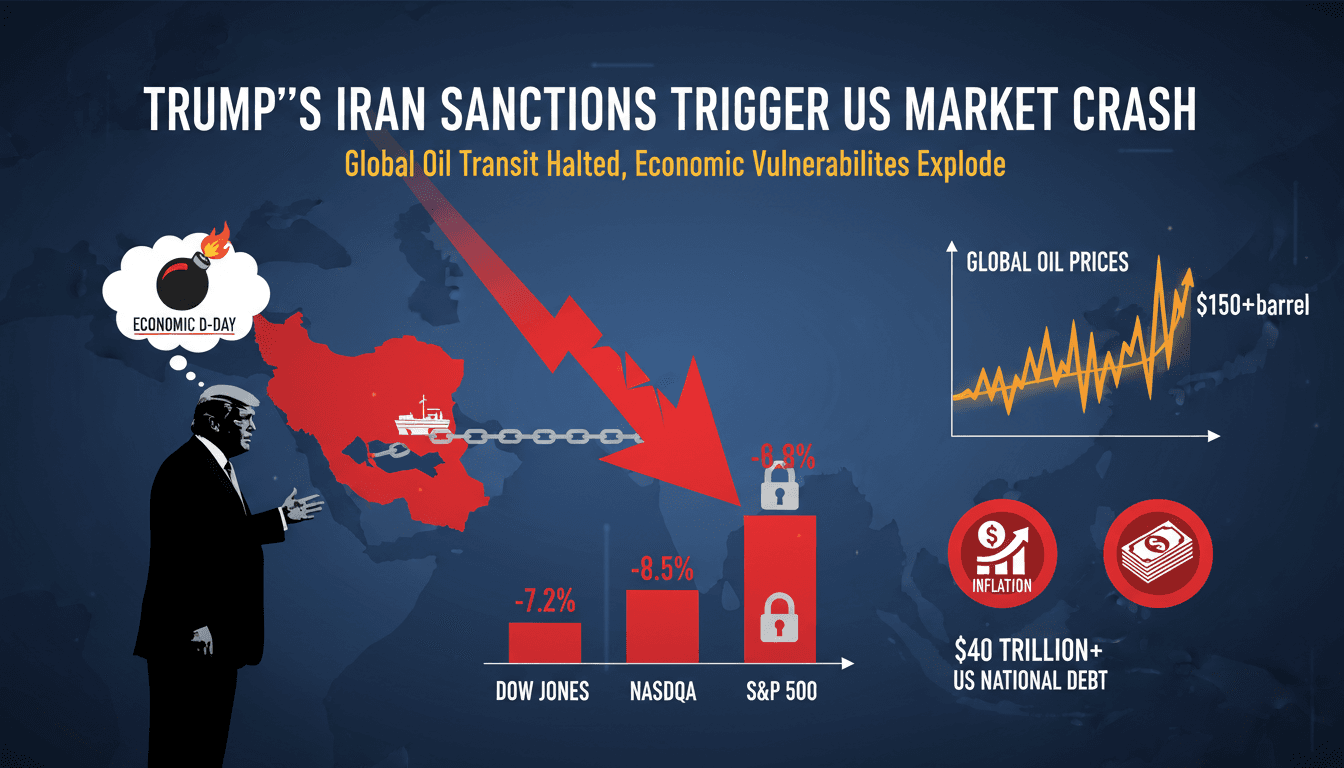
Here's what it means for you.
If you’re invested in US markets or reliant on stable fuel prices, the fallout from these sanctions could impact your financial landscape.
Why it matters
The announcement of unprecedented sanctions against Iran has immediate repercussions for global markets, particularly in energy and equities.
What happened (in 30 seconds)
- Trump announced an 'economic D-Day' campaign against Iran, threatening severe sanctions on August 20, 2026.
- US stock markets plummeted, with the Dow Jones falling over 700 points amid rising oil prices and investor anxiety.
- Iran dismissed the threats, while US Treasury yields rose, indicating concerns over inflation and fiscal stability.
The context you actually need
- The US-Israel conflict with Iran, ongoing since February 2026, has led to the closure of the Strait of Hormuz, disrupting 20% of global oil transit.
- US national debt has surpassed $40 trillion, exacerbated by war costs and rising fuel prices, putting additional pressure on the economy.
- Domestic pressure on Trump's administration is mounting due to rising fuel costs and the unpopularity of the conflict ahead of the November 2026 midterm elections.
What's really happening
On August 19, 2026, President Trump took to Truth Social to announce a campaign of 'economic warfare' against Iran, which he described as unprecedented in scale. This announcement came in the wake of a prolonged military conflict that had already strained US resources and heightened tensions in the Middle East. The closure of the Strait of Hormuz, a critical maritime route for oil and gas, has significantly impacted global energy prices, with US crude oil prices rising to $86.70 per barrel and Brent crude nearing $93.
The immediate market reaction was severe. The Dow Jones Industrial Average fell by 703.84 points (1.32%), signaling investor fears about inflation and the broader economic implications of the sanctions. Treasury yields also rose, with 30-year yields exceeding 5.25%, reflecting concerns about the US's fiscal health as national debt crossed the $40 trillion mark. This debt level is unprecedented and has been fueled by ongoing military expenditures and tax policies that have not kept pace with spending.
Despite the intended pressure on Tehran, the sanctions have backfired in the short term, leading to significant losses in US equity markets. Investors are increasingly wary of the economic fallout from the conflict, particularly as gasoline prices have surged nearly one-third year-over-year. The market's volatility is compounded by the fact that Iran has rejected direct negotiations with the US until access to the Strait of Hormuz is resolved, leaving the situation in a precarious state.
As of August 22, 2026, there were signs of partial stabilization in the markets, aided by emergency Treasury buyback measures. However, the long-term implications of these sanctions remain uncertain, particularly as the US grapples with both domestic economic pressures and international geopolitical tensions.
Who feels it first (and how)
- Investors in US equities, facing immediate losses and increased volatility.
- Consumers experiencing rising fuel prices, impacting household budgets.
- Energy sector stakeholders, particularly those reliant on stable oil prices for operations.
- US Treasury officials, who must manage rising debt levels and investor confidence.
- Residents of Dubai and the UAE, facing elevated living costs due to regional economic pressures and trade disruptions.
What to watch next
- Market recovery indicators: Watch for signs of stabilization in US equity markets and Treasury yields, which will signal investor confidence.
- Fuel price trends: Monitor gasoline prices and crude oil market fluctuations, as these will directly affect consumer spending and inflation.
- Diplomatic negotiations: Keep an eye on indirect negotiations between Iran and the US via Oman regarding the Strait of Hormuz, as any progress could alter market dynamics.
The US national debt has surpassed $40 trillion, impacting fiscal policy.
Continued volatility in US equity markets as investors react to geopolitical developments.
The long-term effectiveness of sanctions on Iran and their impact on global oil prices.
Frequently Asked Questions
- Why it matters?
- The announcement of unprecedented sanctions against Iran has immediate repercussions for global markets, particularly in energy and equities.
- What happened (in 30 seconds)?
- Trump announced an 'economic D-Day' campaign against Iran, threatening severe sanctions on August 20, 2026. US stock markets plummeted, with the Dow Jones falling over 700 points amid rising oil prices and investor anxiety. Iran dismissed the threats, while US Treasury yields rose, indicating concerns over inflation and fiscal stability.
- What's really happening?
- On August 19, 2026, President Trump took to Truth Social to announce a campaign of 'economic warfare' against Iran, which he described as unprecedented in scale. This announcement came in the wake of a prolonged military conflict that had already strained US resources and heightened tensions in the Middle East. The closure of the Strait of Hormuz, a critical maritime route for oil and gas, has significantly impacted global energy prices, with US crude oil prices rising to $86.70 per barrel and B
- Who feels it first (and how)?
- Investors in US equities, facing immediate losses and increased volatility. Consumers experiencing rising fuel prices, impacting household budgets. Energy sector stakeholders, particularly those reliant on stable oil prices for operations. US Treasury officials, who must manage rising debt levels and investor confidence. Residents of Dubai and the UAE, facing elevated living costs due to regional economic pressures and trade disruptions.
- What to watch next?
- Market recovery indicators: Watch for signs of stabilization in US equity markets and Treasury yields, which will signal investor confidence. Fuel price trends: Monitor gasoline prices and crude oil market fluctuations, as these will directly affect consumer spending and inflation. Diplomatic negotiations: Keep an eye on indirect negotiations between Iran and the US via Oman regarding the Strait of Hormuz, as any progress could alter market dynamics.
Global news coverage with extensive reporting on Middle Eastern conflicts and geopolitics.
"Al Jazeera is a Qatar-based broadcaster known for wide regional coverage and alternative perspectives."
— A47 Editor
Trump’s ‘economic D-Day’ claims first victim: Not Iran, but US markets
President Donald Trump has declared what he terms 'economic D-Day' against Iran, threatening severe sanctions on any countries that engage in trade with Tehran. This declaration follows a series of escalating military tensions and aims to economicall...
Comprehensive coverage of Middle Eastern and global issues.
"Al Jazeera is a prominent voice from the Global South, especially the Middle East, with an emphasis on underreported stories."
— A47 Editor
Trump’s ‘economic D-Day’ claims first victim: Not Iran, but US markets
President Donald Trump has declared what he terms 'economic D-Day' against Iran, threatening severe sanctions on any countries that engage in trade with Tehran. This declaration follows a series of escalating military tensions and aims to economicall...
Regional and international reporting focused on Middle Eastern politics, diplomacy, and economics.
"Asharq Al-Awsat is a Saudi-owned international newspaper reflecting mainstream Gulf political perspectives."
— A47 Editor
Trump Warns of 'Economic D-Day' against Iran, but Tehran is Well Acquainted with Sanctions
Former President Donald Trump has issued a stark warning of 'economic D-Day' against Iran, threatening severe sanctions on any countries that assist or engage in trade with Tehran. This declaration follows a series of escalating military tensions and...
Regional coverage and analysis focused on politics, diplomacy, and business across the Middle East.
"Al-Monitor is known for analytical reporting on Middle East politics and policy developments."
— A47 Editor
Trump’s Iran ‘economic D-Day’ threat sends oil prices above $94
Former President Donald Trump has issued a stark warning on Truth Social, threatening severe economic consequences for any country that provides financial support to Iran, which has led to a surge in oil prices above $94. This declaration is part of ...