
U.S. Treasury Bond Yields Surge Following Debt Buyback Intervention
Here's what it means for you.
If you're invested in U.S. bonds or global markets, the recent yield fluctuations could impact your returns and borrowing costs.
Why it matters
The rapid rebound in U.S. Treasury yields signals ongoing fiscal pressures that could affect global borrowing costs and investment strategies.
What happened (in 30 seconds)
- On August 19, 2026, the U.S. Treasury announced a significant increase in its debt buyback program, targeting longer-dated securities.
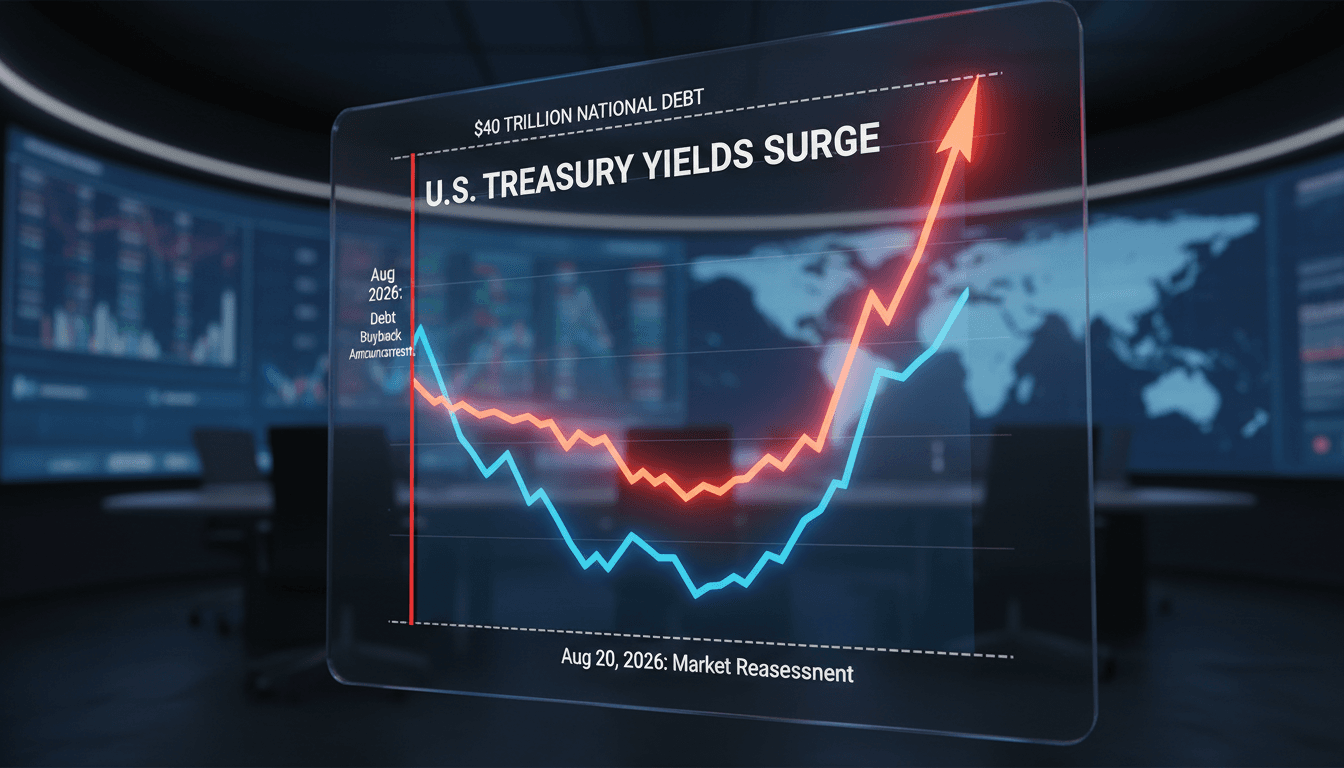
- The next day, yields on 30-year and 10-year Treasury bonds rebounded sharply, erasing most of the previous day's declines.
- This rebound reflects market skepticism about the effectiveness of the intervention amid rising national debt and fiscal deficits.
The context you actually need
- Rising yields: Long-term Treasury yields have been climbing due to persistent fiscal deficits and a national debt surpassing $40 trillion.
- Market reaction: The initial drop in yields from the buyback intervention was short-lived, indicating traders' concerns about overall market supply pressures.
- Geopolitical factors: Broader economic issues, including geopolitical tensions, have contributed to the volatility in bond markets.
What's really happening
On August 19, 2026, the U.S. Treasury Department announced an expansion of its debt repurchase operations, increasing the maximum size from $2 billion to at least $4 billion per operation. This move was specifically aimed at the 10- to 30-year sector to enhance liquidity in a market facing significant supply pressures. Initially, this intervention led to a notable decline in yields, with the 30-year yield dropping as much as 8-10 basis points.
However, by August 20, the bond market reacted swiftly, with yields rebounding sharply. The 30-year yield climbed 5.7 basis points to 5.251%, while the 10-year yield rose over 5.1 basis points to 4.704%. This rapid reversal indicates that traders quickly assessed the limited scale of the intervention relative to the ongoing fiscal pressures, including the national debt reaching $40 trillion.
The underlying mechanism here is complex. The Treasury's buyback program was designed to provide temporary liquidity support, but it did not address the fundamental issues driving yields higher. Analysts noted that while the buyback offered a short-term reprieve, it failed to alleviate concerns about the overall supply of bonds in the market. As the national debt continues to grow, the demand for longer-duration bonds has diminished, leading to higher yields.
Moreover, geopolitical tensions, such as the ongoing conflict in Iran, have added to the uncertainty in the bond market. Investors are increasingly wary of government borrowing needs, which further complicates the landscape. The swift rebound in yields suggests that market participants are not convinced that the Treasury's intervention will have a lasting impact on the overall fiscal situation.
In essence, the bond market is grappling with a delicate balance between short-term liquidity measures and long-term fiscal realities. The Treasury's actions may provide temporary relief, but without addressing the underlying issues, the market remains vulnerable to further fluctuations.
Who feels it first (and how)
- Bond Market Traders: They are directly impacted by yield changes, affecting trading strategies and profit margins.
- Institutional Investors: Their portfolios may see shifts in value as yields fluctuate, influencing investment decisions.
- Borrowers: Higher yields can lead to increased borrowing costs for both individuals and corporations, impacting loans and mortgages.
- Global Investors: Those holding USD-denominated assets may experience changes in returns due to yield movements.
What to watch next
- Debt Ceiling Discussions: Ongoing negotiations regarding the debt ceiling could influence market sentiment and yield movements.
- Economic Indicators: Watch for upcoming economic data releases that could impact fiscal policy and investor confidence.
- Geopolitical Developments: Any escalation in geopolitical tensions may further affect bond market stability and yield trends.
The U.S. national debt has surpassed $40 trillion, contributing to rising yields.
Continued volatility in bond yields as market participants react to fiscal pressures and geopolitical events.
The long-term effectiveness of the Treasury's debt buyback program in stabilizing yields.
Frequently Asked Questions
- Why it matters?
- The rapid rebound in U.S. Treasury yields signals ongoing fiscal pressures that could affect global borrowing costs and investment strategies.
- What happened (in 30 seconds)?
- On August 19, 2026, the U.S. Treasury announced a significant increase in its debt buyback program, targeting longer-dated securities. The next day, yields on 30-year and 10-year Treasury bonds rebounded sharply, erasing most of the previous day's declines. This rebound reflects market skepticism about the effectiveness of the intervention amid rising national debt and fiscal deficits.
- What's really happening?
- On August 19, 2026, the U.S. Treasury Department announced an expansion of its debt repurchase operations, increasing the maximum size from $2 billion to at least $4 billion per operation. This move was specifically aimed at the 10- to 30-year sector to enhance liquidity in a market facing significant supply pressures. Initially, this intervention led to a notable decline in yields, with the 30-year yield dropping as much as 8-10 basis points. However, by August 20, the bond market reacted swif
- Who feels it first (and how)?
- Bond Market Traders: They are directly impacted by yield changes, affecting trading strategies and profit margins. Institutional Investors: Their portfolios may see shifts in value as yields fluctuate, influencing investment decisions. Borrowers: Higher yields can lead to increased borrowing costs for both individuals and corporations, impacting loans and mortgages. Global Investors: Those holding USD-denominated assets may experience changes in returns due to yield movements.
- What to watch next?
- Debt Ceiling Discussions: Ongoing negotiations regarding the debt ceiling could influence market sentiment and yield movements. Economic Indicators: Watch for upcoming economic data releases that could impact fiscal policy and investor confidence. Geopolitical Developments: Any escalation in geopolitical tensions may further affect bond market stability and yield trends.
Global business headlines with AI angles.
"General business outlet that frequently covers AI."
— A47 Editor
Bond Yields Rebound Quickly And Erase The Drop From The Treasury's Intervention In Just a Day
The Treasury Department announced on Wednesday that it will more than double the size of government debt repurchases, leading to a rapid rebound in bond yields that erased the previous day's decline caused by the intervention.
Pan-Arab news coverage spanning politics, business, sports, and regional affairs.
"Asharq Al-Awsat reflects a broad Arab editorial perspective with strong attention to regional geopolitics."
— A47 Editor
هل تزاحم «الخزانة» الأميركية «الفيدرالي» على النفوذ في سوق السندات؟
The U.S. Treasury Department has decided to double its long-term bond repurchase operations, raising questions about the extent of its intervention in the markets. This move indicates a strategic shift in how the Treasury engages with the bond market...
Market-moving headlines impacting equities, bonds, and related risk assets.
"Real-time catalysts and volatility drivers across indices and sectors."
— A47 Editor
Treasury Secretary Bessent doubles US long-bond buybacks in the face of surging yields
Treasury Secretary Bessent has announced a doubling of US long-bond buybacks to a minimum of $4 billion, a strategic response to surging yields that have raised concerns about government borrowing costs. This decision reflects the Treasury's proactiv...
Global business headlines with AI angles.
"General business outlet that frequently covers AI."
— A47 Editor
The Treasury Will More Than Double Its Government Debt Repurchases. Stocks Edged Up.
The U.S. Treasury has announced plans to more than double its government debt repurchases, focusing on the 10-to-20-year and 20-to-30-year segments of the market, coinciding with a notable decline in bond yields. This strategic move aims to stabilize...
Capitol Hill news, legislation, and policy insight.
"The Hill specializes in U.S. politics and policy, with a focus on Capitol Hill developments and a reputation for insider reporting."
— A47 Editor
Treasury Department to double debt buybacks after bond yield spike
The Treasury Department announced plans to double the maximum amount of U.S. debt it can buy back, specifically targeting longer-dated securities in the 10-to-20-year and 20-to-30-year sectors. This decision comes in response to a recent spike in bon...
Pan-Arab news coverage spanning politics, business, sports, and regional affairs.
"Asharq Al-Awsat reflects a broad Arab editorial perspective with strong attention to regional geopolitics."
— A47 Editor
هل تختبر الخزانة الأميركية حدود التدخل في سوق السندات؟
The U.S. Treasury Department is set to double its long-term Treasury bond repurchase operations, a move aimed at enhancing liquidity in the debt market and alleviating the pressures it has faced.
Macro commentary, policy analysis, growth/inflation themes, and global outlooks.
"Contextual macro coverage that complements day-to-day market headlines."
— A47 Editor
Instant View: US Treasury will double some bond buy backs
The US Treasury has announced plans to double the sizes of certain debt buyback operations to a minimum of $4 billion, a strategic move aimed at managing fiscal responsibilities amid rising economic pressures. This decision reflects an ongoing adjust...
Global business headlines with AI angles.
"General business outlet that frequently covers AI."
— A47 Editor
The Treasury Will More Than Double Its Government Debt Repurchases. Yields Are Sharply Lower.
The U.S. Treasury has announced plans to more than double its government debt repurchases, specifically targeting the 10-to-20-year and 20-to-30-year segments of the market. This move comes as yields are sharply lower, indicating a shift in the gover...