
World Bank Warns of 6.4% Economic Contraction in Lebanon Due to Renewed Conflict
Here's what it means for you.
If you’re connected to Lebanon through business or family, the renewed conflict could impact your financial stability and investment opportunities.
Why it matters
The reversal of Lebanon's economic recovery threatens regional stability and could affect global markets reliant on Middle Eastern trade.
What happened (in 30 seconds)
- Renewed conflict: Military confrontations since March 2026 have derailed Lebanon's fragile economic stabilization.
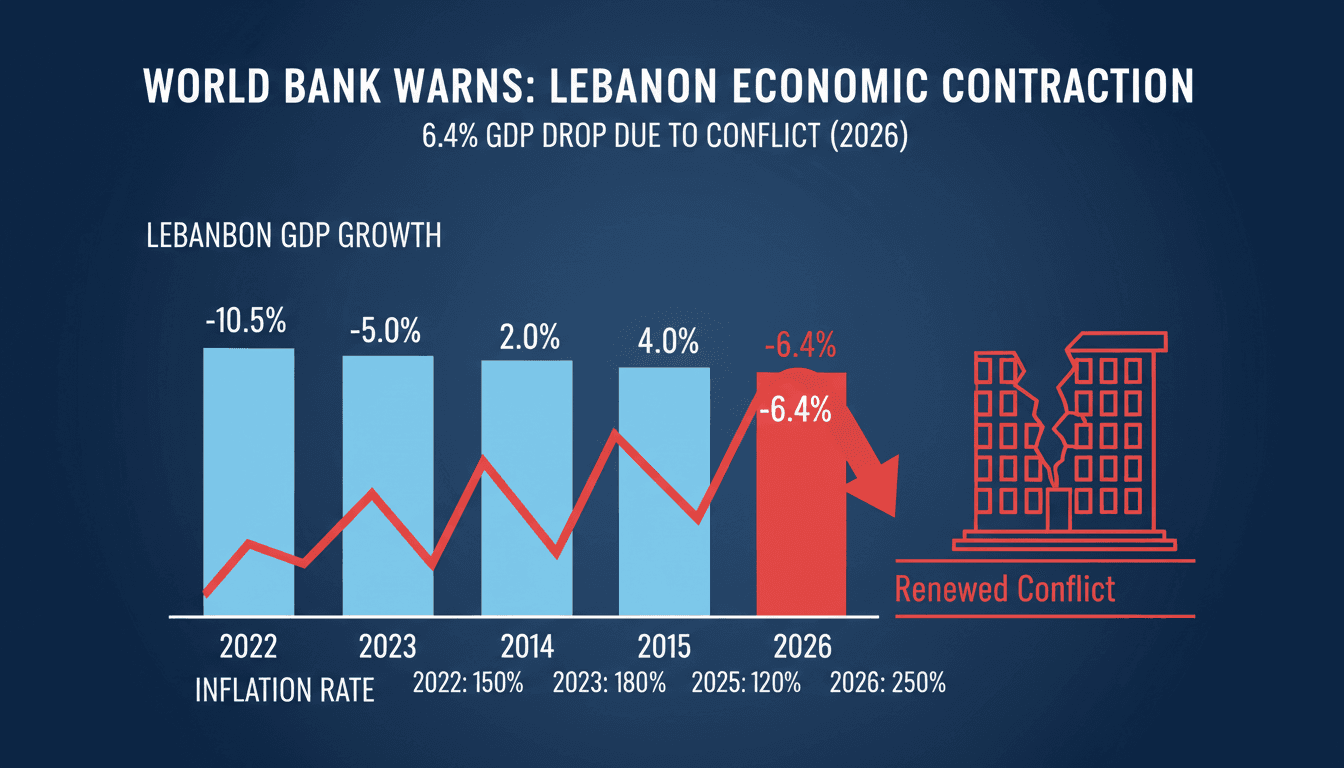
- Economic contraction: The World Bank projects a 6.4% contraction in GDP for 2026, reversing the 4.2% growth achieved in 2025.
- Inflation surge: Inflation is expected to exceed 17.5%, further eroding purchasing power amid ongoing humanitarian needs.
The context you actually need
- Prolonged crisis: Lebanon has faced a financial crisis since the 2019 collapse, worsened by violence in 2024 and the latest conflict.
- Fragile recovery: Prior to the conflict, Lebanon showed signs of economic stabilization, driven by increased consumption and tourism.
- Import dependency: The economy's reliance on imports makes it particularly vulnerable to disruptions in supply chains and regional instability.
What's really happening
The recent escalation of conflict in Lebanon has inflicted severe human and material losses, leading to large-scale internal displacement and destruction of infrastructure, particularly in the southern regions and Beirut's suburbs. This abrupt halt to the recovery momentum that began in late 2025 has prompted the World Bank to forecast a 6.4% contraction in GDP for 2026.
The initial signs of recovery were promising, with a 4.2% growth in 2025, driven by increased domestic consumption, investment, and tourism. However, the renewed violence has reversed these gains, exacerbating pre-existing vulnerabilities in an economy already strained by years of crisis. The humanitarian needs are escalating, and fiscal strains are mounting as the government grapples with crisis-related spending and public sector wage increases.
Inflation is projected to accelerate beyond 17.5%, significantly eroding purchasing power for the average Lebanese citizen. The central bank's efforts to maintain exchange rate stability are at risk, as reduced inflows and higher external payments could create future pressures. Legislative progress on banking reforms has occurred, but full implementation awaits complementary laws on financial regularity and deposit recovery, which are crucial for restoring confidence in the banking sector.
The World Bank emphasizes that without comprehensive restructuring plans, Lebanon's public debt remains unsustainable. The ongoing conflict not only disrupts economic activities but also deters foreign investment, further complicating recovery efforts. The combination of high inflation, elevated current account deficits, and the urgent need for external financing creates a precarious situation for Lebanon's economy.
Who feels it first (and how)
- Lebanese citizens: Facing increased inflation and reduced purchasing power.
- Expatriates: Those in Dubai may see reduced remittances impacting family finances back home.
- Tourism sector: Businesses reliant on tourism will suffer from decreased visitor numbers.
- Investors: Heightened regional instability may deter foreign investment in Lebanon.
What to watch next
- Inflation rates: Monitoring inflation trends will indicate the purchasing power erosion and economic stability.
- Banking reforms: Progress on banking sector restructuring will be crucial for restoring confidence and attracting investment.
- Humanitarian aid: The level of international humanitarian assistance could influence recovery efforts and social stability.
The economy is projected to contract by 6.4% in 2026.
Inflation will exceed 17.5%, impacting daily life for citizens.
The timeline for effective banking reforms and their impact on economic recovery.
Frequently Asked Questions
- Why it matters?
- The reversal of Lebanon's economic recovery threatens regional stability and could affect global markets reliant on Middle Eastern trade.
- What happened (in 30 seconds)?
- Renewed conflict: Military confrontations since March 2026 have derailed Lebanon's fragile economic stabilization. Economic contraction: The World Bank projects a 6.4% contraction in GDP for 2026, reversing the 4.2% growth achieved in 2025. Inflation surge: Inflation is expected to exceed 17.5%, further eroding purchasing power amid ongoing humanitarian needs.
- What's really happening?
- The recent escalation of conflict in Lebanon has inflicted severe human and material losses, leading to large-scale internal displacement and destruction of infrastructure, particularly in the southern regions and Beirut's suburbs. This abrupt halt to the recovery momentum that began in late 2025 has prompted the World Bank to forecast a 6.4% contraction in GDP for 2026. The initial signs of recovery were promising, with a 4.2% growth in 2025, driven by increased domestic consumption, investme
- Who feels it first (and how)?
- Lebanese citizens: Facing increased inflation and reduced purchasing power. Expatriates: Those in Dubai may see reduced remittances impacting family finances back home. Tourism sector: Businesses reliant on tourism will suffer from decreased visitor numbers. Investors: Heightened regional instability may deter foreign investment in Lebanon.
- What to watch next?
- Inflation rates: Monitoring inflation trends will indicate the purchasing power erosion and economic stability. Banking reforms: Progress on banking sector restructuring will be crucial for restoring confidence and attracting investment. Humanitarian aid: The level of international humanitarian assistance could influence recovery efforts and social stability.
Pan-Arab news coverage spanning politics, business, sports, and regional affairs.
"Asharq Al-Awsat reflects a broad Arab editorial perspective with strong attention to regional geopolitics."
— A47 Editor
استمرار «الصراع» يطيح بفرصة التعافي الهش في لبنان
The fragile recovery in Lebanon has faced a severe setback due to renewed military confrontations that occurred in the spring, as highlighted by the World Bank's report titled 'An Economy Weakened by Conflict.'
Global news coverage with extensive reporting on Middle Eastern conflicts and geopolitics.
"Al Jazeera is a Qatar-based broadcaster known for wide regional coverage and alternative perspectives."
— A47 Editor
World Bank projects war-hit Lebanon’s economy to contract by 6.4 percent
The World Bank has projected that Lebanon's economy will contract by 6.4% in 2026, attributing this decline to the ongoing conflict with Israel, which has severely disrupted economic recovery efforts and led to rising inflation and consumer prices.
Comprehensive coverage of Middle Eastern and global issues.
"Al Jazeera is a prominent voice from the Global South, especially the Middle East, with an emphasis on underreported stories."
— A47 Editor
World Bank projects war-hit Lebanon’s economy to contract by 6.4 percent
The World Bank has projected that Lebanon's economy will contract by 6.4 percent due to ongoing conflicts with Israel, which have disrupted economic recovery efforts and led to rising inflation and consumer prices.
Arabic-language coverage of international news and geopolitics.
"RT Arabic is a Russian state-funded outlet often criticized for promoting Kremlin-aligned narratives."
— A47 Editor
البنك الدولي: الحرب تدفع الاقتصاد اللبناني إلى انكماش 6.4% في 2026
The World Bank has projected a contraction of 6.4% in the Lebanese economy for the year 2026, attributing this downturn to the renewed conflict between Israel and Hezbollah, which has severely hindered the fragile economic recovery in the country.
Regional and international reporting focused on Middle Eastern politics, diplomacy, and economics.
"Asharq Al-Awsat is a Saudi-owned international newspaper reflecting mainstream Gulf political perspectives."
— A47 Editor
World Bank Projects Lebanon Economy to Contract by 6.4% Due to War
The World Bank has projected that Lebanon's economy will contract by 6.4% in 2026, primarily due to the ongoing conflict with Israel, which has severely disrupted economic recovery efforts and led to rising inflation and consumer prices.
UAE-based English-language newspaper covering regional politics, economics, and global affairs.
"The National reflects Emirati policy perspectives while maintaining international editorial standards."
— A47 Editor
World Bank projects Lebanon's GDP to contract by 6.4 per cent in 2026
The World Bank has projected that Lebanon's GDP will contract by 6.4% in 2026, primarily due to the ongoing conflict with Israel, which has severely disrupted economic recovery efforts. This decline is expected to worsen existing economic challenges ...