
World Bank Projects 6.4% GDP Contraction for Lebanon Amid Renewed Conflict
Here's what it means for you.
If you're connected to Lebanon's economy or have ties to the region, the renewed conflict could impact your investments and remittances.
Why it matters
The World Bank's projection of a 6.4% GDP contraction in Lebanon signals a significant setback for a country already grappling with economic instability.
What happened (in 30 seconds)
- Conflict escalated in spring 2026, leading to widespread internal displacement and infrastructure damage.
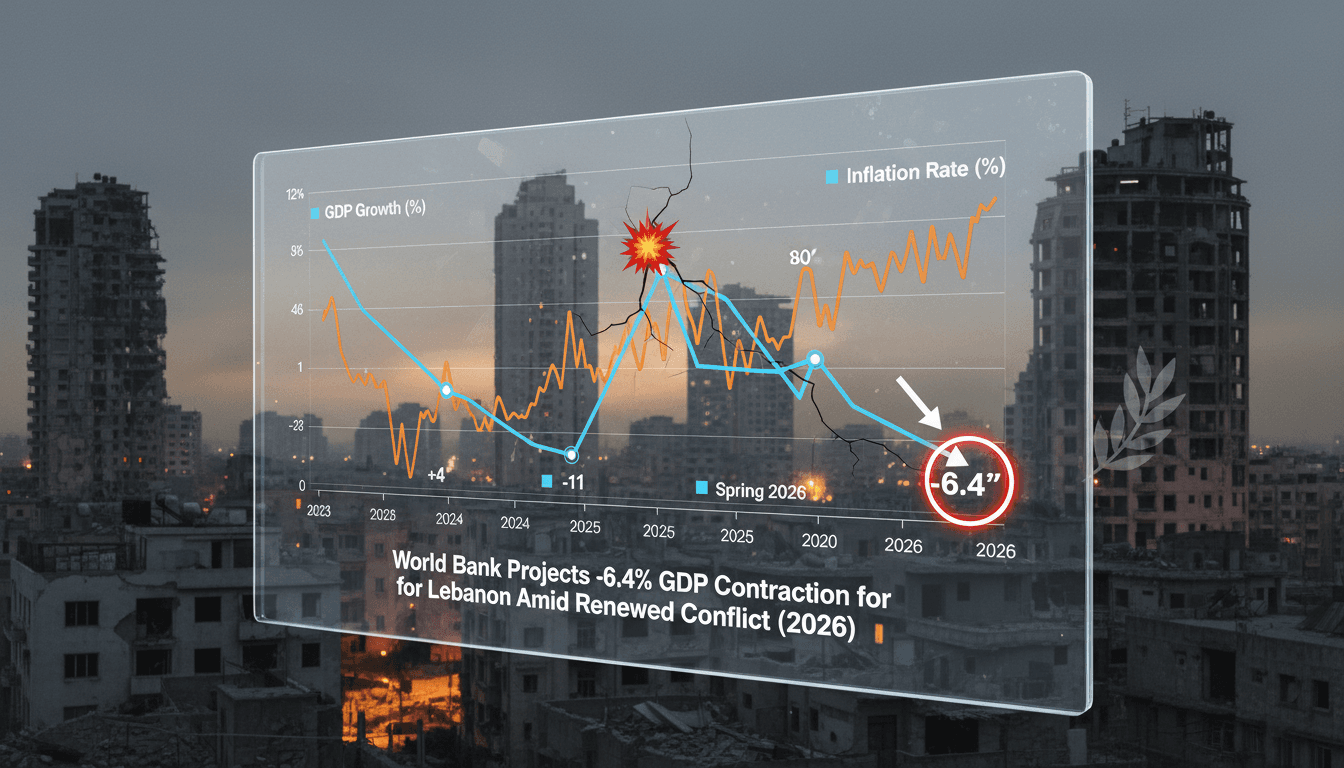
- Lebanon's GDP is projected to contract by 6.4% in 2026, reversing the 4.2% growth achieved in 2025.
- Inflation is expected to exceed 17.5%, further eroding purchasing power and economic stability.
The context you actually need
- Lebanon has faced a severe financial crisis since 2019, with cumulative GDP contraction nearing 60% from pre-crisis levels.
- A modest recovery in 2025 was driven by consumption, investment, and tourism, but this momentum has been halted by renewed hostilities.
- The ongoing conflict is linked to regional tensions involving Hezbollah and Israel, exacerbating humanitarian and economic challenges.
What's really happening
The World Bank's updated Lebanon Economic Monitor paints a grim picture for the country's economic future. Following six years of contraction due to a financial crisis that began in 2019, Lebanon saw a brief glimmer of hope in 2025 with a 4.2% GDP growth. This recovery was largely fueled by increased consumption, investment, and a resurgence in tourism. However, the spring 2026 conflict has reversed these gains, leading to a projected 6.4% contraction in GDP for 2026.
The renewed military confrontations have resulted in widespread internal displacement, particularly in southern Lebanon and Beirut's southern suburbs. This displacement has not only caused humanitarian crises but has also led to significant infrastructure damage, disrupting supply chains and collapsing the tourism sector. As a result, inflation is forecasted to exceed 17.5%, which will further erode the purchasing power of Lebanese citizens already struggling with high living costs.
Public finances, which showed some resilience in the first half of 2026, are now under pressure due to rising expenditures related to crisis response, wages, and reconstruction needs. The Lebanese government is attempting to implement banking sector reforms, with some key amendments approved by parliament. However, full implementation is contingent on additional legislation concerning financial stability and deposit recovery.
The exchange rate stability, which has been maintained through reserves, is now vulnerable to reduced inflows and external shocks. The ongoing conflict has created a precarious fiscal outlook, with public debt remaining unsustainable without comprehensive restructuring. The World Bank emphasizes that banking restructuring and improved public financial management are essential for restoring confidence and attracting external financing.
In summary, the interplay of renewed conflict and economic instability creates a challenging environment for Lebanon, with significant implications for its citizens and the broader region.
Who feels it first (and how)
- Lebanese citizens: Facing inflation and reduced purchasing power, impacting daily life.
- Businesses: Particularly in tourism and retail, suffering from decreased consumer demand and infrastructure damage.
- Lebanese diaspora: Experiencing reduced remittances and potential return migration pressures due to economic uncertainty.
What to watch next
- Inflation rates: Monitoring inflation trends will be crucial as they directly affect purchasing power and economic stability.
- Reconstruction efforts: The pace and effectiveness of reconstruction initiatives will indicate the government's ability to stabilize the economy.
- International aid: Watch for developments in external financing and support from international organizations, which could influence Lebanon's recovery trajectory.
Lebanon's GDP is projected to contract by 6.4% in 2026.
Inflation will exceed 17.5%, impacting purchasing power.
The effectiveness of ongoing reforms and international support in stabilizing the economy.
Frequently Asked Questions
- Why it matters?
- The World Bank's projection of a 6.4% GDP contraction in Lebanon signals a significant setback for a country already grappling with economic instability.
- What happened (in 30 seconds)?
- Conflict escalated in spring 2026, leading to widespread internal displacement and infrastructure damage. Lebanon's GDP is projected to contract by 6.4% in 2026, reversing the 4.2% growth achieved in 2025. Inflation is expected to exceed 17.5%, further eroding purchasing power and economic stability.
- What's really happening?
- The World Bank's updated Lebanon Economic Monitor paints a grim picture for the country's economic future. Following six years of contraction due to a financial crisis that began in 2019, Lebanon saw a brief glimmer of hope in 2025 with a 4.2% GDP growth. This recovery was largely fueled by increased consumption, investment, and a resurgence in tourism. However, the spring 2026 conflict has reversed these gains, leading to a projected 6.4% contraction in GDP for 2026. The renewed military confr
- Who feels it first (and how)?
- Lebanese citizens: Facing inflation and reduced purchasing power, impacting daily life. Businesses: Particularly in tourism and retail, suffering from decreased consumer demand and infrastructure damage. Lebanese diaspora: Experiencing reduced remittances and potential return migration pressures due to economic uncertainty.
- What to watch next?
- Inflation rates: Monitoring inflation trends will be crucial as they directly affect purchasing power and economic stability. Reconstruction efforts: The pace and effectiveness of reconstruction initiatives will indicate the government's ability to stabilize the economy. International aid: Watch for developments in external financing and support from international organizations, which could influence Lebanon's recovery trajectory.
Pan-Arab news coverage spanning politics, business, sports, and regional affairs.
"Asharq Al-Awsat reflects a broad Arab editorial perspective with strong attention to regional geopolitics."
— A47 Editor
استمرار «الصراع» يطيح بفرصة التعافي الهش في لبنان
The fragile recovery in Lebanon has faced a severe setback due to renewed military confrontations that occurred in the spring, as highlighted by the World Bank's report titled 'An Economy Weakened by Conflict.'
Global news coverage with extensive reporting on Middle Eastern conflicts and geopolitics.
"Al Jazeera is a Qatar-based broadcaster known for wide regional coverage and alternative perspectives."
— A47 Editor
World Bank projects war-hit Lebanon’s economy to contract by 6.4 percent
The World Bank has projected that Lebanon's economy will contract by 6.4% in 2026, attributing this decline to the ongoing conflict with Israel, which has severely disrupted economic recovery efforts and led to rising inflation and consumer prices.
Comprehensive coverage of Middle Eastern and global issues.
"Al Jazeera is a prominent voice from the Global South, especially the Middle East, with an emphasis on underreported stories."
— A47 Editor
World Bank projects war-hit Lebanon’s economy to contract by 6.4 percent
The World Bank has projected that Lebanon's economy will contract by 6.4 percent due to ongoing conflicts with Israel, which have disrupted economic recovery efforts and led to rising inflation and consumer prices.
Arabic-language coverage of international news and geopolitics.
"RT Arabic is a Russian state-funded outlet often criticized for promoting Kremlin-aligned narratives."
— A47 Editor
البنك الدولي: الحرب تدفع الاقتصاد اللبناني إلى انكماش 6.4% في 2026
The World Bank has projected a contraction of 6.4% in the Lebanese economy for the year 2026, attributing this downturn to the renewed conflict between Israel and Hezbollah, which has severely hindered the fragile economic recovery in the country.
Regional and international reporting focused on Middle Eastern politics, diplomacy, and economics.
"Asharq Al-Awsat is a Saudi-owned international newspaper reflecting mainstream Gulf political perspectives."
— A47 Editor
World Bank Projects Lebanon Economy to Contract by 6.4% Due to War
The World Bank has projected that Lebanon's economy will contract by 6.4% in 2026, primarily due to the ongoing conflict with Israel, which has severely disrupted economic recovery efforts. This decline is expected to exacerbate existing economic cha...
UAE-based English-language newspaper covering regional politics, economics, and global affairs.
"The National reflects Emirati policy perspectives while maintaining international editorial standards."
— A47 Editor
World Bank projects Lebanon's GDP to contract by 6.4 per cent in 2026
The World Bank has projected that Lebanon's GDP will contract by 6.4% in 2026, primarily due to the ongoing conflict with Israel, which has severely disrupted economic recovery efforts. This decline is expected to worsen existing economic challenges ...