
World Bank Projects 6.4% Contraction in Lebanon's Economy for 2026 Due to Renewed Conflict
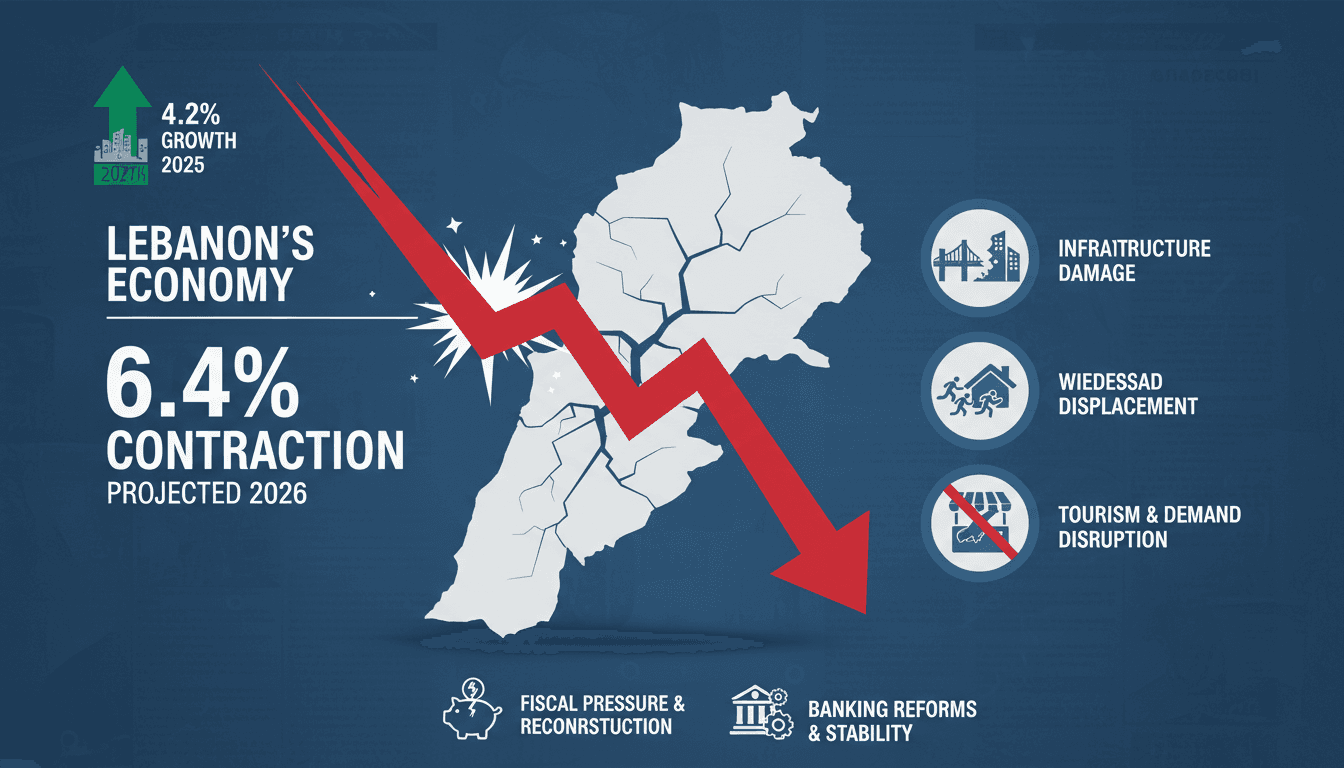
Here's what it means for you.
If you have business interests or connections in Lebanon, the projected economic downturn could impact your operations and financial flows.
Why it matters
The World Bank's forecast signals a significant setback for Lebanon's fragile economy, affecting regional stability and international investment.
What happened (in 30 seconds)
- World Bank projects a 6.4% contraction in Lebanon's economy for 2026 due to renewed conflict.
- Conflict escalation in March 2026 reversed the previous year's 4.2% growth, disrupting recovery efforts.
- Inflation is expected to rise to 17.5%, exacerbating the economic crisis and increasing living costs.
The context you actually need
- Lebanon has been in a financial crisis since 2019, with the economy struggling to stabilize amid ongoing challenges.
- The 2025 growth was driven by consumption, investment, and tourism, marking the strongest performance since the crisis began.
- Renewed conflict has led to infrastructure damage, internal displacement, and supply chain disruptions, compounding existing vulnerabilities.
What's really happening
The World Bank's Summer 2026 Lebanon Economic Monitor, titled "A Conflict-Torn Economy," outlines the dire consequences of renewed fighting that began in March 2026. This escalation has not only reversed the modest recovery seen in 2025 but has also inflicted severe damage on Lebanon's already fragile infrastructure and housing. The report indicates that over one million people have been displaced due to the conflict, leading to significant internal migration and a strain on urban centers.
The economic contraction of 6.4% represents a staggering 10.4 percentage point drop from a no-conflict baseline, highlighting the profound impact of instability on economic performance. Key sectors such as tourism and domestic consumption have been hit hard, with supply chains disrupted and consumer confidence plummeting. As a result, inflation is projected to soar to 17.5%, further eroding purchasing power and exacerbating the cost of living crisis for ordinary Lebanese citizens.
The report emphasizes the urgent need for fiscal reforms and banking sector restructuring to restore confidence among investors and secure necessary financing for reconstruction efforts. The Lebanese government faces mounting international pressure to accelerate these reforms, particularly following recent parliamentary approvals of amendments aimed at restructuring the banking sector. Discussions with the International Monetary Fund (IMF) regarding a support program are set to resume in Beirut, indicating a potential path forward, albeit fraught with challenges.
Market indicators show that the Lebanese pound has stabilized near 90,000 to the USD, but this stability is precarious and could be threatened by ongoing conflict shocks. The combination of fiscal pressures from reconstruction needs and the necessity for structural reforms creates a complex landscape for Lebanon's economic future.
Who feels it first (and how)
- Local businesses: Suffering from reduced consumer spending and disrupted supply chains.
- Tourism sector: Facing sharp declines in visitors and revenue, impacting jobs and local economies.
- Displaced populations: Experiencing immediate hardships due to loss of homes and livelihoods.
- International investors: Facing increased risks and uncertainties, potentially leading to reduced investment in the region.
What to watch next
- IMF negotiations: Progress in discussions with the IMF could signal potential financial support and reform commitments.
- Inflation trends: Monitoring inflation rates will be crucial to understanding the economic strain on households and businesses.
- Conflict developments: Any escalation or de-escalation in conflict will directly impact economic stability and recovery efforts.
The World Bank projects a 6.4% contraction in Lebanon's economy for 2026.
Inflation will rise to 17.5%, further straining the economy and living conditions.
The long-term effectiveness of proposed reforms and international support in stabilizing the economy.
Frequently Asked Questions
- Why it matters?
- The World Bank's forecast signals a significant setback for Lebanon's fragile economy, affecting regional stability and international investment.
- What happened (in 30 seconds)?
- World Bank projects a 6.4% contraction in Lebanon's economy for 2026 due to renewed conflict. Conflict escalation in March 2026 reversed the previous year's 4.2% growth, disrupting recovery efforts. Inflation is expected to rise to 17.5%, exacerbating the economic crisis and increasing living costs.
- What's really happening?
- The World Bank's Summer 2026 Lebanon Economic Monitor, titled "A Conflict-Torn Economy," outlines the dire consequences of renewed fighting that began in March 2026. This escalation has not only reversed the modest recovery seen in 2025 but has also inflicted severe damage on Lebanon's already fragile infrastructure and housing. The report indicates that over one million people have been displaced due to the conflict, leading to significant internal migration and a strain on urban centers. The
- Who feels it first (and how)?
- Local businesses: Suffering from reduced consumer spending and disrupted supply chains. Tourism sector: Facing sharp declines in visitors and revenue, impacting jobs and local economies. Displaced populations: Experiencing immediate hardships due to loss of homes and livelihoods. International investors: Facing increased risks and uncertainties, potentially leading to reduced investment in the region.
- What to watch next?
- IMF negotiations: Progress in discussions with the IMF could signal potential financial support and reform commitments. Inflation trends: Monitoring inflation rates will be crucial to understanding the economic strain on households and businesses. Conflict developments: Any escalation or de-escalation in conflict will directly impact economic stability and recovery efforts.
Arabic-language coverage of international news and geopolitics.
"RT Arabic is a Russian state-funded outlet often criticized for promoting Kremlin-aligned narratives."
— A47 Editor
البنك الدولي: الحرب تدفع الاقتصاد اللبناني إلى انكماش 6.4% في 2026
The World Bank has projected a contraction of 6.4% in the Lebanese economy for the year 2026, attributing this downturn to the renewed conflict between Israel and Hezbollah, which has severely hindered the fragile economic recovery in the country.
Regional and international reporting focused on Middle Eastern politics, diplomacy, and economics.
"Asharq Al-Awsat is a Saudi-owned international newspaper reflecting mainstream Gulf political perspectives."
— A47 Editor
World Bank Projects Lebanon Economy to Contract by 6.4% Due to War
The World Bank has projected that Lebanon's economy will contract by 6.4% in 2026, primarily due to the ongoing war, which has severely impacted the nation's economic stability. This contraction highlights the dire economic challenges Lebanon faces a...
UAE-based English-language newspaper covering regional politics, economics, and global affairs.
"The National reflects Emirati policy perspectives while maintaining international editorial standards."
— A47 Editor
World Bank projects Lebanon's GDP to contract by 6.4 per cent in 2026
The World Bank has projected that Lebanon's GDP will contract by 6.4% in 2026, primarily due to the ongoing war, which has severely affected the nation's economic stability. This contraction underscores the significant economic challenges Lebanon is ...