
Saudi Private Sector Bank Credit Grows by 197.5 Billion Riyals in Q2 2026
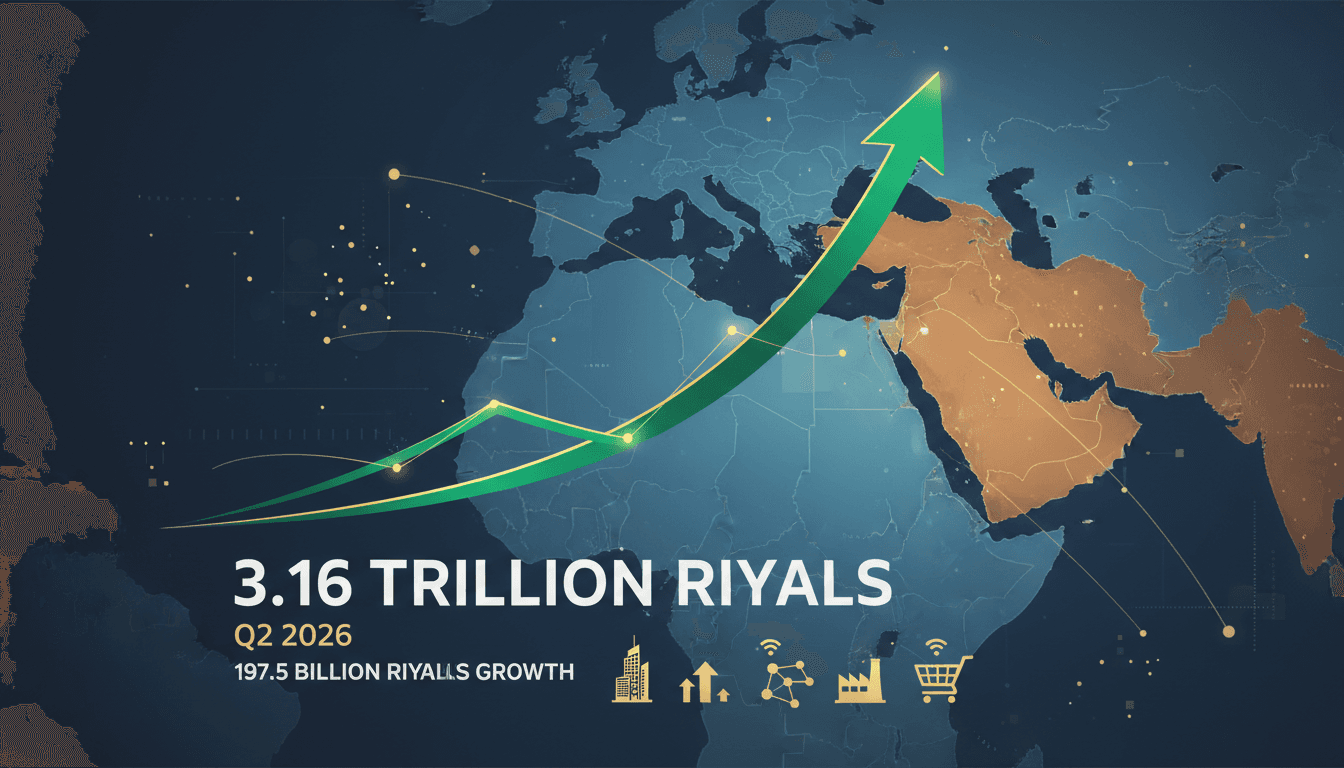
Here's what it means for you.
If you’re involved in business or investment in the Gulf region, the surge in Saudi bank credit could open new opportunities for financing and growth.
Why it matters
This significant increase in private sector bank credit signals a robust economic environment in Saudi Arabia, which could influence regional investment dynamics.
What happened (in 30 seconds)
- Saudi private sector bank credit rose by 197.5 billion riyals year-over-year, reaching 3.16 trillion riyals by Q2 2026.
- Total bank claims on the private sector increased to 3.27 trillion riyals, reflecting a 6.82% annual growth.
- Loans, advances, and overdrafts accounted for nearly all of this rise, indicating strong demand for financing in the non-oil economy.
The context you actually need
- Vision 2030: Saudi Arabia's economic strategy aims to diversify away from oil dependency, empowering the private sector.
- Sustained growth: The private sector claims exceeded 3 trillion riyals for the first time in 2025, driven by reforms that facilitate business activity.
- Investment focus: The increase in credit supports investment and consumption, crucial for the ongoing economic diversification efforts.
What's really happening
The recent data from the Saudi Central Bank (SAMA) reveals a significant uptick in private sector bank credit, which rose by 197.5 billion riyals year-over-year to 3.16 trillion riyals by the end of Q2 2026. This growth, representing a 6.67% annual increase, is primarily driven by loans, advances, and overdrafts, which accounted for nearly all of the rise, increasing by 197.1 billion riyals. Additionally, investments in private securities saw an 11.18% growth, adding 10.96 billion riyals, while discounted bills rose modestly by 397 million riyals.
This expansion in bank credit is a clear indicator of the increasing financing available for private sector activities, which is essential for supporting investment and consumption in the non-oil economy. The total claims on the private sector reached 3.27 trillion riyals, up 208.5 billion riyals or 6.82%, underscoring the importance of credit as a key driver of economic activities.
The growth in bank credit aligns with Saudi Arabia's Vision 2030, which emphasizes economic diversification and private sector empowerment. The government has implemented various reforms to facilitate business operations and attract investments, contributing to the sustained credit growth observed in recent years. This trend is crucial as it reflects the ongoing shift towards a more diversified economy, reducing reliance on oil revenues.
Moreover, the increase in private sector financing is likely to stimulate economic activities across various sectors, including construction, retail, and services. As businesses gain access to more credit, they can invest in expansion, hire more employees, and increase production, which in turn can lead to higher consumer spending and overall economic growth.
The implications of this credit growth extend beyond Saudi Arabia. As the largest economy in the Gulf Cooperation Council (GCC), Saudi Arabia's economic health is closely tied to the region's stability and growth. Increased financing in the Saudi private sector could lead to enhanced trade and investment flows within the GCC, benefiting neighboring economies, including the UAE and Bahrain.
Who feels it first (and how)
- Business owners: Increased access to credit allows for expansion and investment in new projects.
- Investors: Opportunities for financing in diverse sectors may lead to higher returns.
- Consumers: Potential job creation and economic growth could enhance purchasing power and living standards.
- Regional economies: Neighboring GCC countries may benefit from increased trade and investment flows.
What to watch next
- Continued credit growth: Monitor future SAMA reports for ongoing trends in private sector financing, as sustained growth could indicate a healthy economic environment.
- Investment trends: Watch for shifts in where private sector investments are directed, as this could reveal emerging sectors and opportunities.
- Regional economic indicators: Keep an eye on economic performance in neighboring GCC countries, as Saudi Arabia's growth may influence their markets.
Private sector bank credit has increased significantly, supporting economic activities.
Continued growth in credit will stimulate investment and consumption in the non-oil economy.
The long-term impact on regional economies and how they will adapt to Saudi Arabia's economic changes remains to be seen.
Frequently Asked Questions
- Why it matters?
- This significant increase in private sector bank credit signals a robust economic environment in Saudi Arabia, which could influence regional investment dynamics.
- What happened (in 30 seconds)?
- Saudi private sector bank credit rose by 197.5 billion riyals year-over-year, reaching 3.16 trillion riyals by Q2 2026. Total bank claims on the private sector increased to 3.27 trillion riyals, reflecting a 6.82% annual growth. Loans, advances, and overdrafts accounted for nearly all of this rise, indicating strong demand for financing in the non-oil economy.
- What's really happening?
- The recent data from the Saudi Central Bank (SAMA) reveals a significant uptick in private sector bank credit, which rose by 197.5 billion riyals year-over-year to 3.16 trillion riyals by the end of Q2 2026. This growth, representing a 6.67% annual increase, is primarily driven by loans, advances, and overdrafts, which accounted for nearly all of the rise, increasing by 197.1 billion riyals. Additionally, investments in private securities saw an 11.18% growth, adding 10.96 billion riyals, while
- Who feels it first (and how)?
- Business owners: Increased access to credit allows for expansion and investment in new projects. Investors: Opportunities for financing in diverse sectors may lead to higher returns. Consumers: Potential job creation and economic growth could enhance purchasing power and living standards. Regional economies: Neighboring GCC countries may benefit from increased trade and investment flows.
- What to watch next?
- Continued credit growth: Monitor future SAMA reports for ongoing trends in private sector financing, as sustained growth could indicate a healthy economic environment. Investment trends: Watch for shifts in where private sector investments are directed, as this could reveal emerging sectors and opportunities. Regional economic indicators: Keep an eye on economic performance in neighboring GCC countries, as Saudi Arabia's growth may influence their markets.
Culture, society, and public-interest stories for Arabic-speaking readers.
"This Al Watan feed appears section-specific, and the label is kept broad enough to avoid overclaiming the exact mapping."
— A47 Editor
197 مليار ريال زيادة في قروض القطاع الخاص
The private sector's bank claims increased by approximately 208.5 billion riyals over the year, reaching 3.27 trillion riyals by the end of Q2 2026, compared to 3.06 trillion riyals in the same quarter of 2025, marking a 6.82% annual growth, primaril...
Sports reporting with a focus on Saudi and regional competitions.
"Okaz sports coverage is broad and audience-friendly, with strong attention to Saudi teams and leagues."
— A47 Editor
39.44 مليار ارتفاع لاستثمارات المصارف بالسعودية في السندات الحكومية وشبه الحكومية
Data from the Saudi Central Bank, Sama, indicates that cumulative investments by banks in Saudi Arabia in government and quasi-government bonds rose by 6.25% year-on-year by the end of July 2026, amounting to an increase of 39.44 billion riyals compa...
Sports reporting with a focus on Saudi and regional competitions.
"Okaz sports coverage is broad and audience-friendly, with strong attention to Saudi teams and leagues."
— A47 Editor
5.3 % ارتفاع للقروض العقارية من المصارف التجارية بالسعودية
The Saudi Central Bank, known as Sama, reported a 5.3% increase in mortgage loans from commercial banks in Saudi Arabia by the end of the second quarter of 2026, reaching a total of $261.25 billion (979.69 billion SAR). This marks a rise from $248.04...
Sports reporting with a focus on Saudi and regional competitions.
"Okaz sports coverage is broad and audience-friendly, with strong attention to Saudi teams and leagues."
— A47 Editor
بزيادة 8 %.. 144.95 مليار ريال إنفاق المستهلكين بالسعودية خلال 30 يوماً
Consumer spending in Saudi Arabia increased by 8% in July 2026, reaching 144.95 billion riyals, compared to 134.51 billion riyals in July 2025, according to data from the Saudi Central Bank (SAMA). Sales through point-of-sale systems also rose by 7%,...