
U.S. 10-Year Treasury Yield Hits 5 Percent Amid Geopolitical Tensions
Why it matters
The U.S. 10-year Treasury yield is a critical benchmark that influences global borrowing costs and economic stability.
What happened (in 30 seconds)
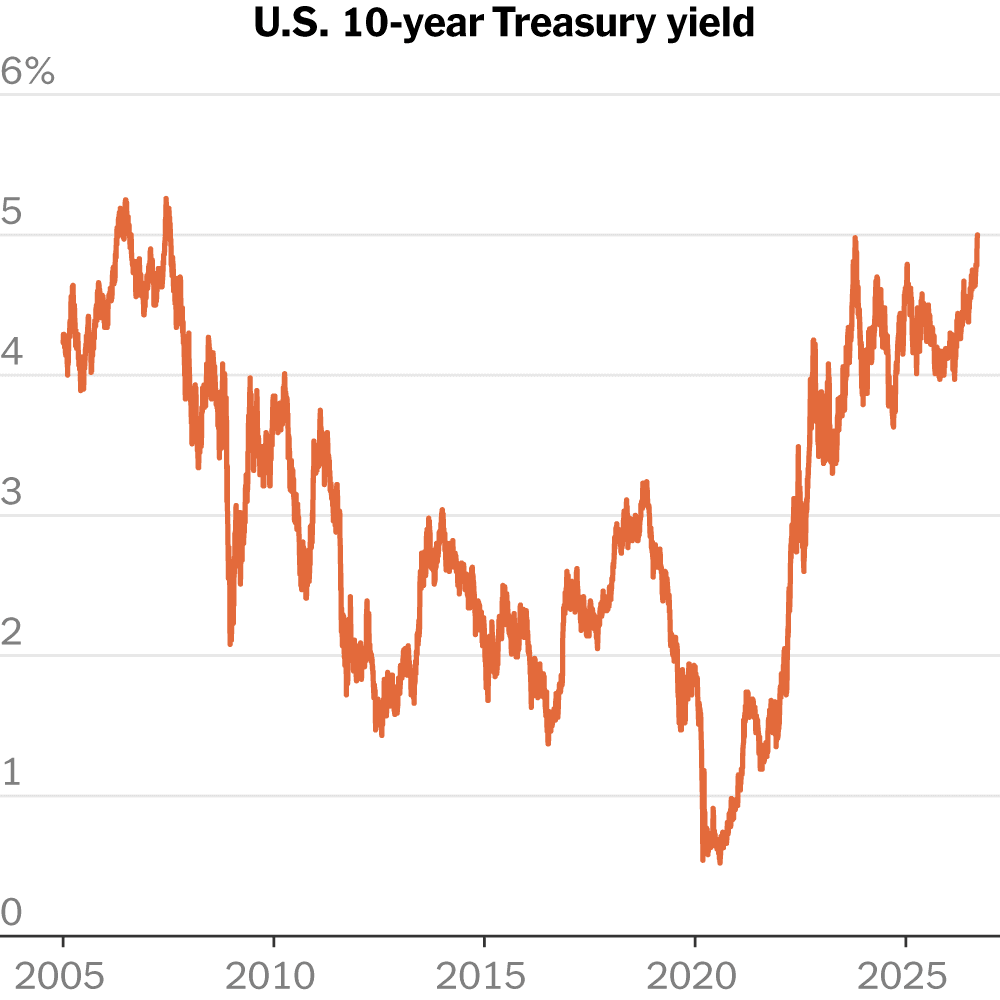
- On September 14, 2026, the U.S. 10-year Treasury yield briefly reached 5 percent, the highest level in three years.
- Investor concerns over Middle East conflict, inflation, and government spending drove the yield increase.
- Mortgage rates immediately reacted, with the 30-year fixed average climbing to 6.76 percent.
The context you actually need
- Middle East tensions have escalated, particularly involving Iran, pushing oil prices above $100 per barrel and raising inflation fears.
- U.S. fiscal policies, including proposed payments to Americans, have led to increased government borrowing, further pressuring yields.
- The Trump administration's bond buyback efforts failed to stabilize the market, reflecting investor skepticism about government interventions.
What's really happening
On September 14, 2026, the U.S. 10-year Treasury yield surged past the 5 percent mark, closing near 4.98 percent. This spike marks the highest yield since October 2023 and the first time it has crossed this threshold since 2007. The rise in yields is primarily attributed to a confluence of geopolitical tensions, particularly in the Middle East, and domestic fiscal policies that have raised concerns among investors.
The ongoing conflict in the Middle East, especially involving Iran, has led to significant spikes in oil prices, which have now surpassed $100 per barrel. This situation has heightened inflation fears, as rising oil prices directly impact transportation and production costs across various sectors. As inflation expectations rise, investors demand higher yields on government bonds to compensate for the anticipated decrease in purchasing power.
Additionally, the U.S. government has been engaging in substantial fiscal expansion, including proposed payments of $5,000 to Americans that are contingent on midterm election outcomes. This kind of spending increases the national deficit and raises concerns about the sustainability of U.S. fiscal policy, prompting investors to seek higher returns on bonds.
The Trump administration's attempts to stabilize the bond market through aggressive Treasury bond buybacks, totaling billions of dollars, have not yielded the desired effect. Investors have largely rejected these interventions, indicating a lack of confidence in the government's ability to manage economic pressures effectively. As a result, the market has continued to react negatively, leading to higher borrowing costs for consumers and businesses alike.
The immediate aftermath of the yield spike saw mortgage rates climb to 6.76 percent, significantly increasing consumer borrowing costs. Equity futures also declined as investors braced for further yield pressures ahead of Federal Reserve decisions. Internationally, sovereign yields showed mixed responses, with some European benchmarks rising in tandem with U.S. yields, indicating a broader trend of increasing borrowing costs globally.
Who feels it first (and how)
- Homebuyers: Higher mortgage rates will increase monthly payments, affecting affordability.
- Corporations: Increased borrowing costs for corporate debt may lead to reduced investment and expansion plans.
- Investors: Those holding bonds may see decreased values as yields rise, impacting portfolios.
- Consumers: Higher costs of borrowing will affect personal loans and credit card rates.
What to watch next
- Federal Reserve decisions: Watch for any signals regarding interest rate adjustments, as they will influence future borrowing costs.
- Oil price trends: Continued fluctuations in oil prices will impact inflation and, consequently, Treasury yields.
- Geopolitical developments: Any escalation or resolution in the Middle East conflict could significantly affect market stability and investor sentiment.
The U.S. 10-year Treasury yield has reached 5 percent, impacting borrowing costs.
Mortgage rates will continue to rise as yields remain elevated.
The long-term effects of government interventions on market stability and investor confidence.
Frequently Asked Questions
- Why it matters?
- The U.S. 10-year Treasury yield is a critical benchmark that influences global borrowing costs and economic stability.
- What happened (in 30 seconds)?
- On September 14, 2026, the U.S. 10-year Treasury yield briefly reached 5 percent, the highest level in three years. Investor concerns over Middle East conflict, inflation, and government spending drove the yield increase. Mortgage rates immediately reacted, with the 30-year fixed average climbing to 6.76 percent.
- What's really happening?
- On September 14, 2026, the U.S. 10-year Treasury yield surged past the 5 percent mark, closing near 4.98 percent. This spike marks the highest yield since October 2023 and the first time it has crossed this threshold since 2007. The rise in yields is primarily attributed to a confluence of geopolitical tensions, particularly in the Middle East, and domestic fiscal policies that have raised concerns among investors. The ongoing conflict in the Middle East, especially involving Iran, has led to s
- Who feels it first (and how)?
- Homebuyers: Higher mortgage rates will increase monthly payments, affecting affordability. Corporations: Increased borrowing costs for corporate debt may lead to reduced investment and expansion plans. Investors: Those holding bonds may see decreased values as yields rise, impacting portfolios. Consumers: Higher costs of borrowing will affect personal loans and credit card rates.
- What to watch next?
- Federal Reserve decisions: Watch for any signals regarding interest rate adjustments, as they will influence future borrowing costs. Oil price trends: Continued fluctuations in oil prices will impact inflation and, consequently, Treasury yields. Geopolitical developments: Any escalation or resolution in the Middle East conflict could significantly affect market stability and investor sentiment.
Capitol Hill news, legislation, and policy insight.
"The Hill specializes in U.S. politics and policy, with a focus on Capitol Hill developments and a reputation for insider reporting."
— A47 Editor
Benchmark bond yield reaches highest level in nearly 20 years
The yield on the 10-year U.S. Treasury bond surged to 5.041 percent, marking its highest level since before the 2008 financial crisis, with the note closing above 5 percent. This increase signals potential higher borrowing costs for millions of Ameri...
Markets desk coverage, trading insights, and investor updates.
"WSJ’s markets reporting provides in-depth analysis and context for investors."
— A47 Editor
What Comes Next, Now that the 10-Year Treasury Yield Has Crossed 5%?
The 10-Year Treasury yield has crossed the 5% threshold, marking a significant moment in the financial markets that could indicate a shift towards a new era of higher interest rates. This development follows a prolonged period of low yields post-fina...
Global business headlines with AI angles.
"General business outlet that frequently covers AI."
— A47 Editor
Treasury Yields Hit The Highest Level In Almost 20 Years And Oil Kept Climbing. Stocks Fell Again.
The benchmark 10-year Treasury yield rose to its highest level since 2007, reflecting ongoing sell-offs in government debt just before the Federal Reserve's upcoming policy decision. This surge in yields coincides with rising oil prices and a decline...
Markets, economy, and company analysis from NYT’s business desk.
"The New York Times is a globally recognized newspaper offering authoritative reporting with a center-left editorial stance."
— A47 Editor
Key U.S. Borrowing Rate Rises to Highest Level Since 2007
The 10-year Treasury yield in the U.S. has risen to levels not seen since 2007, driven by concerns over energy-induced inflation that are unsettling bond investors. This spike reflects a broader trend of increasing borrowing costs and market volatili...
Corporate news, economic trends, and markets with UK and global scope.
"BBC News is widely regarded as reputable and impartial, with a public service mandate."
— A47 Editor
US borrowing costs hit highest level since 2007
The effective interest rate on US government bonds, specifically the 10-year Treasury yield, has reached a peak of 5.04%, marking the highest level since 2007, before slightly easing back. This increase reflects growing concerns over inflation and ri...
Markets desk coverage, trading insights, and investor updates.
"WSJ’s markets reporting provides in-depth analysis and context for investors."
— A47 Editor
Global Bond Selloff Deepens as 10-Year Yields Hit Multiyear Highs
The 10-year U.S. Treasury yield has reached its highest level since 2007, intensifying a global bond selloff as investors brace for the U.S. Federal Reserve's upcoming interest rate decision. This surge in yields reflects growing concerns about econo...
Economic trends, financial markets, corporate news, and policy from a Russian perspective.
"RT is widely criticized for promoting pro-Kremlin narratives and is considered by many to be a state propaganda outlet."
— A47 Editor
US Treasury yield highest since 2007 ahead of Fed’s interest-rate decision
The US Treasury yield has surged to 5.04%, marking its highest level since 2007, which is expected to increase borrowing costs for households, businesses, and governments globally. This rise in yields comes as the Federal Reserve prepares for its upc...
Global markets, investing, and macroeconomics from a premier financial newsroom.
"Bloomberg is respected for in-depth financial reporting and data-driven analysis."
— A47 Editor
US 10-Year Yield Rises to Highest Since 2007 as Fed Looms
The 10-year US Treasury yield has surged to its highest level since 2007, reaching 5.04%, amid a global bond selloff driven by rising capital investments and soaring energy prices that are intensifying inflationary pressures.
Markets, economy, and company analysis from NYT’s business desk.
"The New York Times is a globally recognized newspaper offering authoritative reporting with a center-left editorial stance."
— A47 Editor
10-Year Treasury Yield Touches 5%, Highest Level in Years
The 10-Year Treasury yield has reached 5%, a level not seen since the global financial crisis, indicating a significant shift in the bond market as investors have rejected attempts by the Trump administration to influence rates.
Global business headlines with AI angles.
"General business outlet that frequently covers AI."
— A47 Editor
The Benchmark U.S. Treasury Yield Topped 5% For The First Time In Years. Odds Of a Rate Hike Climbed Further.
The benchmark U.S. Treasury yield has surpassed 5% for the first time in years, with the 10-year yield approaching 5.2%, a level not seen since July 2007, prior to the global financial crisis. This increase indicates rising interest rates amid ongoin...
Global markets, investing, and macroeconomics from a premier financial newsroom.
"Bloomberg is respected for in-depth financial reporting and data-driven analysis."
— A47 Editor
US 10-Year Breaches 5% as Inflation, Supply Worries Mount
The US 10-year Treasury yield has surpassed 5% for the first time since 2023, driven by increasing inflation concerns and heightened government and corporate borrowing needs. This surge reflects a significant shift in market dynamics, as investors re...
Global markets, investing, and macroeconomics from a premier financial newsroom.
"Bloomberg is respected for in-depth financial reporting and data-driven analysis."
— A47 Editor
A 5% Treasury Yield Is Raising New Risks for Markets, Economy
A significant selloff in Treasury bonds has pushed key yields to nearly 5%, raising concerns across Wall Street and Washington regarding the implications of higher borrowing costs on the U.S. economy. This development signals a growing unease about t...