
Gold Prices Drop After US Federal Reserve Raises Interest Rates
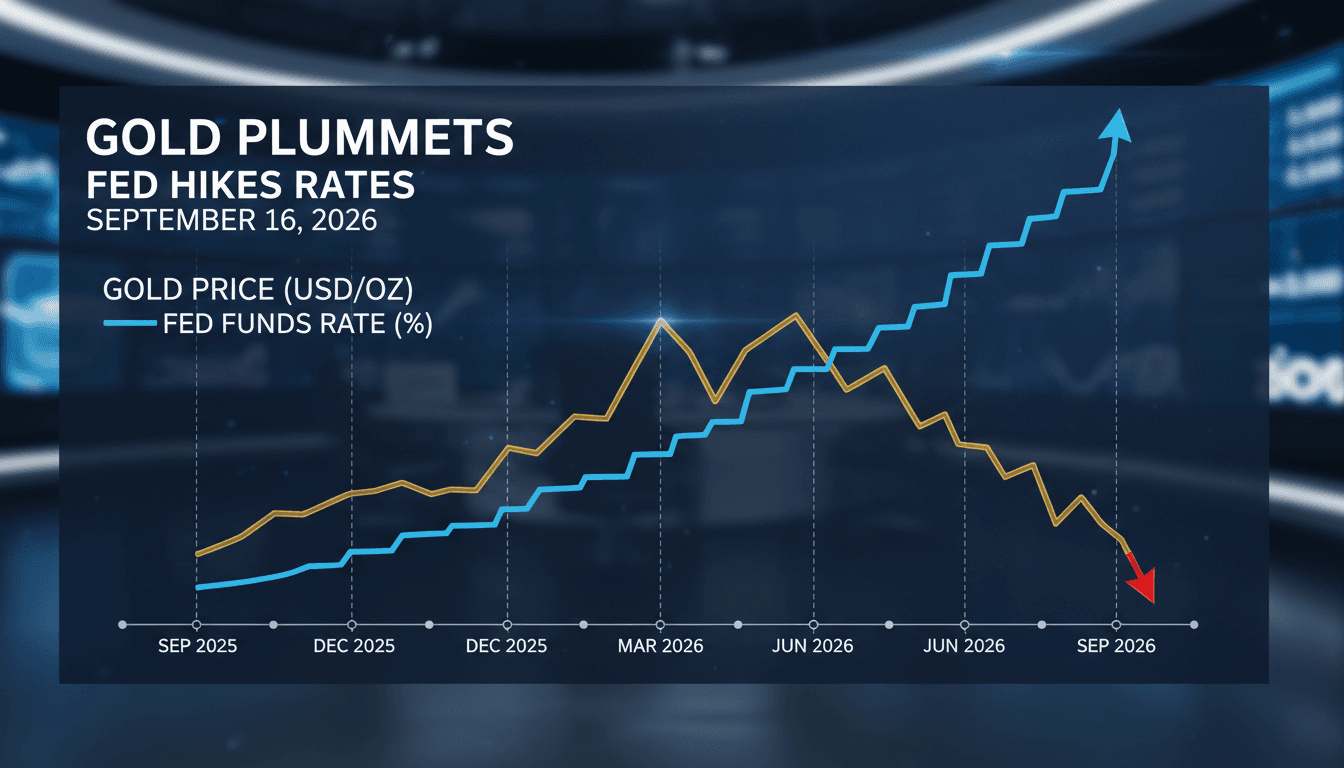
Why it matters
The Federal Reserve's decision to raise interest rates directly influences global commodity markets, including gold, affecting investment strategies and asset allocations.
What happened (in 30 seconds)
- Gold prices fell sharply on September 16, 2026, after the Fed raised interest rates by 25 basis points to a target range of 3.75%–4.00%.
- Spot gold declined approximately 0.78% to around 4260.76 USD per ounce, reflecting increased opportunity costs for holding non-yielding assets.
- Market reactions included a stronger US dollar and higher Treasury yields, which pressured bullion prices downward.
The context you actually need
- Inflation concerns had been mounting, prompting market expectations for a rate hike, which ultimately materialized on September 16.
- Gold traditionally serves as a hedge against inflation, but rising interest rates shift investor focus toward interest-bearing assets, diminishing gold's appeal.
- Volatility in gold prices had been evident in the lead-up to the announcement, driven by fluctuating inflation data and Fed tightening expectations.
What's really happening
On September 16, 2026, the Federal Open Market Committee (FOMC) unanimously decided to increase the federal funds target range by 25 basis points, marking the first rate hike since 2023. This decision was made in response to persistent inflation and economic uncertainties, signaling a potential for further tightening by year-end. The immediate aftermath saw spot gold prices drop approximately 0.78%, reflecting the market's reaction to the hawkish policy signal.
The increase in interest rates raises the opportunity cost of holding gold, a non-yielding asset. As interest rates rise, investors tend to shift their capital toward assets that offer yields, such as bonds or savings accounts, which can provide returns. This shift creates downward pressure on gold prices, as demand for the metal decreases in favor of interest-bearing investments.
Additionally, the stronger US dollar, which often accompanies higher interest rates, further exacerbates the decline in gold prices. A stronger dollar makes gold more expensive for foreign investors, reducing demand and leading to lower prices. The market's initial reaction was characterized by volatility, with gold prices experiencing a partial rebound on September 17, as traders digested the implications of the Fed's decision and oil prices eased.
The broader implications of this rate hike extend beyond gold. The Fed's actions influence global financial markets, affecting everything from equities to commodities. Investors must navigate these shifts carefully, as the interplay between interest rates, inflation, and currency strength can create complex market dynamics.
Who feels it first (and how)
- Gold traders and investors: Immediate impact on trading strategies and asset valuations.
- Commodity markets: Adjustments in pricing and demand forecasts for gold and other precious metals.
- Retail consumers: Changes in gold jewelry prices and investment opportunities in gold-related products.
- Financial institutions: Adjustments in portfolio allocations and risk assessments based on changing interest rates.
What to watch next
- Future Fed announcements: Upcoming meetings and statements from the Fed will provide insight into potential further rate hikes and their implications for gold prices.
- Inflation data releases: Monitoring inflation trends will be crucial, as persistent inflation could lead to additional tightening measures from the Fed.
- Global economic indicators: Economic performance in major markets will influence investor sentiment and asset allocation strategies.
Gold prices declined immediately following the Fed's rate hike announcement.
Continued volatility in gold prices as markets react to economic data and Fed communications.
The long-term trajectory of gold prices in relation to sustained interest rate increases and inflation trends.
Frequently Asked Questions
- Why it matters?
- The Federal Reserve's decision to raise interest rates directly influences global commodity markets, including gold, affecting investment strategies and asset allocations.
- What happened (in 30 seconds)?
- Gold prices fell sharply on September 16, 2026, after the Fed raised interest rates by 25 basis points to a target range of 3.75%–4.00%. Spot gold declined approximately 0.78% to around 4260.76 USD per ounce, reflecting increased opportunity costs for holding non-yielding assets. Market reactions included a stronger US dollar and higher Treasury yields, which pressured bullion prices downward.
- What's really happening?
- On September 16, 2026, the Federal Open Market Committee (FOMC) unanimously decided to increase the federal funds target range by 25 basis points, marking the first rate hike since 2023. This decision was made in response to persistent inflation and economic uncertainties, signaling a potential for further tightening by year-end. The immediate aftermath saw spot gold prices drop approximately 0.78%, reflecting the market's reaction to the hawkish policy signal. The increase in interest rates ra
- Who feels it first (and how)?
- Gold traders and investors: Immediate impact on trading strategies and asset valuations. Commodity markets: Adjustments in pricing and demand forecasts for gold and other precious metals. Retail consumers: Changes in gold jewelry prices and investment opportunities in gold-related products. Financial institutions: Adjustments in portfolio allocations and risk assessments based on changing interest rates.
- What to watch next?
- Future Fed announcements: Upcoming meetings and statements from the Fed will provide insight into potential further rate hikes and their implications for gold prices. Inflation data releases: Monitoring inflation trends will be crucial, as persistent inflation could lead to additional tightening measures from the Fed. Global economic indicators: Economic performance in major markets will influence investor sentiment and asset allocation strategies.
Arabic-language coverage of international news and geopolitics.
"RT Arabic is a Russian state-funded outlet often criticized for promoting Kremlin-aligned narratives."
— A47 Editor
أسعار الذهب تتراجع عقب قرار الفيدرالي الأمريكي
Gold prices experienced a sharp decline on Wednesday following the decision by the U.S. Federal Reserve regarding interest rates, which has put pressure on the precious metal due to the rising opportunity cost of holding it.
Arabic-language coverage of international news and geopolitics.
"RT Arabic is a Russian state-funded outlet often criticized for promoting Kremlin-aligned narratives."
— A47 Editor
الدولار يرتفع بعد قرار الفيدرالي الأمريكي رفع أسعار الفائدة
The dollar rose on Wednesday following the announcement by the U.S. Federal Reserve to raise interest rates, a measure aimed at combating persistent inflation amid uncertainty regarding economic prospects.
Sports reporting with a focus on Saudi and regional competitions.
"Okaz sports coverage is broad and audience-friendly, with strong attention to Saudi teams and leagues."
— A47 Editor
الذهب يرتفع 0.8% مع ترقب قرار الفائدة الأمريكية
Gold prices rose by 0.8% in trading on Wednesday, reaching $4,328.39 per ounce, as investors await the U.S. Federal Reserve's decision on interest rates, with strong expectations for a hike. Meanwhile, December futures for gold fell by 0.9% to $4,369...