
German Consumer Confidence Index Hits Record Low Amid Rising Energy Costs
Why it matters
The decline in German consumer confidence reflects broader economic vulnerabilities that could influence global markets and energy prices.
What happened (in 30 seconds)
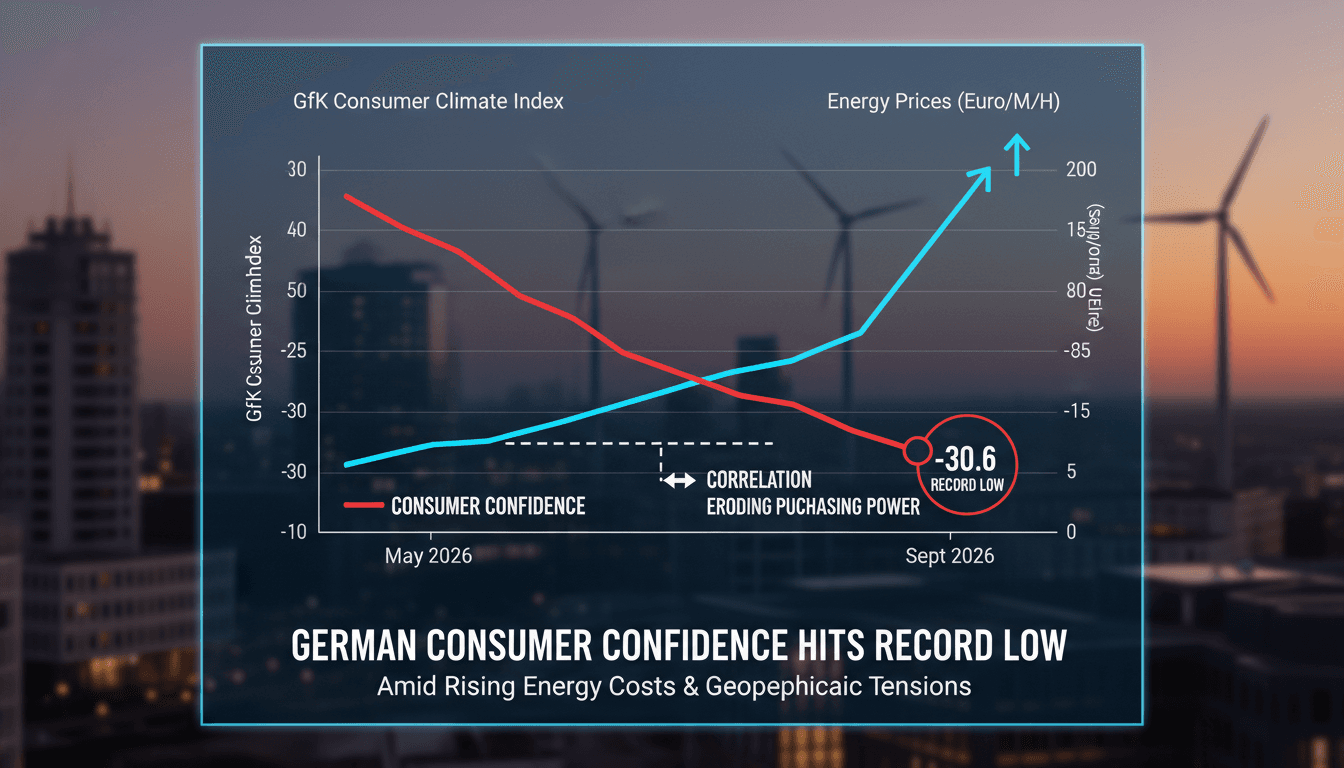
- Consumer sentiment plummeted: The GfK consumer-climate index fell to minus 30.6 for October 2026, the lowest since May 2026.
- Energy costs are a key driver: Rising energy prices, exacerbated by Middle East tensions, are eroding purchasing power and income expectations.
- Increased savings behavior: Households are showing a heightened willingness to save, reminiscent of trends seen during the 2008 financial crisis.
The context you actually need
- Middle East tensions: Renewed U.S. strikes on Iran earlier in September 2026 have caused oil prices to spike, impacting energy costs across Europe.
- ECB implications: Higher energy prices are influencing European Central Bank decisions regarding interest rates, which could have ripple effects throughout the eurozone.
- Consumer resilience waning: Despite previous resilience, German households are now feeling the strain of elevated energy costs, leading to a significant drop in consumer sentiment.
What's really happening
The recent decline in the German consumer-climate index to minus 30.6 is a stark indicator of the economic pressures facing households. This drop, sharper than anticipated, signals a shift in consumer sentiment that could have far-reaching implications. The primary driver of this decline is the surge in energy prices, which has been linked to escalating tensions in the Middle East, particularly following renewed U.S. military actions in Iran. As oil prices rise, so too do the costs of energy across Europe, leading to a direct impact on household budgets.
German consumers, who had previously shown some resilience in the face of economic challenges, are now grappling with a significant erosion of purchasing power. The GfK survey indicates that personal income expectations have fallen to their lowest levels since April 2026, reflecting a growing concern among households about their financial stability. This sentiment is further compounded by a broader economic context where inflationary pressures are mounting, and the European Central Bank is faced with difficult decisions regarding interest rates.
The willingness to save among German households has surged, reaching levels not seen since the 2008 financial crisis. This shift indicates a cautious approach to spending, as consumers prioritize financial security over discretionary purchases. The decline in consumer confidence is particularly concerning given that it comes despite improvements in business sentiment indicators, such as the Ifo index, which suggests that while businesses may be optimistic, consumers are feeling the pinch.
As energy prices continue to rise, the implications for consumer behavior are profound. Households are likely to cut back on spending, which could lead to a slowdown in economic growth. This trend is not isolated to Germany; it has the potential to influence consumer sentiment across the eurozone and beyond, as interconnected markets respond to shifts in purchasing power and economic outlook.
Who feels it first (and how)
- German households: Directly impacted by rising energy costs, leading to reduced spending and increased savings.
- Retail sector: Likely to see a decline in consumer spending, affecting sales and profitability.
- Investors: Those with stakes in energy markets or European economies may experience volatility as consumer confidence wanes.
- Expatriates in Dubai: Indirectly affected through potential shifts in global energy prices and investment sentiment.
What to watch next
- Energy price trends: Monitoring oil prices will be crucial, as further increases could exacerbate consumer sentiment issues.
- ECB interest rate decisions: Any changes in interest rates in response to inflationary pressures will impact borrowing costs and consumer spending.
- Consumer spending reports: Upcoming data on retail sales and consumer spending will provide insights into how households are adjusting their behavior in response to economic pressures.
Rising energy costs are eroding consumer confidence in Germany.
Consumer spending will decline, impacting economic growth in Germany and potentially across Europe.
The long-term effects on global markets and energy prices remain uncertain as geopolitical tensions evolve.
Frequently Asked Questions
- Why it matters?
- The decline in German consumer confidence reflects broader economic vulnerabilities that could influence global markets and energy prices.
- What happened (in 30 seconds)?
- Consumer sentiment plummeted: The GfK consumer-climate index fell to minus 30.6 for October 2026, the lowest since May 2026. Energy costs are a key driver: Rising energy prices, exacerbated by Middle East tensions, are eroding purchasing power and income expectations. Increased savings behavior: Households are showing a heightened willingness to save, reminiscent of trends seen during the 2008 financial crisis.
- What's really happening?
- The recent decline in the German consumer-climate index to minus 30.6 is a stark indicator of the economic pressures facing households. This drop, sharper than anticipated, signals a shift in consumer sentiment that could have far-reaching implications. The primary driver of this decline is the surge in energy prices, which has been linked to escalating tensions in the Middle East, particularly following renewed U.S. military actions in Iran. As oil prices rise, so too do the costs of energy acr
- Who feels it first (and how)?
- German households: Directly impacted by rising energy costs, leading to reduced spending and increased savings. Retail sector: Likely to see a decline in consumer spending, affecting sales and profitability. Investors: Those with stakes in energy markets or European economies may experience volatility as consumer confidence wanes. Expatriates in Dubai: Indirectly affected through potential shifts in global energy prices and investment sentiment.
- What to watch next?
- Energy price trends: Monitoring oil prices will be crucial, as further increases could exacerbate consumer sentiment issues. ECB interest rate decisions: Any changes in interest rates in response to inflationary pressures will impact borrowing costs and consumer spending. Consumer spending reports: Upcoming data on retail sales and consumer spending will provide insights into how households are adjusting their behavior in response to economic pressures.
Global political, business, and cultural coverage from WSJ international desks.
"The Wall Street Journal offers extensive international reporting with a reputation for financial insight and a center-right editorial stance."
— A47 Editor
German Consumer Confidence Falls to Lowest Since May on Energy Costs
Consumer confidence in Germany has sharply declined to its lowest level since May, primarily due to rising energy prices amid escalating tensions in the Middle East. This unexpected drop signals growing economic concerns among consumers.
Social/economic commentary and analysis relevant to business and markets.
"WSJ blends data-driven economic insight with commentary on policy and society."
— A47 Editor
German Consumer Confidence Falls to Lowest Since May on Energy Costs
Consumer confidence in Germany has sharply declined to its lowest level since May, primarily due to rising energy prices exacerbated by escalating tensions in the Middle East. This unexpected drop reflects growing concerns among consumers regarding t...
Key macro releases (CPI, jobs, PMIs), surprise indexes, and market implications.
"Great for data-print awareness and instant read-through to rates and risk assets."
— A47 Editor
German consumer sentiment drops more than expected as energy costs hit incomes
German consumer sentiment has dropped more than expected as rising energy costs significantly impact household incomes, reflecting a negative outlook among consumers. This decline indicates growing concerns about economic stability in Germany.