
IMF Warns of Global Economic Spillovers from Saudi Attacks
Why it matters
The stability of global energy markets hinges on Saudi Arabia's economic health and geopolitical security.
What happened (in 30 seconds)
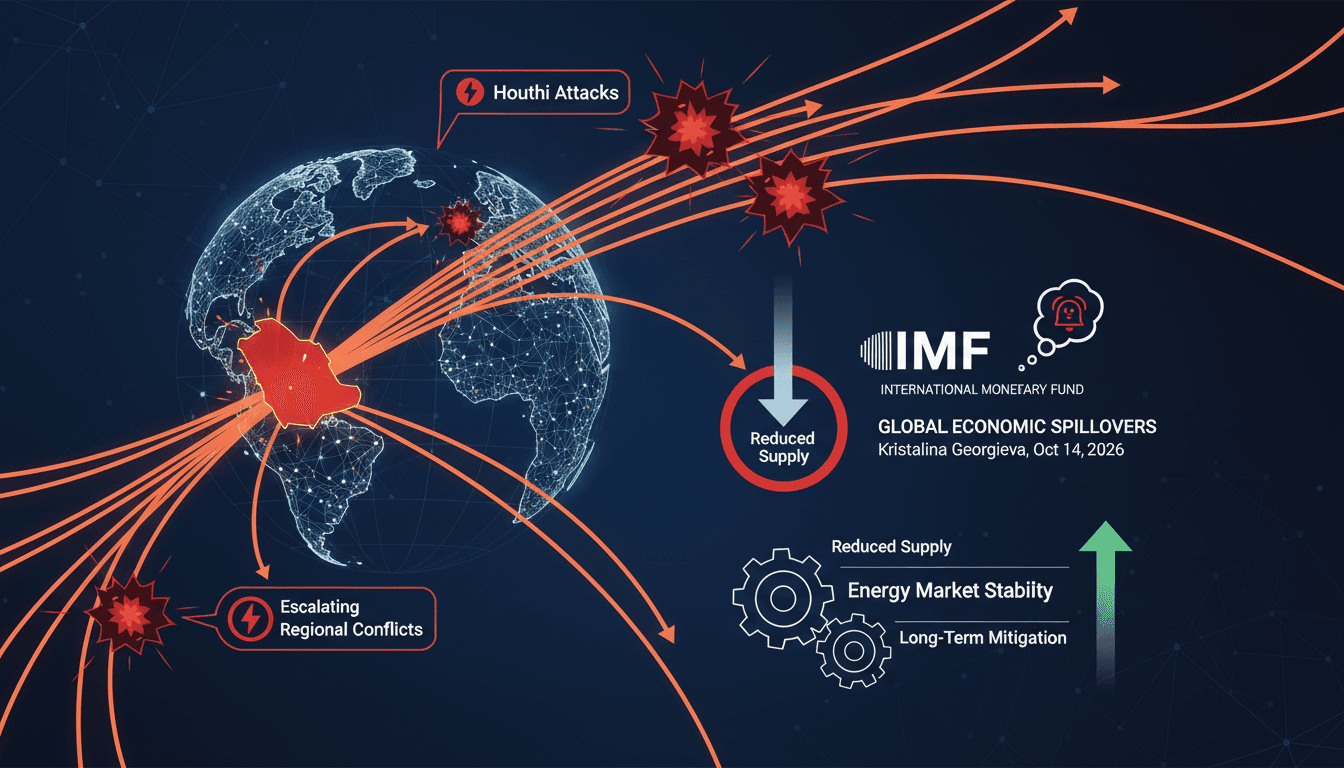
- IMF Managing Director Kristalina Georgieva warned that recent attacks on Saudi Arabia could have negative spillover effects globally.
- Houthi forces have intensified missile and drone strikes on Saudi targets, including critical energy infrastructure.
- Saudi Arabia's economic growth forecast for 2026 was revised down to -3.3%, reflecting immediate impacts from the conflict.
The context you actually need
- Escalating conflict: The situation escalated in early October 2026, with attacks on Riyadh's international airport causing fatalities and operational disruptions.
- Energy market significance: Saudi Arabia plays a crucial role in global energy markets, and any instability can lead to price volatility and supply chain issues.
- IMF's economic outlook: The IMF's October 2026 World Economic Outlook highlighted the kingdom's economic resilience but acknowledged immediate challenges due to the ongoing conflict.
What's really happening
The recent missile and drone attacks on Saudi Arabia by Houthi forces have raised alarms about the potential for widespread economic repercussions. Kristalina Georgieva's remarks at the IMF-World Bank Annual Meetings in Bangkok underscore the interconnectedness of global economies, particularly in energy markets. Saudi Arabia, as a leading oil producer, is pivotal to the stability of energy prices worldwide. The IMF's downward revision of Saudi Arabia's growth forecast from a previously expected 1.7% to a contraction of 3.3% for 2026 reflects the immediate economic fallout from these attacks.
The conflict has not only disrupted operations at key facilities but has also heightened tensions in the region, particularly around the strategically vital Strait of Hormuz and the Red Sea. These waterways are critical for oil exports, and any disruption can lead to increased shipping costs and delays, impacting global supply chains. The IMF's assessment highlights that while Saudi Arabia has made strides in diversifying its economy and building resilience through structural reforms, the immediate impacts of the conflict are significant.
Georgieva's comments also point to the broader implications for global inflation and growth. As energy prices fluctuate due to instability in Saudi Arabia, countries reliant on oil imports, including those in the Gulf Cooperation Council (GCC), may face increased costs. This could lead to inflationary pressures that affect consumer spending and economic growth in various regions. The IMF's warning serves as a reminder that geopolitical tensions can have far-reaching consequences, affecting not just the countries directly involved but also economies worldwide.
Who feels it first (and how)
- Energy sector: Companies reliant on stable oil prices may see increased costs and volatility.
- Logistics and shipping: Disruptions in the Red Sea and Strait of Hormuz could delay shipments and raise transportation costs.
- Consumers: Rising energy prices may lead to higher costs for goods and services, impacting household budgets.
- Investors: Market volatility may affect investment strategies, particularly in energy and emerging markets.
What to watch next
- Energy prices: Monitor fluctuations in oil prices as they will indicate the immediate impact of the conflict on global markets.
- Saudi economic indicators: Keep an eye on economic data releases from Saudi Arabia, particularly regarding GDP growth and non-oil sector performance.
- Geopolitical developments: Watch for any changes in the conflict dynamics or international responses that could further impact regional stability.
The IMF has revised Saudi Arabia's growth forecast downward due to the conflict.
Increased energy prices and supply chain disruptions will affect global markets.
The long-term impact on Saudi Arabia's economic reforms and diversification efforts remains uncertain.
Frequently Asked Questions
- Why it matters?
- The stability of global energy markets hinges on Saudi Arabia's economic health and geopolitical security.
- What happened (in 30 seconds)?
- IMF Managing Director Kristalina Georgieva warned that recent attacks on Saudi Arabia could have negative spillover effects globally. Houthi forces have intensified missile and drone strikes on Saudi targets, including critical energy infrastructure. Saudi Arabia's economic growth forecast for 2026 was revised down to -3.3%, reflecting immediate impacts from the conflict.
- What's really happening?
- The recent missile and drone attacks on Saudi Arabia by Houthi forces have raised alarms about the potential for widespread economic repercussions. Kristalina Georgieva's remarks at the IMF-World Bank Annual Meetings in Bangkok underscore the interconnectedness of global economies, particularly in energy markets. Saudi Arabia, as a leading oil producer, is pivotal to the stability of energy prices worldwide. The IMF's downward revision of Saudi Arabia's growth forecast from a previously expected
- Who feels it first (and how)?
- Energy sector: Companies reliant on stable oil prices may see increased costs and volatility. Logistics and shipping: Disruptions in the Red Sea and Strait of Hormuz could delay shipments and raise transportation costs. Consumers: Rising energy prices may lead to higher costs for goods and services, impacting household budgets. Investors: Market volatility may affect investment strategies, particularly in energy and emerging markets.
- What to watch next?
- Energy prices: Monitor fluctuations in oil prices as they will indicate the immediate impact of the conflict on global markets. Saudi economic indicators: Keep an eye on economic data releases from Saudi Arabia, particularly regarding GDP growth and non-oil sector performance. Geopolitical developments: Watch for any changes in the conflict dynamics or international responses that could further impact regional stability.
English-language reporting on Saudi politics, policy, and society.
"Saudi Gazette reflects mainstream Saudi institutional perspectives."
— A47 Editor
IMF Chief: Attacks on Saudi Arabia could have ‘negative spillover everywhere’
IMF Managing Director Kristalina Georgieva stated that recent attacks on Saudi Arabia could lead to negative spillovers affecting the global economy. During the IMF-World Bank Annual Meetings in Bangkok, she acknowledged Saudi Arabia's resilience and...
English-language reporting focused on Saudi Arabia and regional affairs.
"Saudi Gazette provides English-language coverage that often aligns with mainstream Saudi news priorities."
— A47 Editor
IMF Chief: Attacks on Saudi Arabia could have ‘negative spillover everywhere’
IMF Managing Director Kristalina Georgieva stated that recent attacks on Saudi Arabia could lead to negative spillovers affecting the global economy. During the IMF-World Bank Annual Meetings in Bangkok, she acknowledged Saudi Arabia's resilience and...
English-language news from Qatar covering domestic and regional affairs.
"Gulf Times reflects Qatari perspectives on regional developments."
— A47 Editor
IMF chief says Saudi attacks could have negative spillover 'everywhere'
IMF Managing Director Kristalina Georgieva warned that recent attacks on Saudi Arabia could have negative spillover effects on the global economy, emphasizing the interconnectedness of geopolitical conflicts and economic stability.
Sports reporting with a focus on Saudi and regional competitions.
"Okaz sports coverage is broad and audience-friendly, with strong attention to Saudi teams and leagues."
— A47 Editor
صندوق النقد يحذر: الهجمات على السعودية تهدد الاقتصاد العالمي
Kristalina Georgieva, the Managing Director of the International Monetary Fund, warned that recent attacks on Saudi Arabia could have significant repercussions for the global economy, particularly due to rising energy costs and increasing geopolitica...