
PwC report reveals AI's dual impact on job market dynamics
Here's what it means for you.
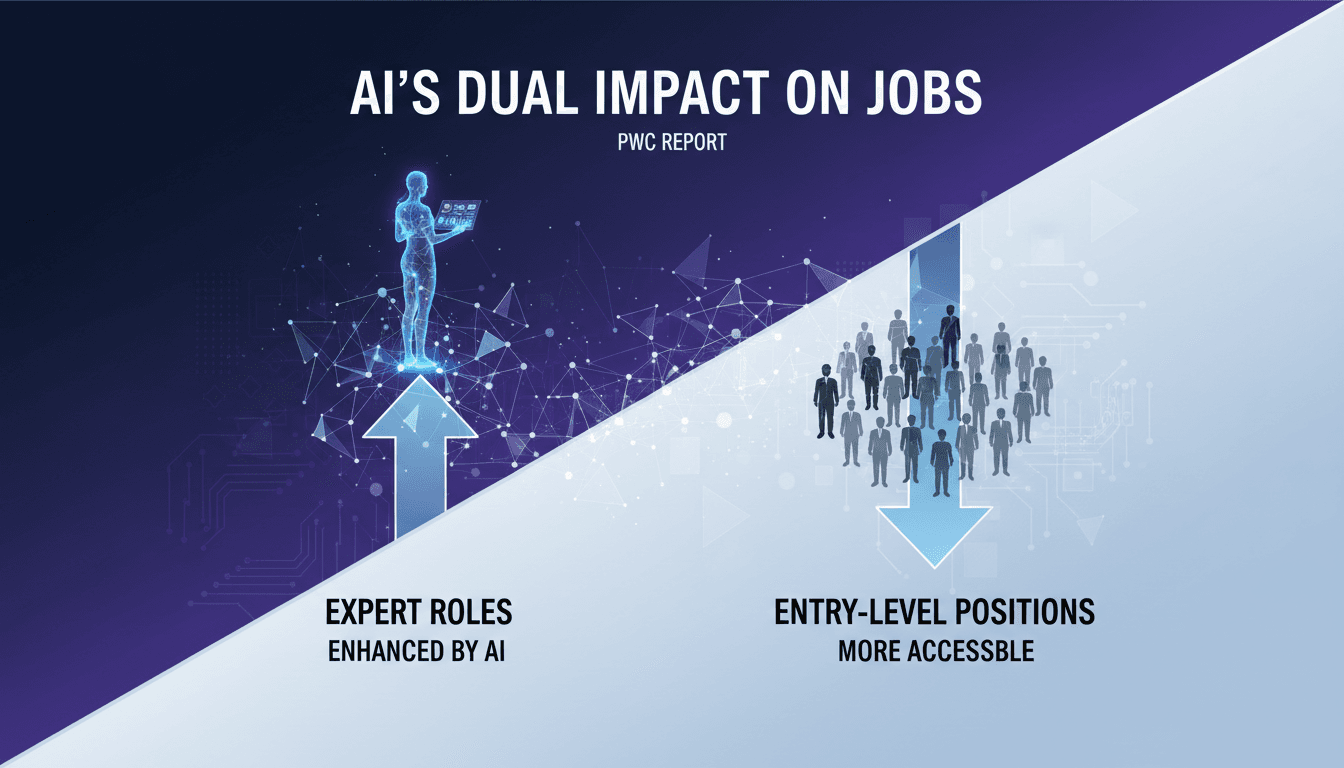
The recent PwC report highlights a transformative shift in the job market driven by artificial intelligence. As AI automates various tasks, it creates a bifurcated landscape where expert roles are enhanced while entry-level positions become more accessible. This evolution necessitates a reevaluation of educational and training programs to equip the workforce with the skills demanded by employers. The implications for job seekers are significant, as the demand for skilled workers is expected to rise. Those entering the job market will need to adapt to new expectations that prioritize advanced skills, even at entry-level positions.
What happened
PwC has released a comprehensive analysis detailing the impact of AI on the job market. The report indicates a "two-track" system where certain jobs are enhanced for experts while others become more accessible to non-experts. This analysis is based on data from over 1 billion jobs globally and 2.4 million entry-level roles in the United States.
The findings reveal a growing demand for entry-level workers equipped with advanced skills, as AI continues to automate parts of workflows. This shift is leading to wage growth in roles that are increasingly reliant on both technical and human skills.
The Context
The PwC report sheds light on the evolving dynamics of the job market, emphasizing the importance of adaptability in the workforce. As AI technologies become more integrated into various industries, employers are seeking candidates who possess a blend of technical expertise and interpersonal skills. This trend reflects a significant change in workforce expectations, particularly for entry-level positions.
The timing of this report is crucial, as it aligns with ongoing discussions about the future of work and the skills needed to thrive in an AI-driven economy. Stakeholders, including educators and policymakers, must consider these findings to ensure that training programs are aligned with the demands of the job market.
Takeaway
As AI continues to reshape the workforce, the demand for skilled workers is likely to increase. This trend suggests a necessary evolution in educational and training programs to meet the new workforce expectations. Monitoring changes in job training initiatives will be essential to align with the skills required in an AI-enhanced job market.
Additionally, observing wage growth trends for roles impacted by AI automation will provide insights into the economic implications of this shift. The ongoing integration of AI across industries indicates that adaptability and skill development will be critical for future job seekers.
National coverage of politics and current events across Canada.
"Global News is a mainstream Canadian outlet with a centrist editorial stance, focusing on factual reporting."
— A47 Editor
AI is creating a ‘two-track’ job market, report says. What it means for you
A new report by PwC indicates that artificial intelligence (AI) is creating a 'two-track' job market, where AI serves as a 'force-multiplier' for experts while simplifying tasks for non-experts. This dual impact suggests a significant shift in employ...
Consumer tech news, reviews, and buying guides for gadgets and electronics.
"TechRadar is known for comprehensive buying advice, hardware reviews, and consumer tech news targeted at mainstream audiences."
— A47 Editor
AI is rapidly reshaping the skills employers want most from workers — and shockingly enough, so-called 'human' skills might be more in demand
A recent PwC report indicates that jobs where artificial intelligence (AI) automates parts of the workflow are experiencing significant growth, including wage increases, challenging the notion that AI will solely replace human workers.
Business and tech news excluding paywalled content.
"High-volume business/tech outlet with frequent AI coverage."
— A47 Editor
Employers want entry-level workers with senior-level skills in the age of AI, a huge PwC analysis found
A recent analysis by PwC examined over 1 billion jobs globally, revealing a significant demand for entry-level workers possessing senior-level skills, particularly in the context of artificial intelligence (AI). This trend highlights the evolving exp...