
Bank of Japan raises interest rates to 1% amid inflation concerns
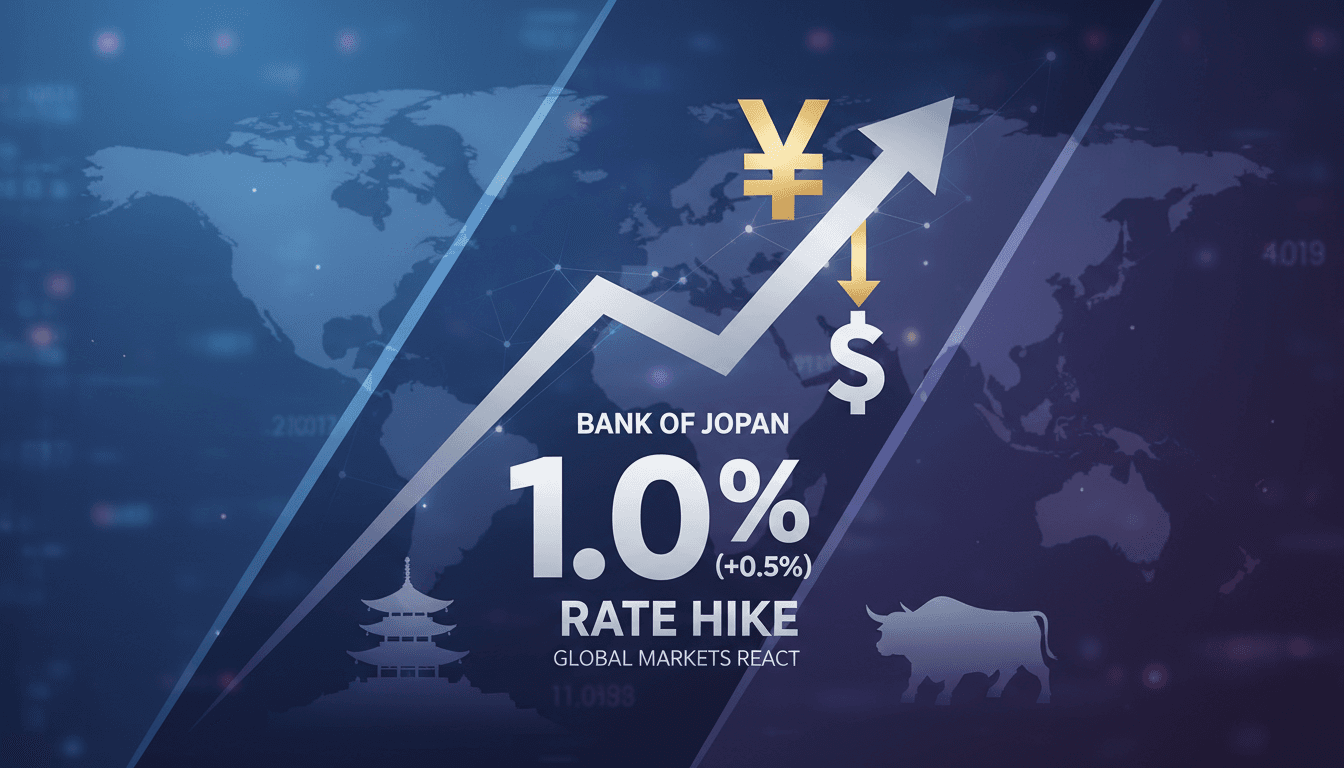
Here's what it means for you.
The Bank of Japan's decision to raise interest rates to 1% signals a significant shift in its monetary policy, aimed at combating rising inflation. This move may influence market dynamics as investors reassess their strategies in response to changing economic conditions. As central banks globally prepare for upcoming meetings, the implications of this rate hike could extend beyond Japan, affecting international monetary policies and currency valuations.
What happened
The Bank of Japan (BOJ) has raised its benchmark interest rate to 1%, marking the highest level since 1995. This decision was made in response to increasing inflationary pressures and has led to the yen paring gains against the dollar, which is currently near 10-day lows. The market's reaction is also influenced by a preliminary peace deal between the U.S. and Iran, adding another layer of complexity to the economic landscape.
The yen is trading around 160.23 per U.S. dollar, raising concerns about potential market interventions. The dollar index has seen a 2% increase since the onset of the conflict in February, reflecting broader market sentiments. The BOJ's rate hike was decided by a 7-1 vote, indicating some internal dissent within the bank.
The Context
This rate hike comes at a time when global markets are reacting to geopolitical developments, particularly the U.S.-Iran peace deal aimed at extending a ceasefire and reopening the Strait of Hormuz. The BOJ's decision is crucial as it highlights the challenges faced by the Japanese economy amid rising inflation and uncertainties regarding supply chain normalization.
As central banks, including the Bank of England and the U.S. Federal Reserve, prepare for their own meetings, the BOJ's actions may prompt increased scrutiny of monetary policies worldwide. The interplay between these geopolitical events and monetary policy will be vital in shaping market expectations and currency valuations in the coming months.
Takeaway
Market participants will closely monitor comments from BOJ Deputy Governor Shinichi Uchida regarding future rate hikes, as well as reactions from other central banks. The upcoming meetings of the Bank of England and the U.S. Federal Reserve are expected to further influence market dynamics and investor sentiment.
As the global economic landscape evolves, the BOJ's decision may serve as a bellwether for other central banks grappling with similar inflationary pressures. The focus will remain on how these institutions communicate their monetary policy adjustments in light of ongoing geopolitical developments.
Macro commentary, policy analysis, growth/inflation themes, and global outlooks.
"Contextual macro coverage that complements day-to-day market headlines."
— A47 Editor
Dollar slips as markets wait on Warsh’s Fed debut
Business, markets, economy, and corporate news with strong UAE and regional relevance.
"Emirates 24|7 business coverage tends to center UAE markets, property, regulation, and regional economic developments."
— A47 Editor
Dollar near 10-day lows, no respite for yen after BOJ hikes as expected Dollar near 10-day lows, no respite for yen after BOJ hikes as expected
The dollar remained near 10-day lows as a preliminary agreement to end the Iran war was signed, boosting risk appetite, while the yen hovered around the critical 160 level following the Bank of Japan's anticipated interest rate hike.
Global markets, investing, and macroeconomics from a premier financial newsroom.
"Bloomberg is respected for in-depth financial reporting and data-driven analysis."
— A47 Editor
Yen Pares Gains Versus Dollar After BOJ Hikes Key Rate to 1%
The Bank of Japan (BOJ) has raised its benchmark interest rate to 1%, the highest level since 1995, in response to persistent inflationary pressures. This decision, which was widely anticipated, led to the yen paring its earlier gains against the dol...