
IMF Maintains 2026 Global Growth Forecast Amid Middle East Conflicts
Here's what it means for you.
The International Monetary Fund's decision to maintain its 2026 global growth forecast signals a complex interplay between technological advancements and geopolitical tensions. For professionals and policymakers, this highlights the importance of monitoring both artificial intelligence developments and regional conflicts. The stability attributed to AI may provide opportunities for growth, but the risks from ongoing Middle Eastern conflicts cannot be overlooked. As markets react to these dynamics, stakeholders should prepare for potential volatility. Understanding the balance between innovation and instability will be crucial for strategic planning in the coming years.
What happened
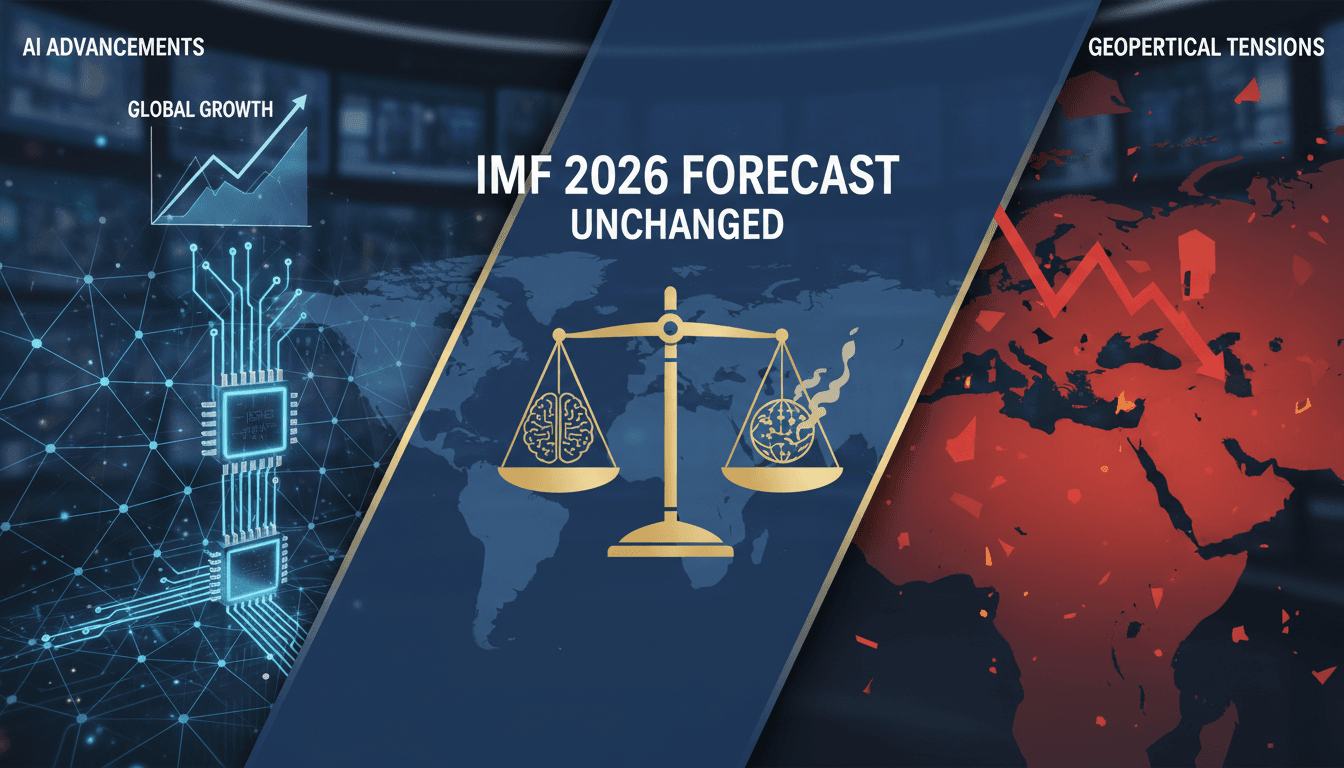
The International Monetary Fund (IMF) has kept its global growth forecast for 2026 unchanged, despite the backdrop of renewed conflicts in the Middle East. The organization attributes this stability to advancements in artificial intelligence, which are seen as a counterbalance to the negative impacts of geopolitical tensions. However, the IMF has expressed concerns regarding the risks posed by the ongoing fighting in the region.
Petya Koeva Brooks, deputy director at the IMF, emphasized the uncertainty surrounding the economic outlook. The IMF's latest report reflects a cautious stance, acknowledging that while AI may bolster growth, the geopolitical landscape remains fraught with challenges.
The Context
The IMF's decision comes at a time when renewed fighting in the Middle East has raised concerns about economic stability. The organization has previously cut its growth projections due to these geopolitical tensions, underscoring the significance of the region's conflicts on global markets. The interplay between technological advancements, particularly in artificial intelligence, and these tensions will be crucial for future economic forecasts.
As the IMF continues to assess the situation, the implications for global economic stability are profound. Stakeholders must remain vigilant as developments in the Middle East could significantly impact the broader economic landscape.
Takeaway
Looking ahead, it is essential to monitor developments in the Middle East for their potential impacts on global markets. Observing trends in artificial intelligence will also be critical, as these advancements may influence economic resilience amid geopolitical uncertainties. The IMF's outlook suggests that the balance between technology and conflict will shape future economic forecasts.
As the situation evolves, stakeholders should prepare for potential shifts in economic stability and growth trajectories. Understanding these dynamics will be vital for informed decision-making in the coming years.
Global markets, investing, and macroeconomics from a premier financial newsroom.
"Bloomberg is respected for in-depth financial reporting and data-driven analysis."
— A47 Editor
IMF Says AI Offsets Middle East Fallout
The International Monetary Fund (IMF) has maintained its global growth forecast for the year, attributing this stability to the surge in artificial intelligence, which has mitigated the adverse effects of ongoing conflicts in the Middle East. Petya K...
Regional coverage and analysis focused on politics, diplomacy, and business across the Middle East.
"Al-Monitor is known for analytical reporting on Middle East politics and policy developments."
— A47 Editor
IMF cuts 2026 world growth forecast, flags risks from new Mideast fighting
The International Monetary Fund (IMF) has once again revised its global growth forecast for 2026 downward, now projecting a significant decline due to renewed fighting in the Middle East. Petya Koeva Brooks, deputy director at the IMF's research depa...
Technology business and AI-related headlines.
"Data-driven tech newsroom with global scope."
— A47 Editor
IMF Says AI Helps Offset War-Driven Slowdown But Sees Risks
The International Monetary Fund (IMF) has maintained its global growth forecast for this year, attributing the stability to the surge in artificial intelligence (AI) which has mitigated the economic impact of ongoing conflicts in the Middle East.
Technology business news, market impacts, and innovation trends.
"Bloomberg is a premier financial and tech news provider, respected for its in-depth reporting and analytical rigor."
— A47 Editor
IMF Says AI Helps Offset War-Driven Slowdown But Sees Risks
The International Monetary Fund (IMF) has maintained its global growth forecast for this year, attributing the stability to the surge in artificial intelligence (AI) which has mitigated the economic impact of ongoing conflicts in the Middle East.