
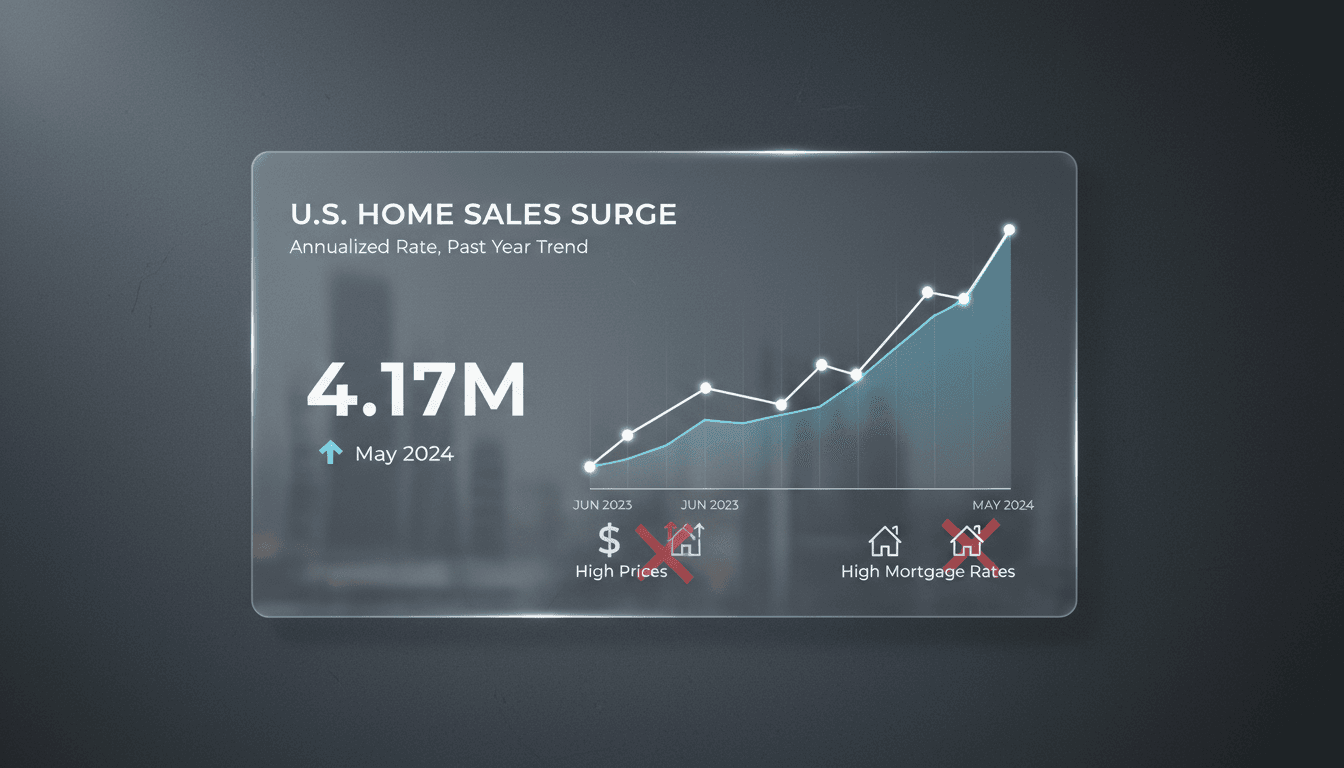
U.S. existing-home sales reach highest annualized rate of 4.17 million in May
Here's what it means for you.
The surge in existing-home sales to an annualized rate of 4.17 million in May signals a potential rebound in the housing market, despite ongoing challenges. This increase may indicate a shift in buyer confidence, which could influence future market dynamics. For professionals in real estate and finance, understanding these trends is crucial for strategic planning and investment decisions. The resilience of the housing market suggests that if economic conditions stabilize, we may see further growth in sales. Stakeholders should remain vigilant as they navigate the complexities of high mortgage rates and home prices.
What happened
In May, U.S. existing-home sales rose to an annualized rate of 4.17 million, marking the highest level recorded this year. This increase exceeded expectations, indicating a stronger housing market than previously anticipated. The rise in sales comes despite persistent challenges, including high mortgage rates and elevated home prices that continue to affect buyers.
This figure represents a significant rebound in the housing market, showcasing the potential for recovery. The current pace of sales is the fastest recorded in 2026, highlighting a notable shift in market activity.
The Context
The increase in existing-home sales is occurring against a backdrop of high mortgage rates and record home prices, which have historically posed challenges for buyers. The housing market's resilience suggests that many are still willing to engage in transactions despite these hurdles. This situation reflects a complex landscape where economic factors play a crucial role in shaping buyer behavior.
As the market evolves, stakeholders, including real estate agents and policymakers, must consider the implications of these trends. The timing of this surge is particularly relevant as it may influence future sales and pricing strategies in the coming months.
Takeaway
Looking ahead, it will be essential to monitor trends in mortgage rates and their impact on home sales. As the housing market navigates these challenges, shifts in home prices may also occur as demand fluctuates. The resilience shown in May's sales figures could lead to further increases if economic conditions stabilize.
Stakeholders should remain attentive to these developments, as they will play a significant role in shaping the housing market's trajectory in the near future.
Global business headlines with AI angles.
"General business outlet that frequently covers AI."
— A47 Editor
U.S. Existing Home Sales Hit 2026 High Despite Elevated Mortgage Rates
U.S. existing home sales have surged to their fastest pace of the year, reaching a high not seen since 2026, despite the challenges posed by elevated mortgage rates and record home prices. This increase reflects a resilient housing market as buyers c...
Global markets, investing, and macroeconomics from a premier financial newsroom.
"Bloomberg is respected for in-depth financial reporting and data-driven analysis."
— A47 Editor
US Existing-Home Sales Rise to Fastest Pace of the Year
Existing-home sales in the US surged to an annualized rate of 4.17 million in May, marking the fastest pace of the year, as reported by Mike McKee on Bloomberg. This increase reflects a robust demand in the housing market, driven by favorable conditi...
Key macro releases (CPI, jobs, PMIs), surprise indexes, and market implications.
"Great for data-print awareness and instant read-through to rates and risk assets."
— A47 Editor
US existing home sales increase more than expected in May
Existing home sales in the U.S. increased more than expected in May, reaching an annualized rate of 4.17 million, marking the fastest pace of the year. This surge reflects robust demand in the housing market, driven by favorable conditions for buyers...