
China's GDP growth hits 3.5-year low amid economic imbalances
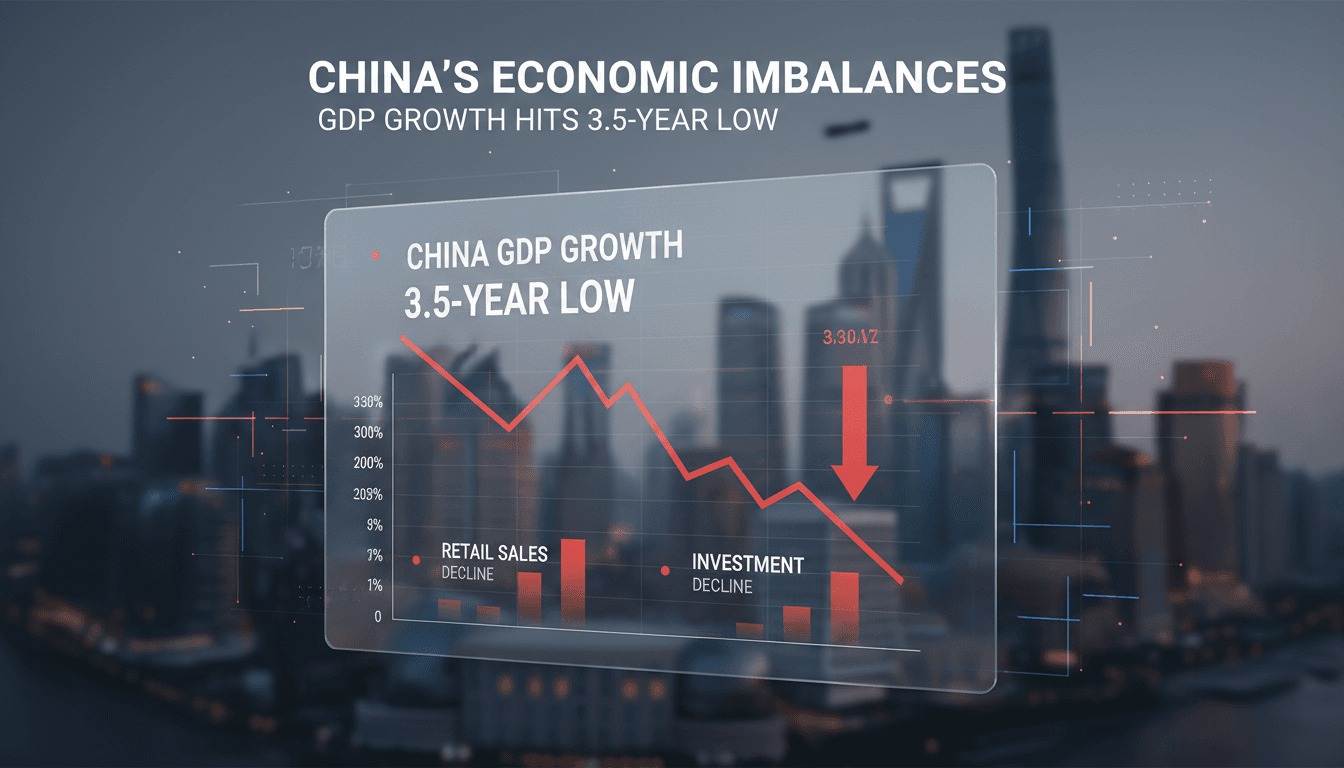
Here's what it means for you.
The recent decline in China's GDP growth signals a troubling trend for global markets, particularly as the world's second-largest economy grapples with significant imbalances. Investors and policymakers alike should closely monitor the implications of this slowdown, as it may affect trade dynamics and investment strategies. The potential for government intervention to stimulate growth could also reshape economic forecasts in the near term. As retail sales and investment weaken, the ripple effects may extend beyond China's borders, influencing global supply chains and consumer markets. Stakeholders in various sectors should prepare for possible shifts in policy that could arise in response to these economic pressures.
What happened
China's second-quarter GDP growth has fallen to its lowest level in 3.5 years, dropping below the government's annual target range. This significant slowdown is attributed to worsening economic imbalances, particularly in the retail sales and investment sectors. The latest figures confirm that the growth rate is one of the lowest seen in decades, raising alarms about the overall health of the economy.
The release of these GDP figures on July 15, 2026, followed a series of monthly indicators that had already shown weakness in retail sales and investment. This combination of factors has led to increased scrutiny of China's economic stability and future growth prospects.
The Context
The current economic landscape in China is marked by significant challenges, particularly in consumer spending and investment. Stakeholders, including businesses and government officials, are increasingly concerned about the implications of these trends on economic stability. The timing of this downturn is critical, as it coincides with broader global economic uncertainties.
As the Chinese government faces mounting pressure to address these imbalances, the potential for policy adjustments becomes a focal point for analysts and investors. Understanding the underlying issues affecting various sectors will be essential for navigating the evolving economic environment.
Takeaway
Looking ahead, the ongoing economic pressures in China may prompt the government to implement measures aimed at stimulating growth. Observers should watch for potential interventions that could reshape the economic landscape, particularly in retail and investment sectors. Trends in consumer spending will also be crucial to monitor in the coming months, as they may provide insights into the effectiveness of any policy adjustments.
As the situation develops, the implications for both domestic and international markets will become clearer, making it essential for stakeholders to stay informed and adaptable.
Macro commentary, policy analysis, growth/inflation themes, and global outlooks.
"Contextual macro coverage that complements day-to-day market headlines."
— A47 Editor
China’s Q2 economic growth cools to 3-1/2-year low as imbalances worsen
China's economy has experienced a significant slowdown, with second-quarter growth recorded at 4.3%, the lowest rate in over three years, as domestic demand falters despite a boost in exports. This decline reflects ongoing economic pressures, includi...
Editor-curated FT homepage stories spanning markets, business, world, and opinion.
"The Financial Times is a globally respected business publication with a centrist/center-left tone and strong markets focus."
— A47 Editor
China’s economy grows at one of lowest rates in decades
China's economy has reported a growth rate of 4.3% in the second quarter of 2026, marking one of the lowest rates in decades and falling below the government's annual target range. This slowdown is attributed to weak domestic demand and a struggling ...
Editor-curated FT homepage stories spanning markets, business, world, and opinion.
"The Financial Times is a globally respected business publication with a centrist/center-left tone and strong markets focus."
— A47 Editor
China’s growth: five things to watch as economic pressure mounts
Recent monthly indicators reveal a decline in China's retail sales and investment, signaling economic weakness ahead of the second-quarter figures. This downturn is compounded by falling resale home prices and sluggish domestic demand, particularly i...