
Saudi Foreign Minister Engages with Qatar and Egypt Amid Iranian Threats
Here's what it means for you.
The recent discussions between Saudi Arabia, Qatar, and Egypt highlight a growing commitment among Gulf states to address regional security threats. This collaborative approach may lead to enhanced maritime safety and a more stable geopolitical landscape. Stakeholders in the region should monitor these developments closely, as they could influence diplomatic negotiations and international agreements.
What happened
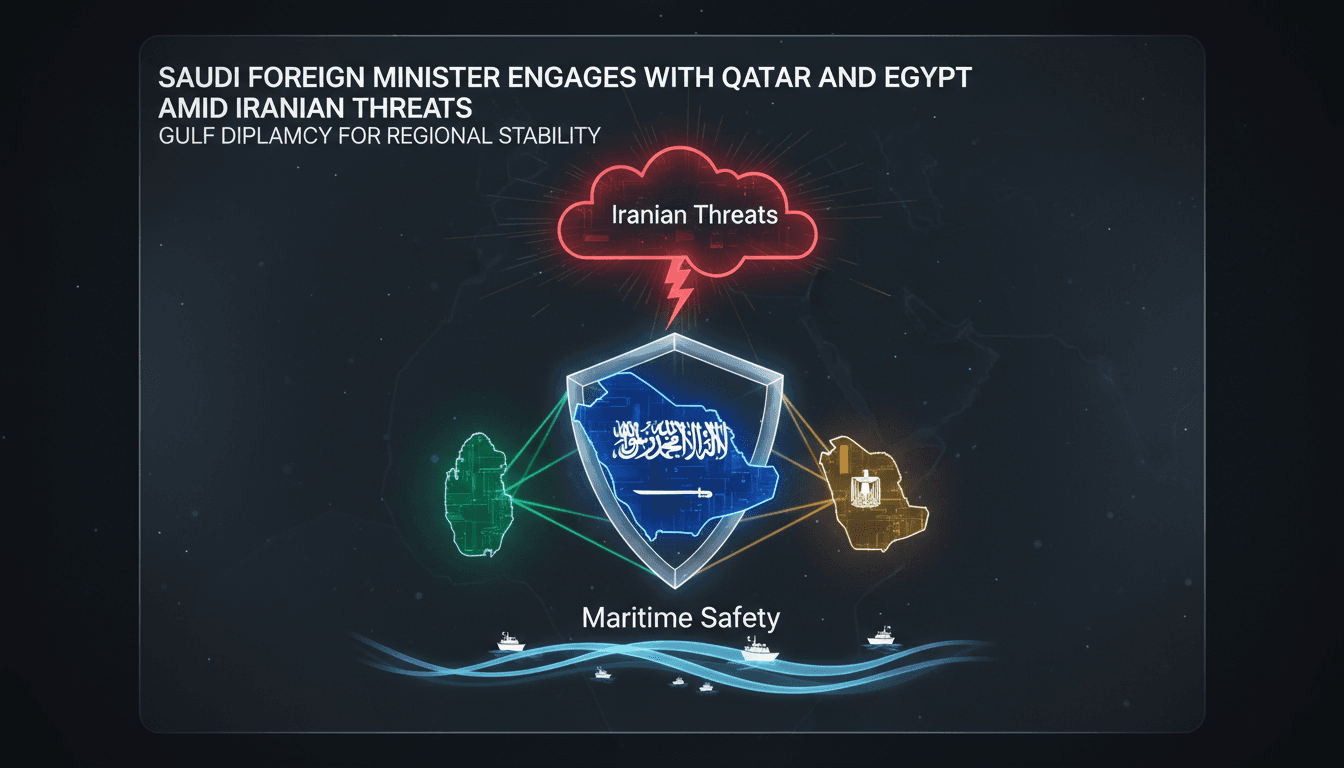
Saudi Foreign Minister Prince Faisal bin Farhan engaged in discussions with his counterparts from Qatar and Egypt regarding the escalating Iranian threats against Bahrain. These conversations were initiated through phone calls, reflecting a proactive stance on regional security. Both foreign ministers condemned the Iranian attacks and underscored the necessity for collaborative efforts to ensure maritime safety.
The dialogue emphasizes a shared commitment to returning to diplomatic negotiations, aiming to de-escalate tensions in the region. This engagement marks a significant step towards fostering unity among Gulf states in the face of external threats.
The Context
The Iranian attacks on Bahrain have raised significant concerns about regional security, prompting a call for increased diplomatic efforts among Gulf nations. The discussions between the foreign ministers come at a critical time, as the stability of the Middle East hangs in the balance. The importance of adhering to international agreements, particularly the US-Iran agreement, was highlighted during these talks.
This collaborative approach among Saudi Arabia, Qatar, and Egypt signals a potential shift towards a more unified front against external aggression. The involvement of multiple stakeholders indicates a recognition of the need for a coordinated response to ensure regional peace.
Takeaway
The ongoing dialogue among regional leaders suggests a concerted effort to address security threats and promote stability in the Middle East. As tensions persist, the emphasis on diplomatic dialogue may pave the way for a more secure environment. Observers should watch for potential developments in US-Iran negotiations and further diplomatic engagements among Gulf states.
The outcomes of these discussions could significantly impact the geopolitical landscape, influencing future collaborations and agreements in the region.
Arabic-language coverage of Saudi, regional, and international affairs.
"Al Bilad offers mainstream Saudi newspaper coverage across domestic and broader Arab topics."
— A47 Editor
وزير الخارجية يبحث مع نظرائه بـ4 دول مستجدات المنطقة
Prince Faisal bin Farhan bin Abdullah, the Minister of Foreign Affairs, received a phone call from Sheikh Mohammed bin Abdulrahman bin Jassim Al Thani, the Prime Minister and Minister of Foreign Affairs of Qatar, to discuss recent developments in the...
Arabic-language reporting focused on domestic developments in Saudi Arabia.
"Okaz is a mainstream Saudi newspaper that often reflects domestic priorities and official-facing coverage."
— A47 Editor
وزير الخارجية يتلقى اتصالًا هاتفيًا من وزير خارجية مصر
Saudi Foreign Minister Prince Faisal bin Farhan received a phone call from Egyptian Foreign Minister Dr. Badr Abdelatty, during which they discussed regional developments, condemned recent Iranian attacks targeting Bahrain, and addressed maritime thr...
Arabic-language reporting focused on domestic developments in Saudi Arabia.
"Okaz is a mainstream Saudi newspaper that often reflects domestic priorities and official-facing coverage."
— A47 Editor
وزير الخارجية يتلقى اتصالاً هاتفياً من رئيس مجلس الوزراء وزير خارجية دولة قطر
Saudi Foreign Minister Prince Faisal bin Farhan received a phone call from Sheikh Mohammed bin Abdulrahman bin Jassim Al Thani, the Prime Minister and Foreign Minister of Qatar. The discussion focused on recent developments, including their condemnat...