
U.S. Defense Secretary Hegseth Announces New Indo-Pacific Strategy at Shangri-La Dialogue
Why it matters
This strategy aims to reshape regional security dynamics, impacting trade and defense collaborations.
What happened (in 30 seconds)
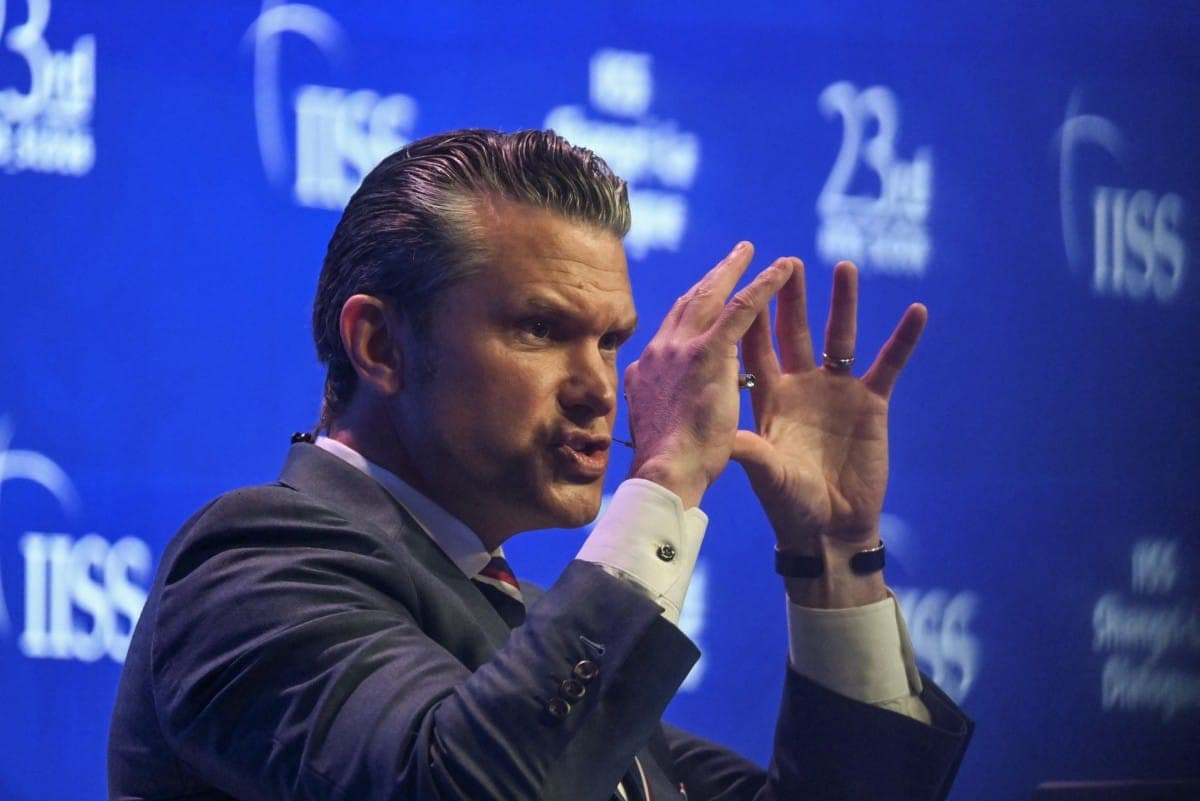
- On May 30, 2026, U.S. Defense Secretary Pete Hegseth unveiled a new Indo-Pacific strategy at the Shangri-La Dialogue in Singapore.
- The strategy emphasizes a collaborative approach with regional allies to prevent any single power, particularly China, from dominating the region.
- Hegseth called for increased defense spending and capabilities among allies, marking a shift from reliance on U.S. military support.
The context you actually need
- The Shangri-La Dialogue is a key annual forum for defense ministers and military leaders, highlighting global security concerns.
- Geopolitical tensions in the Indo-Pacific have escalated, particularly due to China's military assertiveness and expansion.
- Hegseth's remarks reflect a broader U.S. strategy focusing on shared responsibilities among allies rather than unilateral action.
What's really happening
The unveiling of the new Indo-Pacific strategy by U.S. Defense Secretary Pete Hegseth at the Shangri-La Dialogue marks a significant pivot in U.S. foreign policy. This strategy is designed to foster a "strong, quiet, clear" approach, emphasizing collaboration with regional allies such as the Philippines, Australia, Indonesia, Malaysia, Singapore, Vietnam, and India. The core of this strategy is to create a balanced power dynamic in the Indo-Pacific, which has become increasingly crucial given China's growing military capabilities and assertiveness in the region.
Hegseth's address highlighted the importance of burden-sharing among allies, urging them to enhance their defense capabilities and reduce their reliance on U.S. military support. This shift is not merely rhetorical; it reflects a pragmatic alignment of national interests among the U.S. and its allies. By encouraging regional partners to invest more in their defense, the U.S. aims to create a more resilient security architecture that can withstand external pressures, particularly from China.
The strategy's implications extend beyond military cooperation. It signals a potential reconfiguration of trade and investment relationships in the region. As allies bolster their defense capabilities, there may be increased opportunities for defense contractors and logistics firms to engage with these nations. This could lead to a ripple effect in the corporate sector, where businesses adapt to the new landscape of defense partnerships and regional security dynamics.
Moreover, the positive reception from regional governments indicates a willingness to collaborate on security issues, which could further solidify alliances and enhance collective defense mechanisms. However, the strategy also poses challenges, particularly for countries like China, which may perceive this as a direct challenge to their influence in the Indo-Pacific. The U.S. strategy could lead to heightened tensions, necessitating careful navigation of diplomatic relations.
In summary, Hegseth's new Indo-Pacific strategy represents a strategic recalibration aimed at fostering collaboration among allies while addressing the challenges posed by China's assertiveness. The focus on shared responsibilities and increased defense spending among allies is likely to reshape the security landscape in the region, with far-reaching implications for trade, investment, and geopolitical stability.
Who feels it first (and how)
- Defense contractors: Increased demand for military equipment and technology from regional allies.
- Logistics firms: Opportunities for collaboration in defense supply chains and infrastructure.
- Regional governments: Enhanced defense budgets and capabilities, impacting national security policies.
- Investors: Shifts in investment strategies towards defense and security sectors in the Indo-Pacific.
What to watch next
- Increased defense spending: Monitor how regional allies respond to Hegseth's call for enhanced military capabilities, as this will shape defense contracts and partnerships.
- China's response: Watch for diplomatic and military reactions from China, which could influence regional stability and security dynamics.
- Trade relations: Observe changes in trade agreements and partnerships as countries adapt to the new security landscape.
The U.S. aims to foster a balanced power dynamic in the Indo-Pacific.
Regional allies will increase their defense spending and capabilities.
The long-term impact on U.S.-China relations and regional stability remains uncertain.
Frequently Asked Questions
- Why it matters?
- This strategy aims to reshape regional security dynamics, impacting trade and defense collaborations.
- What happened (in 30 seconds)?
- On May 30, 2026, U.S. Defense Secretary Pete Hegseth unveiled a new Indo-Pacific strategy at the Shangri-La Dialogue in Singapore. The strategy emphasizes a collaborative approach with regional allies to prevent any single power, particularly China, from dominating the region. Hegseth called for increased defense spending and capabilities among allies, marking a shift from reliance on U.S. military support.
- What's really happening?
- The unveiling of the new Indo-Pacific strategy by U.S. Defense Secretary Pete Hegseth at the Shangri-La Dialogue marks a significant pivot in U.S. foreign policy. This strategy is designed to foster a "strong, quiet, clear" approach, emphasizing collaboration with regional allies such as the Philippines, Australia, Indonesia, Malaysia, Singapore, Vietnam, and India. The core of this strategy is to create a balanced power dynamic in the Indo-Pacific, which has become increasingly crucial given Ch
- Who feels it first (and how)?
- Defense contractors: Increased demand for military equipment and technology from regional allies. Logistics firms: Opportunities for collaboration in defense supply chains and infrastructure. Regional governments: Enhanced defense budgets and capabilities, impacting national security policies. Investors: Shifts in investment strategies towards defense and security sectors in the Indo-Pacific.
- What to watch next?
- Increased defense spending: Monitor how regional allies respond to Hegseth's call for enhanced military capabilities, as this will shape defense contracts and partnerships. China's response: Watch for diplomatic and military reactions from China, which could influence regional stability and security dynamics. Trade relations: Observe changes in trade agreements and partnerships as countries adapt to the new security landscape.
Conservative-leaning political and national coverage.
"The Washington Times is a conservative-leaning newspaper known for its political coverage and advocacy of right-of-center viewpoints."
— A47 Editor
Hegseth: U.S. reverting to Cold War balance of power security strategy in Asia
In a recent speech, U.S. Defense Secretary Pete Hegseth outlined a strategic shift towards a Cold War-style balance of power in the Indo-Pacific, emphasizing military enhancements and regional alliances to counter China's influence. He advocated for ...
Capitol Hill news, legislation, and policy insight.
"The Hill specializes in U.S. politics and policy, with a focus on Capitol Hill developments and a reputation for insider reporting."
— A47 Editor
Hegseth walks tightrope on China, urging Asian allies to share burden against threats
Defense Secretary Pete Hegseth moderated his stance on China during the Shangri-La Dialogue in Singapore, advocating for collaborative efforts between the U.S. and its Asian allies to address regional threats. His remarks come after a recent bilatera...
UAE-based newspaper covering Gulf politics, society, and international developments.
"Gulf News is one of the UAE’s most prominent English-language publications."
— A47 Editor
Pentagon chief Hegseth outlines new US Indo-Pacific strategy at Singapore summit
At the Shangri-La Dialogue in Singapore, U.S. Defense Secretary Pete Hegseth outlined a new Indo-Pacific strategy, emphasizing the United States' commitment to maintaining a stable equilibrium with China while strengthening alliances in the region. T...
A curated Gulf News feed featuring major stories across news, business, opinion, and lifestyle.
"Gulf News is a major UAE newspaper whose featured stories feed reflects a broad editorial mix shaped for a Gulf audience."
— A47 Editor
Pentagon chief Hegseth outlines new US Indo-Pacific strategy at Singapore summit
At the Shangri-La Dialogue in Singapore, U.S. Defense Secretary Pete Hegseth outlined a new Indo-Pacific strategy, emphasizing the United States' commitment to maintaining a stable equilibrium with China while strengthening alliances in the region. T...
Global markets, investing, and macroeconomics from a premier financial newsroom.
"Bloomberg is respected for in-depth financial reporting and data-driven analysis."
— A47 Editor
Hegseth Reaffirms US Commitment to Pacific Allies
US Defense Secretary Pete Hegseth reaffirmed the United States' commitment to its Pacific allies during a recent security forum in Singapore, praising the stability of US-China relations while criticizing European defense partners for their spending ...
International coverage of politics, culture, and current affairs.
"BBC News is widely regarded as a reputable international news organization, known for its impartial tone and public service mandate."
— A47 Editor
US not 'turning back' on Asia allies, but expects them to boost defence, says Hegseth
At the Shangri-La Dialogue in Singapore, U.S. Defense Secretary Pete Hegseth reaffirmed the United States' commitment to its Asian allies while emphasizing the expectation for these nations to enhance their defense capabilities. This statement comes ...
Global markets, investing, and macroeconomics from a premier financial newsroom.
"Bloomberg is respected for in-depth financial reporting and data-driven analysis."
— A47 Editor
Hegseth Praises Asian Allies, Takes Swipe at NATO
At the Shangri-La Dialogue Defense Summit in Singapore, U.S. Defense Secretary Pete Hegseth praised the current state of U.S.-China relations, describing them as the best in years, while simultaneously criticizing European NATO allies for their defen...
Arabic-language coverage of political affairs and current events.
"Okaz political coverage typically follows mainstream Saudi framing on national and regional affairs."
— A47 Editor
وزير الدفاع الأمريكي: عصر الاعتماد على واشنطن انتهى.. ولا مكان لـ«المتطفلين» أمنياً
U.S. Defense Secretary Pete Hegseth warned of China's growing military capabilities, urging U.S. allies in Asia to increase their defense spending to counter Beijing's rapid military expansion and maintain regional stability. Speaking at the Shangri-...
International stories from NPR’s global desk.
"NPR is an American public media organization known for thoughtful reporting and a slightly left-leaning editorial tone."
— A47 Editor
Hegseth urges Asian leaders to boost military spending against China
U.S. Defense Secretary Pete Hegseth urged Asian leaders to increase military spending in response to China's military buildup, highlighting a sense of 'rightful alarm' regarding regional security threats. His remarks were made during the Shangri-La D...
Public radio coverage of American news and issues.
"NPR is an American public media organization known for thoughtful reporting and a slightly left-leaning editorial tone."
— A47 Editor
Hegseth urges Asian leaders to boost military spending against China
U.S. Defense Secretary Pete Hegseth urged Asian leaders to increase military spending in response to China's military buildup, highlighting a sense of 'rightful alarm' regarding regional security threats. His remarks were made during the Shangri-La D...
Global markets, investing, and macroeconomics from a premier financial newsroom.
"Bloomberg is respected for in-depth financial reporting and data-driven analysis."
— A47 Editor
Hegseth Hails China Relationship at Defense Summit
At the Shangri-La Dialogue Defense Summit in Singapore, Defense Secretary Pete Hegseth praised the current state of US-China relations, describing them as the best in years, while notably omitting discussions on Taiwan and the Iran war. His remarks i...
Editor-curated FT homepage stories spanning markets, business, world, and opinion.
"The Financial Times is a globally respected business publication with a centrist/center-left tone and strong markets focus."
— A47 Editor
Hegseth says US-China ties are ‘better than in years’
Defense Secretary Pete Hegseth stated that US-China relations are currently at their best in years, while emphasizing the need for allied nations to increase defense spending to counter China's military expansion. This statement was made during a rec...
Global political, business, and cultural coverage from WSJ international desks.
"The Wall Street Journal offers extensive international reporting with a reputation for financial insight and a center-right editorial stance."
— A47 Editor
Hegseth Says U.S. Needs More From Asian Allies to Secure Balance Against China
During a recent speech, U.S. Defense Secretary Pete Hegseth emphasized the need for increased contributions from Asian allies to maintain a strategic balance against China, reflecting concerns over the U.S.'s security commitments in the region.
Global markets, investing, and macroeconomics from a premier financial newsroom.
"Bloomberg is respected for in-depth financial reporting and data-driven analysis."
— A47 Editor
Hegseth Takes Swipe at European Defense Partners
During a defense forum in Singapore, Defense Secretary Pete Hegseth criticized European defense partners while praising the United States' stable ties with China and its allies in Asia. His remarks highlighted concerns about Europe's defense spending...
Global markets, investing, and macroeconomics from a premier financial newsroom.
"Bloomberg is respected for in-depth financial reporting and data-driven analysis."
— A47 Editor
Hegseth Speaks at Shangri-La Dialogue (Full)
Secretary of Defense Pete Hegseth delivered a speech at the Shangri-La Dialogue Defense Summit, addressing the significance of US-China relations and emphasizing the strategic importance of the Pacific region for US security. He also criticized Europ...