
U.S. military maintains maritime blockade on Iran amid heightened tensions
Here's what it means for you.
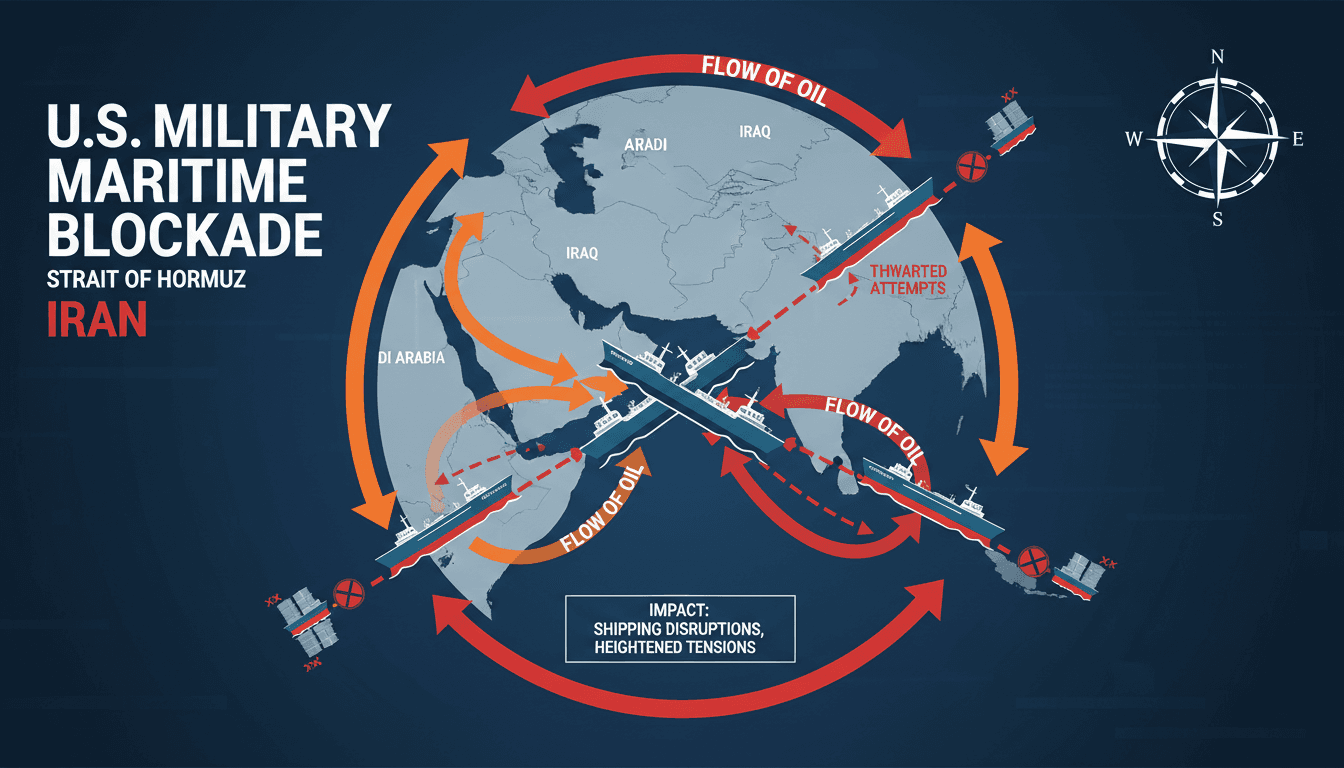
The U.S. military's enforcement of a maritime blockade against Iran signals a significant escalation in geopolitical tensions, particularly affecting global oil markets. As the U.S. continues to assert control over vital shipping routes, stakeholders in the energy sector should prepare for potential disruptions. This situation may lead to increased volatility in oil prices and heightened scrutiny of maritime security in the region. The ongoing military presence in the Strait of Hormuz underscores the importance of this strategic waterway, which is crucial for international oil shipments. Businesses and policymakers must remain vigilant as developments unfold, given the potential for further military engagement.
What happened
The U.S. military has confirmed that its maritime blockade on Iran remains fully in effect, successfully thwarting multiple attempts by oil tankers to breach it. Recent operations included the disabling of oil tankers that attempted to evade the restrictions, highlighting ongoing tensions in the region. As of July 25, U.S. forces redirected a total of 12 commercial vessels, demonstrating the scale of enforcement of the blockade.
The U.S. Central Command (CENTCOM) has reported a heightened state of alert and readiness in response to these tensions. This proactive approach reflects the military's commitment to maintaining security in the Strait of Hormuz, a critical passage for global oil transportation.
The Context
The U.S. resumed its maritime blockade on Iran on July 14, following Iran's closure of the Strait of Hormuz. This closure has been actively enforced by Iran's Revolutionary Guard, which has sought to prevent oil tankers from passing through the vital shipping route. The situation has escalated as both nations assert control over maritime navigation, raising concerns about potential conflict.
The Strait of Hormuz is a strategic chokepoint for oil shipments, making it a focal point for U.S.-Iranian tensions. The ongoing military operations by the U.S. reflect a broader geopolitical struggle in the region, with implications for global energy markets and international relations.
Takeaway
The situation in the Strait of Hormuz remains critical, with the potential for further military engagement as both sides assert control over maritime navigation. Observers should monitor further U.S. military operations in the region, as well as Iran's response to the continued enforcement of the blockade. The heightened state of alert from CENTCOM indicates that the U.S. is prepared for any escalation.
As tensions persist, the outlook for the region remains uncertain, with both U.S. and Iranian forces likely to continue their assertive postures. Stakeholders in the energy sector should remain informed about developments that could impact shipping routes and oil prices.
Arabic-language coverage of political affairs and current events.
"Okaz political coverage typically follows mainstream Saudi framing on national and regional affairs."
— A47 Editor
الجيش الأمريكي: حصار إيران لا يزال سارياً
The U.S. military has confirmed that the maritime blockade on Iran remains fully in effect, with U.S. Central Command (CENTCOM) reporting the diversion of 12 commercial vessels attempting to breach the blockade and the disruption of two ships that fa...
Jordanian news and regional updates.
"Roya News is a Jordanian outlet focused on breaking news and local affairs."
— A47 Editor
سينتكوم: الحصار البحري على إيران مستمر وتعطيل ناقلات حاولت خرقه
U.S. Central Command (CENTCOM) has announced that the maritime blockade on Iran remains in effect, with actions taken to disable tankers attempting to breach this blockade. This statement underscores ongoing tensions in the region and highlights the ...
Arabic-language coverage of Saudi, regional, and international affairs.
"Al Bilad offers mainstream Saudi newspaper coverage across domestic and broader Arab topics."
— A47 Editor
الجيش الأمريكي يعطّل ناقلة نفط حاولت كسر الحصار على إيران
The U.S. military announced that it fired upon an oil tanker attempting to breach the American blockade imposed on Iranian ports. Captain Tim Hawkins, a spokesperson for U.S. Central Command, stated that the crew of the vessel made four attempts to v...