
Netanyahu Rejects US Demands for Military Withdrawals from Gaza Syria and Lebanon
What happened
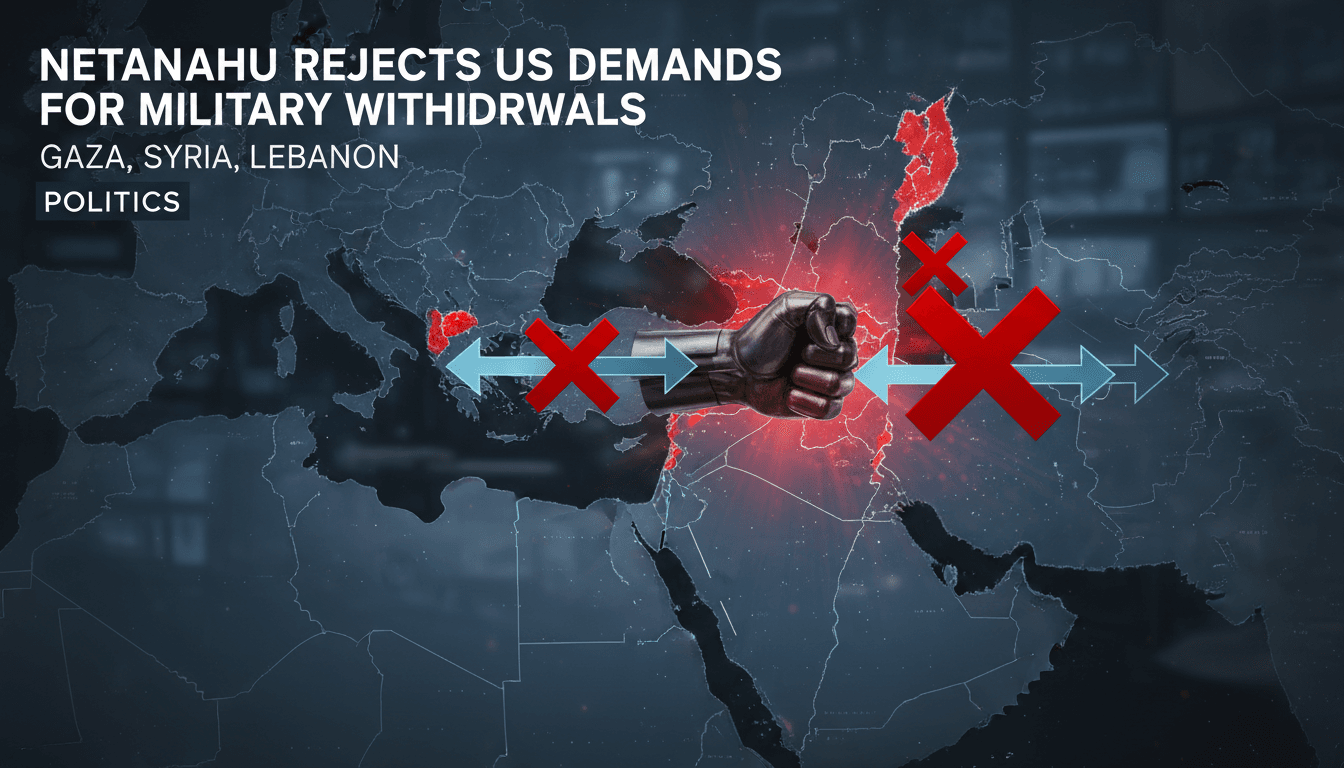
Israeli Prime Minister Benjamin Netanyahu has announced his intention to reject U.S. requests for military withdrawals from Gaza, Syria, and Lebanon. This decision comes just ahead of his meeting with President Donald Trump, where various regional issues, including security concerns, will be on the agenda. Netanyahu's firm stance reflects Israel's strategic interests in maintaining its military presence in these territories.
The U.S. has expressed concerns regarding Israel's military operations in these regions, which adds complexity to the ongoing discussions. Netanyahu communicated his decision to his cabinet before traveling to the U.S., indicating a clear commitment to his position. The implications of this rejection could significantly impact the geopolitical landscape.
The Context
Netanyahu's rejection of U.S. demands is rooted in Israel's long-standing strategic interests in the region. The meeting with Trump is expected to address multiple pressing issues, including the rising tensions in the West Bank, which may further influence Netanyahu's stance. As the situation evolves, the dynamics between Israel and the U.S. could shift, potentially reshaping their diplomatic relations.
The backdrop of this decision includes ongoing security concerns, particularly regarding Iran's influence in the region. Netanyahu's willingness to expand military operations in the West Bank adds another layer to the complexities of the situation. As both leaders prepare for their discussions, the stakes are high for regional stability.
Takeaway
Netanyahu's firm stance against U.S. withdrawal requests may lead to increased tensions between Israel and the U.S. regarding military presence in the region. Observers should watch for reactions from the U.S. government following this announcement, as well as potential impacts on Israeli military operations in the West Bank. The upcoming meeting between Netanyahu and Trump will be crucial in determining the future of U.S.-Israel relations.
As the geopolitical landscape continues to evolve, the implications of Netanyahu's decision could resonate beyond immediate military concerns, influencing broader diplomatic strategies. Stakeholders should remain vigilant as developments unfold in the coming weeks.
Pan-Arab political news and analysis.
"Al-Quds Al-Arabi is a London-based Arabic newspaper known for political coverage."
— A47 Editor
إعلام عبري: نتنياهو يعتزم رفض مطالب أمريكية بالانسحاب من 3 جبهات
Israeli Prime Minister Benjamin Netanyahu is reportedly planning to reject U.S. demands for Israel to withdraw from three fronts, namely Gaza, Syria, and Lebanon. This decision comes amid ongoing tensions in the region and reflects Israel's stance on...
Arabic-language coverage of international news and geopolitics.
"RT Arabic is a Russian state-funded outlet often criticized for promoting Kremlin-aligned narratives."
— A47 Editor
نتنياهو: الأمريكيون سيطالبون بسلسلة من الانسحابات من غزة وسوريا ولبنان وأنا أرفض ذلك
قال رئيس الوزراء الإسرائيلي بنيامين نتنياهو لوزراء "الكابينت"، قبيل مغادرته إلى الولايات المتحدة، إنه "سيرفض مطالب الأمريكيين بتنفيذ انسحابات من غزة وسوريا ولبنان".
Jordanian news and regional updates.
"Roya News is a Jordanian outlet focused on breaking news and local affairs."
— A47 Editor
نتنياهو يرفض مطالب أمريكية بالانسحاب من غزة وسوريا ولبنان
Israeli Prime Minister Benjamin Netanyahu has rejected U.S. demands for withdrawal from Gaza, Syria, and Lebanon, amidst rising tensions in the West Bank. This refusal highlights ongoing geopolitical challenges in the region and Israel's stance on te...
Arabic-language coverage of international news and geopolitics.
"RT Arabic is a Russian state-funded outlet often criticized for promoting Kremlin-aligned narratives."
— A47 Editor
نتنياهو يتوجه إلى واشنطن للقاء ترامب ويعلن الاستعداد لتوسيع العمليات في الضفة
Israeli Prime Minister Benjamin Netanyahu announced his departure to Washington for a meeting with U.S. President Donald Trump to discuss several issues, including Iran, while reaffirming the continuation of operations in the West Bank.