
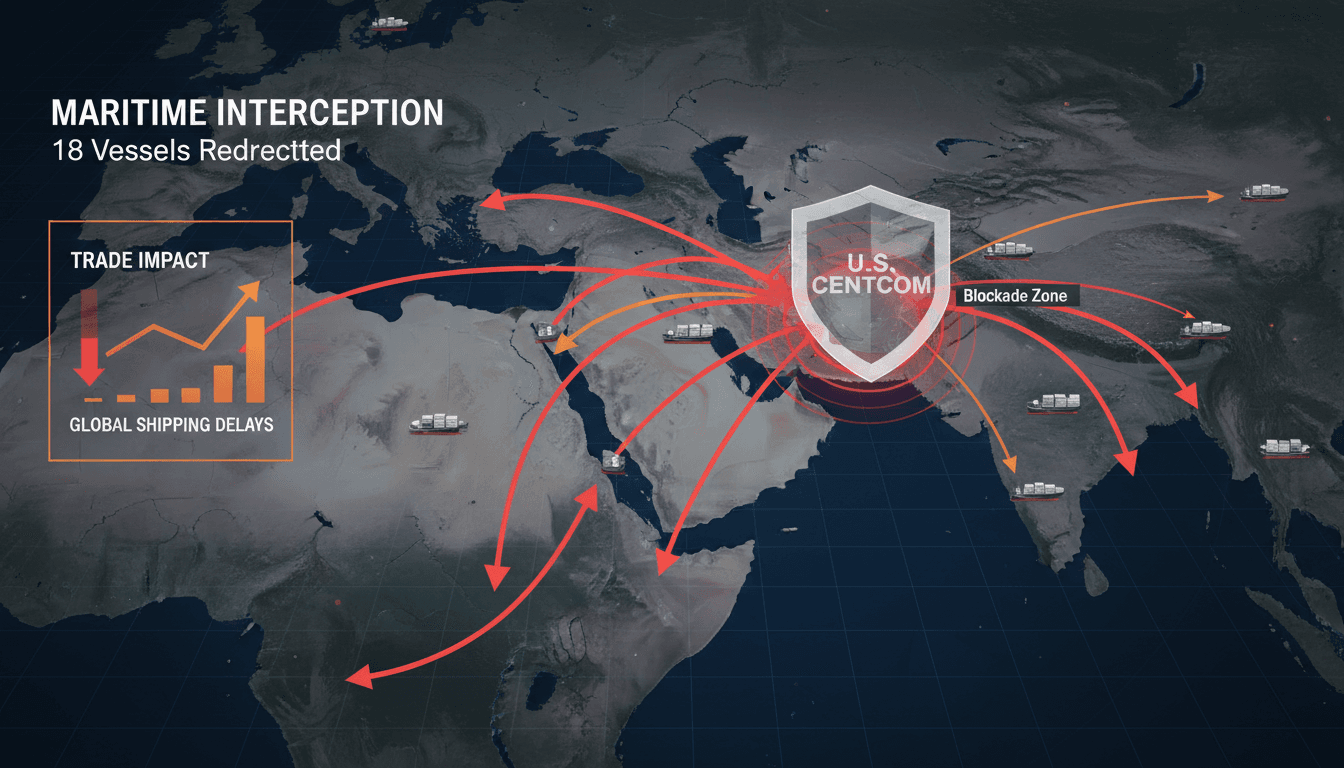
CENTCOM Intensifies Maritime Operations Against Iran Redirecting 18 Vessels
Here's what it means for you.
The U.S. Central Command's recent actions signify a heightened commitment to maritime security in the Arabian Sea, impacting commercial shipping routes and regional trade dynamics. Stakeholders in maritime industries should prepare for potential disruptions as the U.S. enforces compliance with its regulations. This escalation may also influence diplomatic relations and security policies in the region.
What happened
The U.S. Central Command (CENTCOM) has intensified its maritime operations against Iran by redirecting 18 commercial vessels and conducting inspections on several others. This renewed enforcement of a maritime blockade aims to ensure compliance with U.S. regulations. The operations reflect a strategic response to ongoing tensions between the U.S. and Iran regarding maritime security.
Since the reactivation of the blockade, CENTCOM has reported changing the course of multiple vessels and boarding others for inspections. Two vessels were disabled for non-compliance, highlighting the seriousness of the enforcement efforts. This action underscores the U.S. commitment to maintaining maritime security in the region.
The Context
The maritime blockade on Iran has been reactivated to enforce compliance with U.S. regulations, amid rising tensions in the region. The U.S. aims to deter Iranian activities that threaten maritime security, which has implications for international shipping and regional stability. The timing of these operations coincides with heightened scrutiny of Iran's maritime practices.
As the U.S. continues to assert its presence in the Arabian Sea, the potential for conflict remains a concern. Stakeholders, including shipping companies and regional governments, must navigate the complexities of this evolving situation. The U.S. actions may provoke further responses from Iran, complicating diplomatic efforts.
Takeaway
Looking ahead, the U.S. is likely to continue its maritime operations to maintain pressure on Iran. Observers should monitor potential responses from Iran regarding the maritime blockade, as these could escalate tensions further. Additionally, developments in U.S.-Iran relations will be crucial in understanding the broader implications for regional security.
The ongoing enforcement actions may have lasting effects on maritime trade and security policies in the region. Stakeholders should remain vigilant as the situation evolves, considering both the risks and opportunities presented by these developments.
Arabic-language coverage of international news and geopolitics.
"RT Arabic is a Russian state-funded outlet often criticized for promoting Kremlin-aligned narratives."
— A47 Editor
القيادة المركزية الأمريكية تكشف عدد السفن التي اعترضتها بعد استئناف حصار إيران
The U.S. Central Command (CENTCOM) has confirmed that the U.S. military has intercepted and redirected 18 commercial vessels since the resumption of the maritime blockade on Iranian ports. This action underscores the ongoing tensions in the region an...
Pan-Arab news coverage spanning politics, business, sports, and regional affairs.
"Asharq Al-Awsat reflects a broad Arab editorial perspective with strong attention to regional geopolitics."
— A47 Editor
أميركا: قواتنا غيَّرت مسار 17 سفينة تجارية واعتلت سفينتين
The U.S. Central Command (CENTCOM) announced that its forces redirected 17 commercial vessels, disabled two, and boarded two others to ensure compliance. This operation highlights the ongoing maritime security efforts by U.S. forces in strategic wate...
Arabic-language coverage of political affairs and current events.
"Okaz political coverage typically follows mainstream Saudi framing on national and regional affairs."
— A47 Editor
«سنتكوم» تشدد حصارها البحري على إيران.. اعتراض سفن وتغيير مسار 12 أخرى
The U.S. Central Command (CENTCOM) has intensified its maritime blockade on Iran, conducting a series of operations in the Arabian Sea that included rerouting commercial vessels and boarding several ships to enforce the blockade. As of July 25, CENTC...