
Iran Rejects Oman's Joint Management Proposal for Strait of Hormuz
Here's what it means for you.
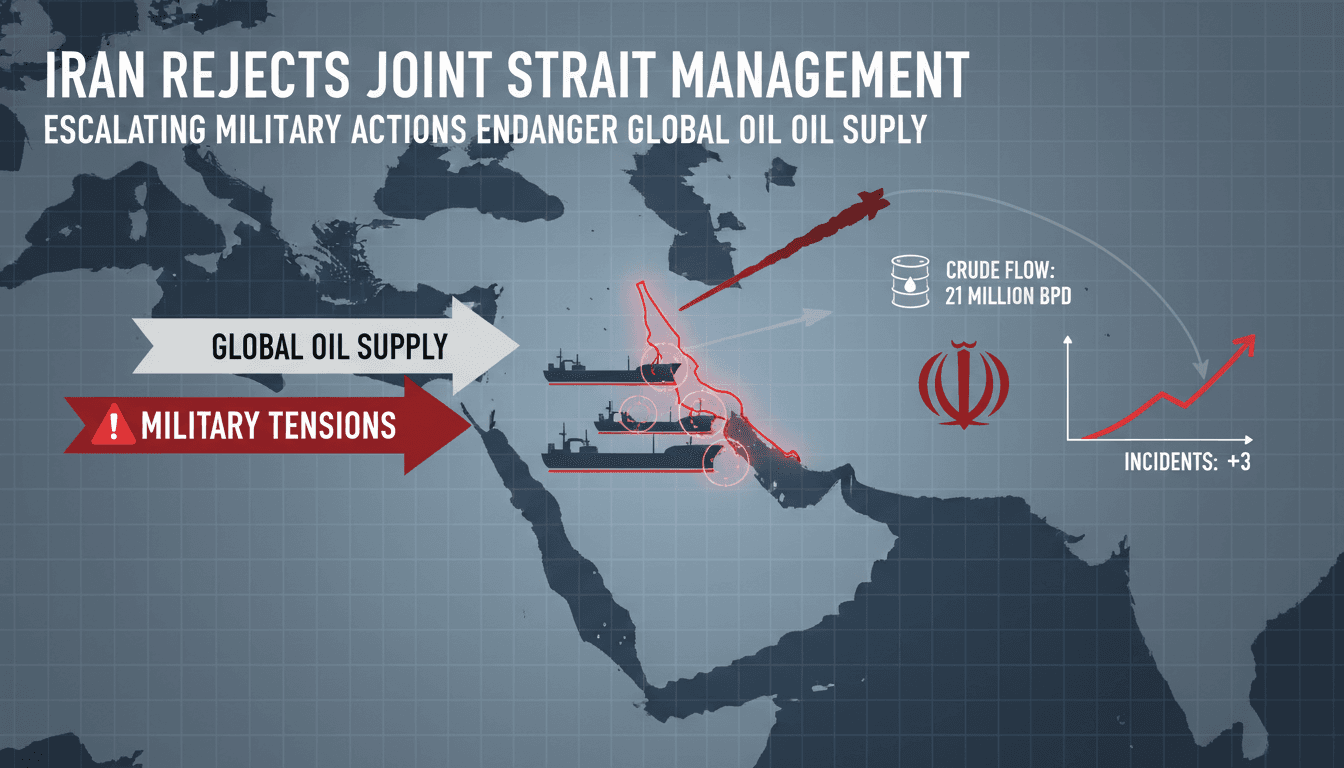
The rejection of Oman's proposal for joint management of the Strait of Hormuz by Iran signals a potential escalation in regional tensions that could impact global oil supply chains. As Iran's Revolutionary Guard intensifies military actions, stakeholders in the oil market should prepare for possible disruptions. This situation underscores the fragility of maritime security in a region critical for energy transportation. The ongoing dispute highlights the complexities of geopolitical dynamics in the Middle East, where national interests often clash. Businesses and policymakers must remain vigilant as developments unfold, particularly regarding the security of maritime routes.
What happened
Iran has officially rejected Oman's proposal for shared management of the Strait of Hormuz, insisting on maintaining its control over this vital waterway. This decision comes amid rising military tensions, with Iran's Revolutionary Guard reportedly targeting three tankers in the region. The refusal to collaborate with Oman indicates Iran's desire to assert its dominance in the area.
The Revolutionary Guard's recent actions have raised alarms about the potential for further military confrontations. This escalation could have significant implications for global oil supply, given the strait's critical role in maritime trade.
The Context
The Strait of Hormuz is a crucial maritime route for global oil shipments, making its security a matter of international concern. Iran's Revolutionary Guard has recently increased military assertiveness, which has heightened tensions in the region. Oman, on the other hand, has advocated for a cooperative approach to manage the strait amid these rising tensions.
The disagreement over management strategies reflects broader geopolitical dynamics, with Iran seeking to maintain control while Oman promotes collaboration. As military actions intensify, the potential for conflict looms larger, impacting not only regional stability but also global energy markets.
Takeaway
As the situation in the Strait of Hormuz continues to evolve, stakeholders should closely monitor Iran's military actions and any responses from international players regarding maritime security. The ongoing tensions could lead to further confrontations, which would have direct implications for global oil supply and pricing.
The complexities of regional security dynamics necessitate vigilance from businesses and policymakers alike, as the potential for conflict remains high. Observers should be prepared for developments that could affect not only the immediate region but also the broader global economy.
Pan-Arab news coverage spanning politics, business, sports, and regional affairs.
"Asharq Al-Awsat reflects a broad Arab editorial perspective with strong attention to regional geopolitics."
— A47 Editor
إيران ترفض مقترح عمان لإدارة «هرمز»
Iran has rejected Oman’s proposal for a joint regional management of the strategic Strait of Hormuz, asserting its control over the vital maritime passage. This decision comes amid reports from the Revolutionary Guard about targeting three tankers in...
Global news coverage with extensive reporting on Middle Eastern conflicts and geopolitics.
"Al Jazeera is a Qatar-based broadcaster known for wide regional coverage and alternative perspectives."
— A47 Editor
Iran and Oman swap proposals to manage Strait of Hormuz: What we know
Iran has proposed a deal to manage the Strait of Hormuz, seeking greater control than Oman, which has suggested a Gulf-backed plan for joint management involving voluntary fees for vessels. This exchange of proposals highlights ongoing tensions in th...
Comprehensive coverage of Middle Eastern and global issues.
"Al Jazeera is a prominent voice from the Global South, especially the Middle East, with an emphasis on underreported stories."
— A47 Editor
Iran and Oman swap proposals to manage Strait of Hormuz: What we know
Iran has proposed a deal to manage the Strait of Hormuz, seeking greater control than Oman, which has suggested a Gulf-backed plan for joint management involving voluntary fees for vessels. This exchange of proposals highlights ongoing tensions in th...
UAE-based English-language newspaper covering regional politics, economics, and global affairs.
"The National reflects Emirati policy perspectives while maintaining international editorial standards."
— A47 Editor
Iran vs Oman: Two visions for the Strait of Hormuz
Iran and Oman are engaged in discussions regarding the management of the strategically significant Strait of Hormuz, with Iran proposing a temporary plan that would grant it greater control over transit lines. This proposal reflects ongoing tensions ...
UAE-based English-language newspaper covering regional politics, economics, and global affairs.
"The National reflects Emirati policy perspectives while maintaining international editorial standards."
— A47 Editor
Iran vs Oman: Two visions for the Strait of Hormuz
Iran and Oman are currently engaged in discussions regarding the management of the strategically significant Strait of Hormuz, with Iran proposing a temporary plan that would grant it greater control over transit lines. This proposal comes amidst ong...