
U.S. Navy faces resource constraints impacting defense commitments to Israel
Here's what it means for you.
The U.S. Navy's diminishing capacity to defend Israel raises significant concerns for both national and international security. As military engagements with Iran escalate, the prioritization of domestic defense over international commitments could reshape U.S. defense strategies. This shift may have profound implications for regional stability and U.S. military readiness. The ongoing conflict not only strains military resources but also invites scrutiny regarding the economic impact of these engagements on American citizens. Stakeholders must consider how these developments will influence future defense policies and military allocations.
What happened
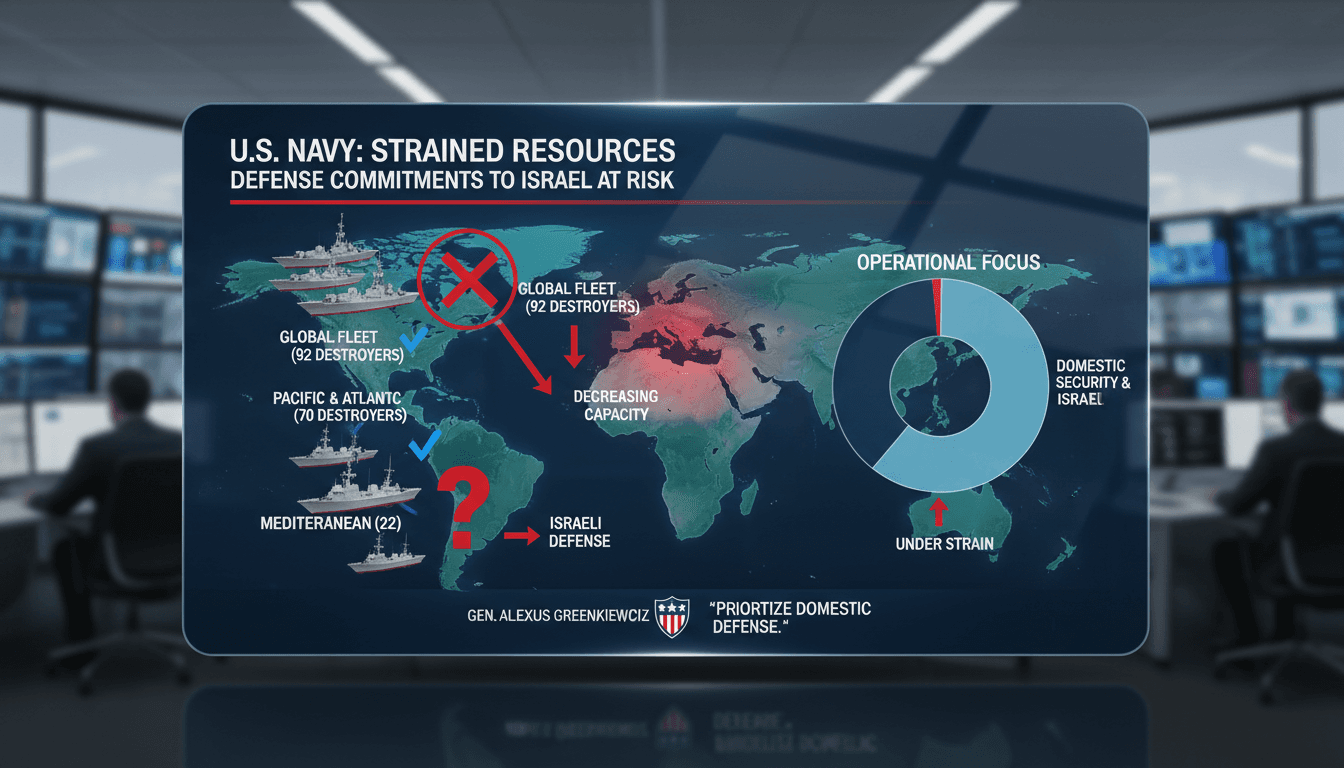
General Alexus Greenkiewicz has alerted the Pentagon about the U.S. Navy's insufficient destroyer fleet, which is crucial for protecting Israel from ballistic missile threats. Currently, there are only five destroyers stationed in the Mediterranean, a number deemed inadequate given the rising tensions with Iran. This shortage has prompted military officials to reconsider the sustainability of U.S. defense operations in the region.
The U.S. has been actively involved in intercepting Iranian missiles aimed at Israel, further stretching its naval capabilities. As operational demands increase, the military's ability to fulfill its commitments abroad is being challenged.
The Context
The ongoing conflict with Iran has placed significant strain on U.S. military resources, leading to heightened operational demands. As the U.S. engages in missile defense operations, there is growing domestic criticism regarding the economic ramifications of the war. This situation has raised questions about the balance between international commitments and domestic security priorities.
General Greenkiewicz's confidential memo underscores the urgency of the situation, highlighting the need for a reassessment of U.S. military strategy in the region. The implications of these resource constraints could affect not only military operations but also broader geopolitical dynamics.
Takeaway
The U.S. military may need to reevaluate its strategic priorities in light of these resource constraints. Potential changes in military strategy regarding Israel could emerge as officials seek to address the challenges posed by limited naval assets. Observers should monitor how these developments influence upcoming U.S. elections and public sentiment regarding military spending.
As the situation evolves, the focus on domestic defense needs may become increasingly pronounced, prompting a shift in how the U.S. engages with international allies. The implications of these changes will be critical for understanding future defense policies.
Arabic-language coverage of Saudi, regional, and international affairs.
"Al Bilad offers mainstream Saudi newspaper coverage across domestic and broader Arab topics."
— A47 Editor
تحذير أمريكي من استنزاف الدفاعات
American reports indicate warnings from within the U.S. Department of Defense regarding the diminishing capability to defend Israel amid ongoing military strain during confrontations with Iran. Officials, including General Alexus Greenkiewicz, have c...
Arabic-language coverage of political affairs and current events.
"Okaz political coverage typically follows mainstream Saudi framing on national and regional affairs."
— A47 Editor
قائد أمريكي: لن نستطيع حماية إسرائيل من الصواريخ الباليستية
General Alexus Greenkiewicz, the U.S. commander in Europe, warned the Pentagon that U.S. naval forces lack the capabilities to continue protecting Israel from ballistic missiles, indicating a potential shift in priorities towards defending U.S. terri...
Pan-Arab news coverage spanning politics, business, sports, and regional affairs.
"Asharq Al-Awsat reflects a broad Arab editorial perspective with strong attention to regional geopolitics."
— A47 Editor
جنرال أميركي يحذر «البنتاغون» من نقص القوات اللازمة لحماية إسرائيل
A U.S. general has warned the Pentagon about a shortage of naval destroyers, which are crucial for countering Iranian ballistic missile attacks aimed at Israel. This shortage may force the military to make difficult choices regarding its defensive ca...
Arabic-language coverage of international news and geopolitics.
"RT Arabic is a Russian state-funded outlet often criticized for promoting Kremlin-aligned narratives."
— A47 Editor
"واشنطن بوست": جنرال أمريكي يحذر البنتاغون من عدم كفاية القوات لحماية إسرائيل
The Washington Post reported that General Alexus Greenkiewicz, the head of U.S. European Command, warned Pentagon officials about the insufficiency of available forces to protect Israel. This warning highlights concerns regarding the military readine...