
Trump suggests imminent end to U.S. war with Iran as Gulf states condemn Houthi attacks
Here's what it means for you.
The potential conclusion of the U.S. war with Iran could reshape military strategies and alliances in the Middle East. As Gulf states react to escalating Houthi aggression, regional security dynamics are increasingly complex. Stakeholders in the region must prepare for shifts in diplomatic relations and military postures as the situation evolves.
What happened
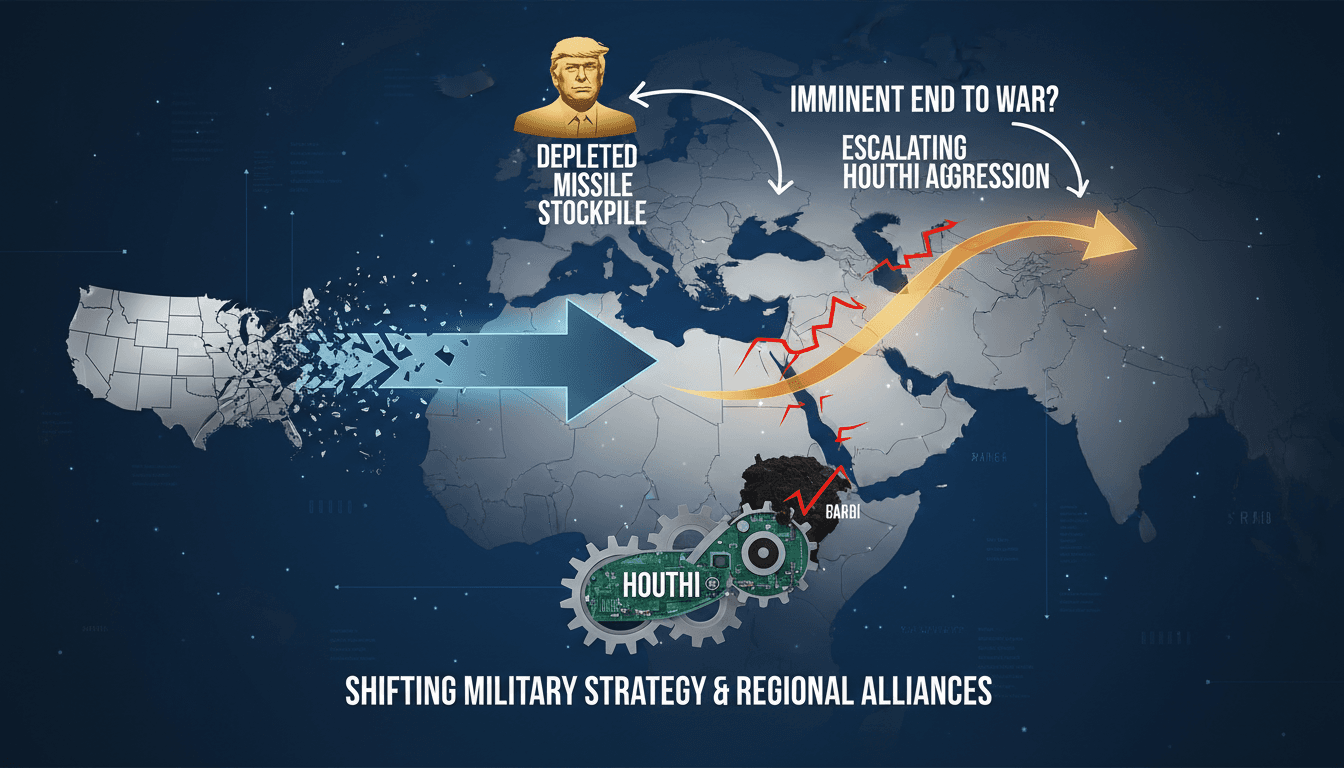
U.S. President Donald Trump has indicated that the ongoing war with Iran may come to an end soon, citing supply issues faced by the military. His comments come amid rising tensions in the region, particularly following recent Houthi attacks on Saudi Arabia. The United Arab Emirates, Bahrain, and Kuwait have condemned these attacks, reflecting a unified stance among Gulf states against Houthi aggression.
The conflict has now lasted five months, during which the U.S. military has reportedly depleted much of its long-range missile stockpile. This depletion raises questions about the sustainability of continued military engagement in the region. Trump's optimism about a potential resolution suggests a shift in the U.S. approach to the conflict.
The Context
The ongoing conflict between the U.S. and Iran has reached a critical juncture, with significant implications for regional stability. The Houthi attacks on Saudi Arabia have heightened tensions, prompting Gulf states to take a firm stance against these actions. The situation is further complicated by the U.S. military's logistical challenges, particularly concerning missile supplies.
As the U.S. grapples with these supply issues, the responses from Gulf states will be crucial in shaping future military and diplomatic strategies. The interplay between military actions and diplomatic efforts will determine the trajectory of both the conflict with Iran and the broader security landscape in the Gulf region.
Takeaway
The coming weeks will be pivotal in assessing the future of U.S.-Iran relations and the stability of the Gulf region. Observers should monitor developments in military engagements and the responses of Gulf states to ongoing Houthi attacks. These factors will likely influence shifts in alliances and military strategies as the situation unfolds.
As the conflict evolves, the implications for regional security and international relations will become clearer. Stakeholders must remain vigilant as the dynamics in the Middle East continue to change.
UAE-based English-language newspaper covering regional politics, economics, and global affairs.
"The National reflects Emirati policy perspectives while maintaining international editorial standards."
— A47 Editor
Iran war latest: UAE, Bahrain and Kuwait condemn Houthi attacks on Saudi Arabia
The United Arab Emirates (UAE), Bahrain, and Kuwait have condemned recent Houthi attacks on Saudi Arabia, highlighting the ongoing tensions in the region. These attacks have raised concerns about security and stability in the Gulf, prompting a unifie...
Regional and international reporting focused on Middle Eastern politics, diplomacy, and economics.
"Asharq Al-Awsat is a Saudi-owned international newspaper reflecting mainstream Gulf political perspectives."
— A47 Editor
Trump Says He Thinks War with Iran Will End ‘Pretty Soon’
U.S. President Donald Trump expressed optimism that the ongoing war with Iran will conclude 'pretty soon,' during a recent press briefing. He highlighted the challenges faced by the U.S. Army regarding supply issues amid the conflict, indicating a pr...
Regional coverage and analysis focused on politics, diplomacy, and business across the Middle East.
"Al-Monitor is known for analytical reporting on Middle East politics and policy developments."
— A47 Editor
Trump says he thinks war with Iran will end 'pretty soon'
U.S. President Donald Trump expressed optimism regarding the conclusion of the ongoing war with Iran, suggesting it would end 'pretty soon' during a press briefing. He noted that the U.S. Army is facing supply issues with certain weapons amid the con...