
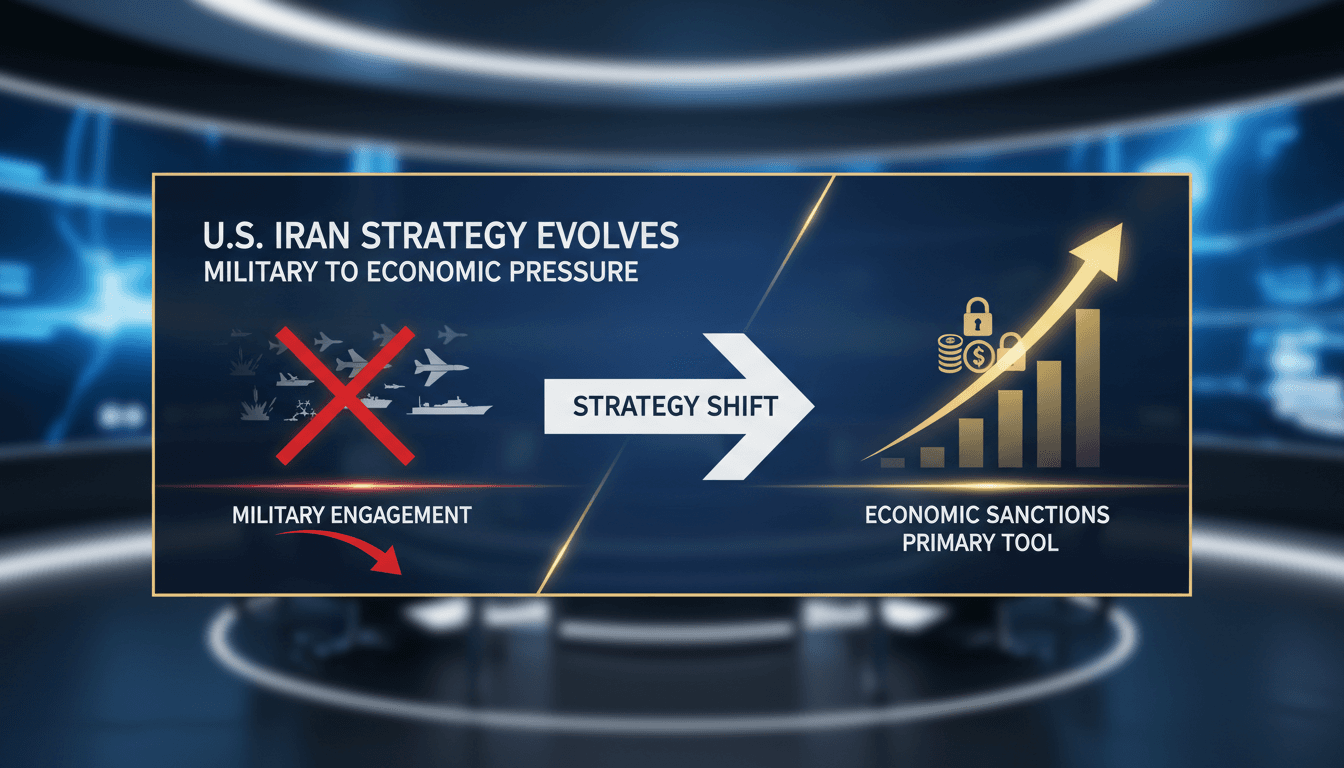
Trump shifts U.S. strategy towards Iran from military action to economic sanctions
Here's what it means for you.
The shift in U.S. strategy towards Iran signifies a critical pivot in foreign policy, emphasizing economic sanctions over military engagement. This approach may reshape international relations and impact global markets, particularly in sectors reliant on stability in the Middle East. Stakeholders should prepare for potential fluctuations in oil prices and geopolitical tensions as the U.S. seeks to exert pressure on Tehran.
What happened
President Trump has announced a strategic shift in U.S. policy regarding Iran, moving from military action to an increased focus on economic sanctions. This change comes as the conflict with Iran approaches its sixth month, during which military options have become less viable. Trump has asserted that these sanctions could lead to a breakthrough in negotiations that have stalled.
The decision reflects a recognition of dwindling military resources and the need for alternative methods to influence Iran's actions. By pivoting to economic pressure, the administration aims to leverage financial tools to achieve its foreign policy objectives.
The Context
The U.S. has been engaged in military operations in Iran for nearly six months, with initial predictions of a short engagement proving overly optimistic. As negotiations with Iran have stalled, the Trump administration has sought to recalibrate its approach. The shift to economic sanctions underscores the limitations of military engagement and the necessity of exploring other avenues to impact Iran's behavior.
Trump's strategy is characterized by a belief that economic pressure can effectively influence Tehran. This transition may also reflect broader geopolitical considerations, as the U.S. navigates a complex landscape involving various stakeholders in the region.
Takeaway
Looking ahead, the effectiveness of economic sanctions on Iran remains uncertain, but the U.S. administration appears committed to this strategy. Observers should monitor potential developments in U.S.-Iran negotiations and the impact of sanctions on Iran's economy and political stability. The long-term implications suggest that economic pressure may become a primary tool in U.S. foreign policy towards Iran.
As the situation evolves, stakeholders will need to stay informed about the ramifications of this strategic shift and its potential effects on global markets and diplomatic relations.
Right-of-center views on political news.
"The Washington Times is a conservative-leaning newspaper known for its political coverage and advocacy of right-of-center viewpoints."
— A47 Editor
Trump grapples with cycle of violence, diplomacy and economic pressure as Iran war nears sixth month
President Trump is currently navigating a complex situation as the conflict with Iran approaches its sixth month, having initially anticipated a brief military engagement. Instead, he faces ongoing violence and diplomatic challenges, compounded by a ...
Global business headlines with AI angles.
"General business outlet that frequently covers AI."
— A47 Editor
Trump Doubles Down On Economic Pressure On Iran As Prospects For a Deal Fade: 'I'm Their Banker'
President Donald Trump has intensified economic pressure on Iran, asserting that the strategy is effective as the likelihood of a diplomatic deal diminishes. He emphasized his role in the negotiations, claiming, 'I'm their banker,' which highlights t...
International stories from NPR’s global desk.
"NPR is an American public media organization known for thoughtful reporting and a slightly left-leaning editorial tone."
— A47 Editor
Trump pivots back to sanctions for Iran as other strategies to end his war fizzle
Former U.S. President Donald Trump has shifted his strategy back to imposing sanctions on Iran, as previous efforts to negotiate an end to hostilities have stalled and U.S. military stockpiles have diminished. Trump believes that increasing economic ...
Global business headlines with AI angles.
"General business outlet that frequently covers AI."
— A47 Editor
Trump Signals Focus On Economic Pressure On Iran As Hormuz Deal Remains Elusive: 'They Have No Money'
Donald Trump has indicated a strategic shift towards economic pressure on Iran, emphasizing that the nation lacks financial resources as negotiations to reopen the Strait of Hormuz remain unresolved. This marks a notable change from previous military...
Comprehensive coverage of Middle Eastern and global issues.
"Al Jazeera is a prominent voice from the Global South, especially the Middle East, with an emphasis on underreported stories."
— A47 Editor
What’s behind Trump’s shift to economic pressure on Iran? Will it work?
Former U.S. President Donald Trump has shifted his strategy towards increasing economic pressure on Iran, focusing on sanctions and a naval blockade, as military options are currently sidelined. This decision comes amid stabilizing oil prices, which ...
Global news coverage with extensive reporting on Middle Eastern conflicts and geopolitics.
"Al Jazeera is a Qatar-based broadcaster known for wide regional coverage and alternative perspectives."
— A47 Editor
What’s behind Trump’s shift to economic pressure on Iran? Will it work?
Former U.S. President Donald Trump has shifted his strategy towards increasing economic pressure on Iran, focusing on sanctions and a naval blockade, as military options are currently sidelined. This decision comes amid stabilizing oil prices, which ...
English-language digital publication covering business, politics, technology, and current affairs.
"The Arabian Post mixes original and syndicated-style coverage with a broad regional and global business-news orientation."
— A47 Editor
Trump shifts Iran pressure towards economic squeeze
Former U.S. President Donald Trump has shifted his strategy regarding Iran, focusing on increasing economic pressure through sanctions and a naval blockade, as military options are currently sidelined. This change comes amid stabilizing oil prices, w...