
USS Abraham Lincoln Crew Faces Severe Conditions After 250 Days at Sea
Here's what it means for you.
The ongoing situation aboard the USS Abraham Lincoln highlights critical issues surrounding military deployment policies and the welfare of service members. As lawmakers express concern over the crew's living conditions, this incident may prompt a reevaluation of how extended deployments are managed. The implications could lead to reforms aimed at ensuring better support and resources for sailors during prolonged operations.
What happened
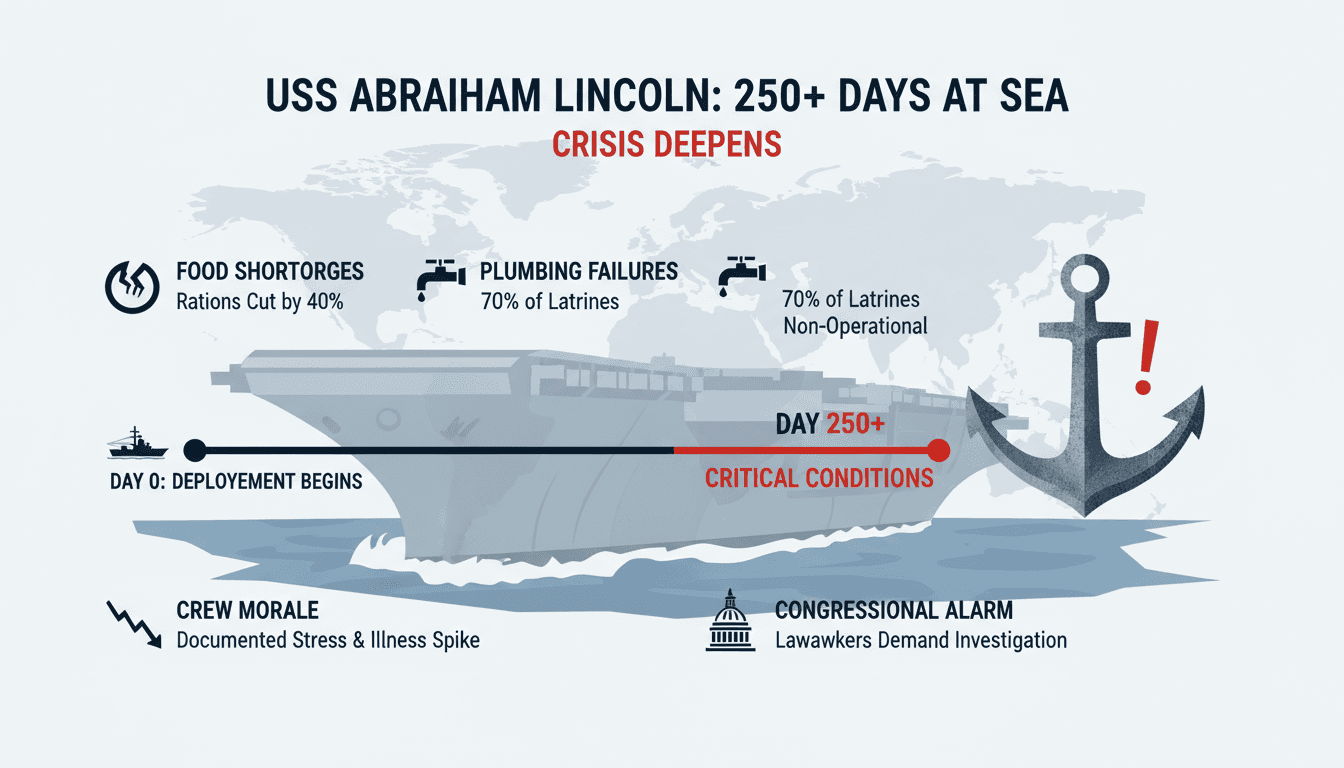
Sailors aboard the USS Abraham Lincoln are currently facing alarming conditions due to an extended deployment that has lasted over 250 days. Reports indicate that the crew is experiencing severe food shortages and plumbing failures, which have significantly impacted their daily lives. The physical and mental strain on the sailors has intensified, raising concerns among U.S. lawmakers about their well-being.
As the situation escalates, some crew members have reportedly considered drastic measures, including jumping overboard, due to the unbearable conditions. This alarming development has drawn attention from various news sources and prompted inquiries from Democratic members of Congress seeking clarifications regarding the situation.
The Context
The USS Abraham Lincoln's deployment has surpassed 250 days as of August 2026, marking a significant duration that has led to deteriorating living conditions for its crew. The combination of food shortages and broken plumbing has created an environment that is increasingly difficult for sailors to endure. Lawmakers are now involved, seeking answers and accountability regarding the treatment of military personnel during such prolonged deployments.
This incident underscores the broader implications for military policy and the need for sustainable practices in managing deployments. As public scrutiny grows, the welfare of service members is likely to become a focal point for future discussions and potential reforms.
Takeaway
The situation aboard the USS Abraham Lincoln raises urgent questions about the sustainability of extended military deployments and the conditions faced by service members. As lawmakers continue to investigate, there may be potential congressional hearings focused on military deployment conditions and the health and safety measures for sailors. The outcome of these inquiries could lead to significant changes in how the military approaches long-term deployments.
As developments unfold, stakeholders will be closely monitoring the situation to ensure that the welfare of service members is prioritized in future military operations.
International coverage of politics, culture, and current affairs.
"BBC News is widely regarded as a reputable international news organization, known for its impartial tone and public service mandate."
— A47 Editor
Conditions on US aircraft carrier at sea for more than 250 days raise alarms
Sailors aboard the USS Abraham Lincoln have faced dire conditions during their extended deployment, which has now surpassed 250 days at sea without making landfall. Reports indicate food shortages and plumbing issues, leading some crew members to con...
Pan-Arab news coverage spanning politics, business, sports, and regional affairs.
"Asharq Al-Awsat reflects a broad Arab editorial perspective with strong attention to regional geopolitics."
— A47 Editor
بعد استنزاف الذخائر… حرب إيران ترهق بحارة أميركا
The U.S. Navy is experiencing increasing physical and mental strain among the crew of the USS Abraham Lincoln following an extension of its deployment in the Middle East amid ongoing tensions. This situation has raised concerns regarding the well-bei...
Arabic-language political and world news coverage for UAE readers.
"Emarat Al Youm world coverage usually presents international developments through a UAE and Arab audience lens."
— A47 Editor
"محاولات انتحار" ونقص غذاء.. أوضاع بحارة "أبراهام لينكولن" تثير المخاوف "محاولات انتحار" ونقص غذاء.. أوضاع بحارة "أبراهام لينكولن" تثير المخاوف
Concerns have been raised regarding the conditions aboard the USS Abraham Lincoln, as Democratic members of the U.S. Congress have requested clarifications about reports of suicide attempts and food shortages among the sailors. This situation has pro...