
Egypt Evaluates Potential Membership in Makkah Agreement for Defense Cooperation
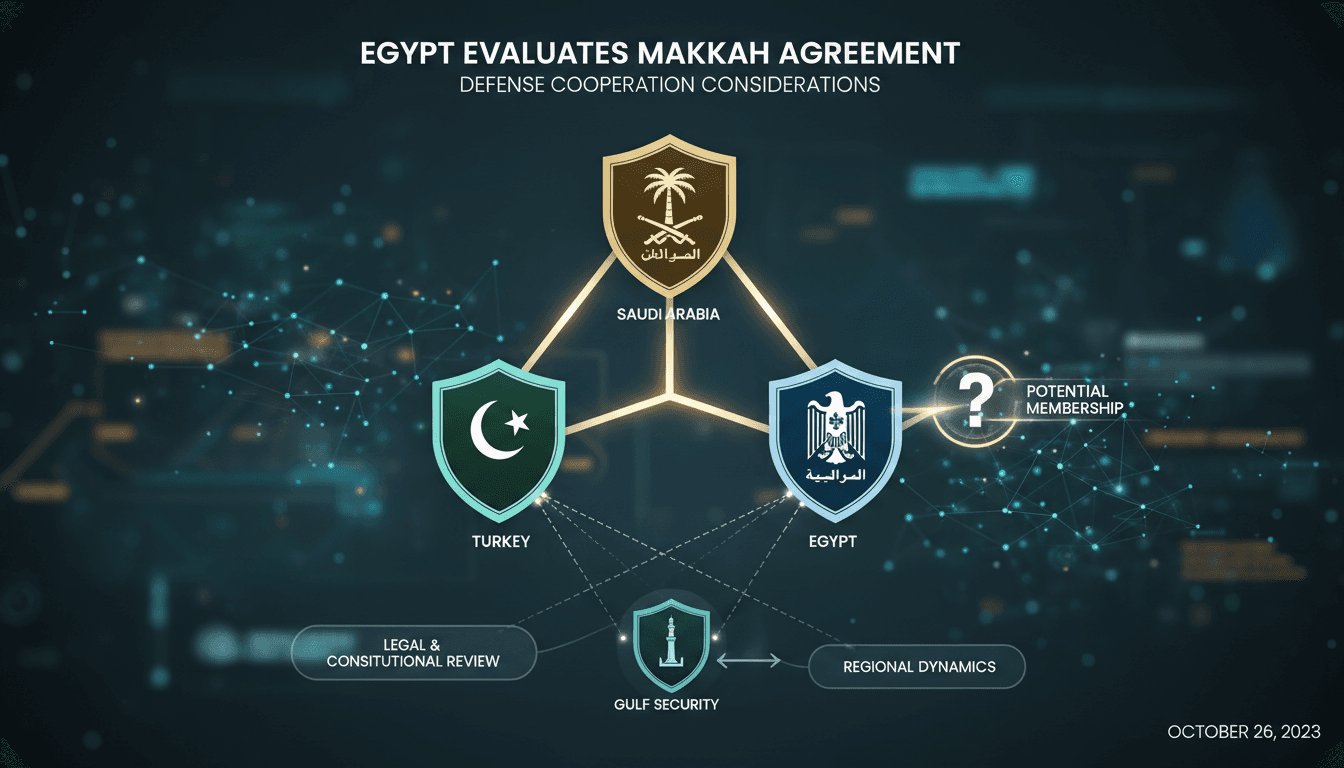
Here's what it means for you.
Egypt's consideration of joining the Makkah Agreement signals a pivotal moment in its foreign policy, particularly regarding Gulf security. This decision could reshape Egypt's relationships with key regional players, including Saudi Arabia, Turkey, and Pakistan. The implications extend beyond mere membership, potentially influencing broader security dynamics in the Middle East. As Egypt navigates the complexities of legal and constitutional factors, stakeholders will be closely monitoring the outcome. The decision could either strengthen or complicate Egypt's role in regional defense cooperation.
What happened
Egypt is currently evaluating its potential membership in the Makkah Agreement, a defense pact that includes Saudi Arabia, Turkey, and Pakistan. The country's Foreign Minister, بدر عبد العاطي, has reaffirmed Egypt's commitment to the security and stability of Gulf nations while discussing this potential alliance. He emphasized that the evaluation process is thorough, taking into account various constitutional and legal considerations.
This assessment comes at a time when Egypt has historically supported Gulf security initiatives. The Makkah Agreement aims to enhance collective defense among its member states, which adds a layer of urgency to Egypt's decision-making process.
The Context
The Makkah Agreement represents a strategic collaboration among three key nations: Saudi Arabia, Turkey, and Pakistan. Egypt's involvement in this pact could significantly impact its relations with these countries and the Gulf Cooperation Council as a whole. The timing of this evaluation is crucial, as regional security dynamics continue to evolve amid various geopolitical challenges.
Egypt's historical support for Gulf security underscores its vested interest in the stability of the region. The complexities surrounding legal and constitutional factors will play a critical role in determining whether Egypt ultimately joins the agreement.
Takeaway
As Egypt weighs its options regarding the Makkah Agreement, the outcome will likely influence its relations with Gulf nations and the broader security landscape in the region. Observers should monitor Egypt's final decision closely, as it may prompt reactions from other Gulf nations regarding their own security strategies. The implications of this decision could reverberate throughout the Middle East, affecting alliances and defense postures.
In the coming weeks, the focus will be on how Egypt navigates these legal complexities and the potential ramifications for regional stability.
Algerian and regional news coverage.
"Echorouk is a major Algerian outlet with broad national reporting."
— A47 Editor
أول ردّ رسمي من مصر حول الانضمام إلى “اتفاق مكة” للدفاع المشترك
Egypt's Foreign Minister, Badr Abdel Atti, officially commented on the country's potential joining of the 'Makkah Agreement' for collective defense, stating that Cairo is examining the agreement from various aspects. This statement was made during a ...
Arabic-language coverage of international news and geopolitics.
"RT Arabic is a Russian state-funded outlet often criticized for promoting Kremlin-aligned narratives."
— A47 Editor
وزير الخارجية المصري يكشف سبب عدم الانضمام لاتفاقية مكة الدفاعية
Egyptian Foreign Minister Badr Abdel Aty stated that the country is seriously considering joining the Makkah Defense Agreement, emphasizing the need to examine constitutional and legal considerations thoroughly.
Pan-Arab news coverage spanning politics, business, sports, and regional affairs.
"Asharq Al-Awsat reflects a broad Arab editorial perspective with strong attention to regional geopolitics."
— A47 Editor
مصر تشدد على أمن الخليج واستقراره
Egyptian Foreign Minister Badr Abdel Atti reiterated Egypt's steadfast support for the security and stability of Gulf countries, expressing solidarity with the Gulf Cooperation Council (GCC) states. This statement underscores Egypt's commitment to re...