
Trump imposes 100% tariff on imported drones targeting Chinese manufacturers
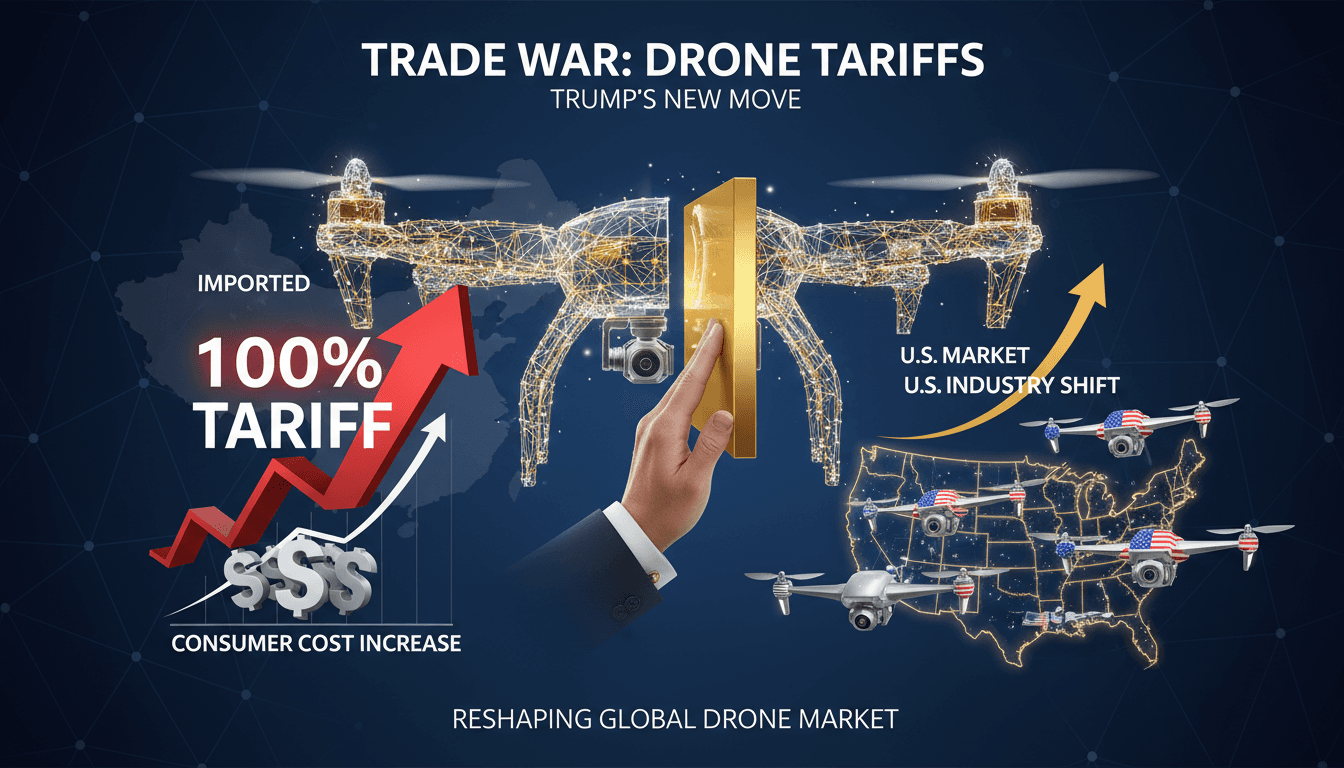
Here's what it means for you.
The recent decision by President Trump to impose a 100% tariff on certain imported drones and their components is poised to significantly impact the U.S. drone market. This move aims to protect American manufacturers from the dominance of Chinese companies, potentially reshaping industry dynamics. Consumers may face higher prices as a result of increased costs associated with these tariffs. As the U.S. navigates ongoing trade tensions with China, this tariff could lead to a shift in sourcing strategies for businesses reliant on imported drones. The long-term implications may include a more competitive domestic market, but also the risk of retaliatory measures from China.
What happened
On August 13, 2026, President Trump signed a presidential order imposing a 100% tariff on specific imported drones and their components. This significant financial duty is aimed at addressing concerns regarding the overwhelming presence of Chinese manufacturers in the drone industry. The decision reflects the administration's broader strategy to protect American industries amid escalating trade tensions.
The tariff applies to a select range of drone products, marking a decisive step in U.S. trade policy. This action has been reported by multiple news sources, highlighting its importance in the current economic landscape.
The Context
The drone industry has been largely dominated by Chinese manufacturers, raising alarms about national competitiveness and security. By imposing this tariff, the U.S. government seeks to bolster domestic production and reduce reliance on foreign imports. This decision comes at a time when trade relations between the U.S. and China are particularly strained, making it a critical moment for American manufacturers.
The timing of this announcement is crucial, as it aligns with ongoing discussions about trade policies and economic strategies. Stakeholders in the drone market, including manufacturers and consumers, will need to adapt to the new economic conditions created by this tariff.
Takeaway
The implementation of this 100% tariff may lead to increased costs for consumers and businesses that rely on imported drones. As the U.S. drone market adjusts to these changes, manufacturers will need to innovate and adapt to remain competitive. Additionally, potential retaliatory measures from China could further complicate the landscape.
Looking ahead, the impact on U.S. drone manufacturers and the overall market will be closely monitored. The evolving trade relationship between the U.S. and China will likely influence future policies and market dynamics.
Arabic-language coverage of international news and geopolitics.
"RT Arabic is a Russian state-funded outlet often criticized for promoting Kremlin-aligned narratives."
— A47 Editor
ترامب يفرض رسوما جمركية بنسبة 100% على واردات أنواع معينة من الطائرات المسيرة
On Thursday, U.S. President Donald Trump issued an order imposing a 100% tariff on imports of certain types of drones and their components into the United States. This decision reflects a significant shift in trade policy concerning unmanned aerial v...
Pan-Arab news coverage spanning politics, business, sports, and regional affairs.
"Asharq Al-Awsat reflects a broad Arab editorial perspective with strong attention to regional geopolitics."
— A47 Editor
ترمب يعلن فرض رسوم جمركية تصل إلى 100% على المسيّرات المستوردة
Donald Trump signed a presidential proclamation imposing tariffs of up to 100% on imported drones and their components, a sector predominantly controlled by China. This move reflects ongoing tensions in trade relations between the United States and C...
Jordanian news and regional updates.
"Roya News is a Jordanian outlet focused on breaking news and local affairs."
— A47 Editor
ترمب يعلن فرض رسوم جمركية تصل إلى 100% على المسيرات المستوردة
Former President Donald Trump has announced the imposition of tariffs of up to 100% on imported drones, a move that is expected to significantly impact the drone market and international trade relations. This decision reflects ongoing tensions regard...