
US and Iran ceasefire agreement expires without renewal
Here's what it means for you.
The expiration of the ceasefire between the U.S. and Iran signals a critical moment in international relations, particularly in the Middle East. Stakeholders in global markets and policy circles should prepare for potential escalations in military actions, which could disrupt regional stability. The absence of a renewed agreement complicates diplomatic negotiations, leaving both nations at a crossroads. As tensions rise, the implications for energy markets and geopolitical alliances could be significant. Investors and policymakers must closely monitor developments to navigate the uncertain landscape ahead.
What happened
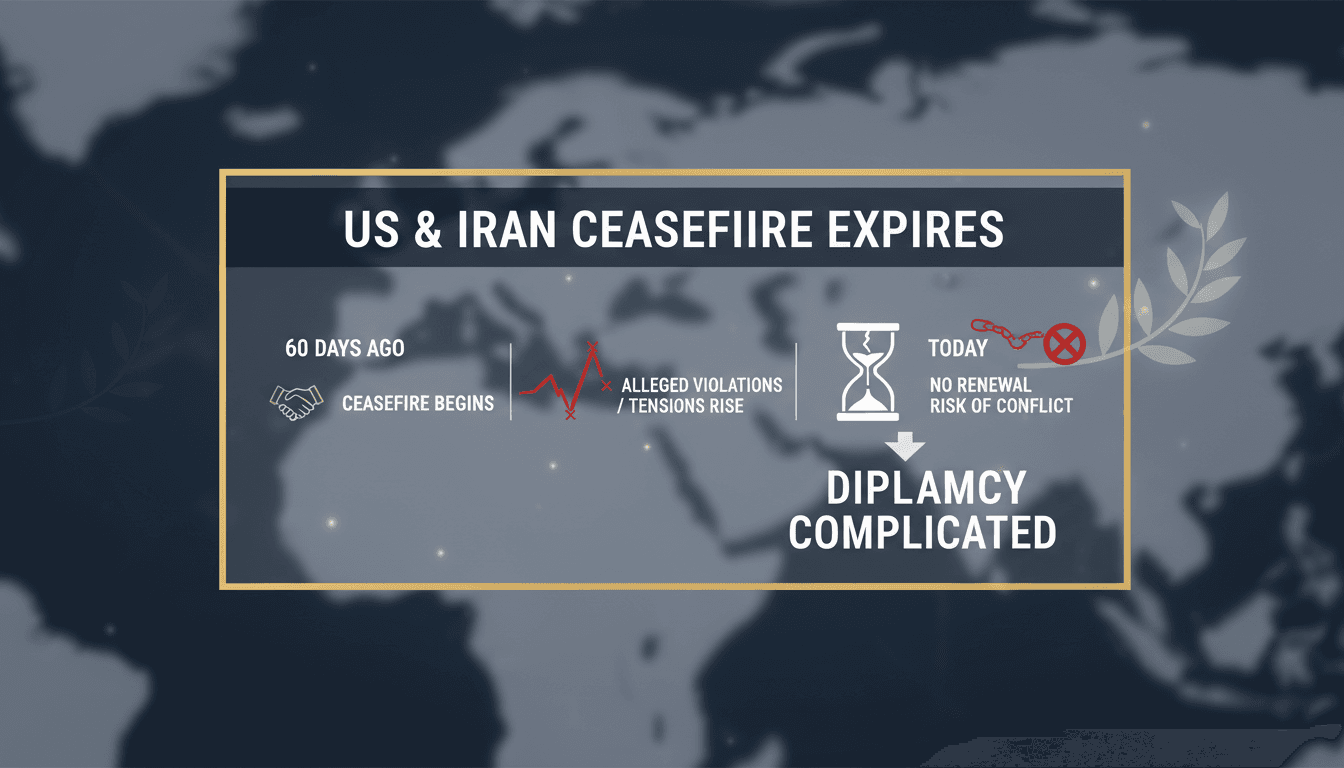
The 60-day ceasefire between the United States and Iran has officially ended without a new agreement. This ceasefire, known as the Islamabad Understanding, was established following significant military tensions that escalated earlier this year. Despite discussions about extending the ceasefire, no formal agreement has been reached, leaving both parties in a precarious position.
Iranian officials have accused the U.S. of violating the terms of the original ceasefire, further complicating the situation. The lack of a renewed ceasefire raises concerns about the potential for renewed military confrontations between the two nations.
The Context
The ceasefire was initially established after months of military confrontations that began on February 28, 2026. The Islamabad Understanding aimed to halt military actions and facilitate discussions on various issues, including nuclear matters. However, with the expiration of the ceasefire, both nations are now reassessing their strategies moving forward.
Iran's Foreign Ministry has indicated that the 60-day negotiation period is no longer relevant due to alleged U.S. violations. This backdrop of mistrust and accusations underscores the complexities of U.S.-Iran relations and the challenges that lie ahead for diplomatic efforts.
Takeaway
As the ceasefire has ended, the future of U.S.-Iran relations remains uncertain. Both nations face pressure to either extend the agreement or prepare for potential escalations in military actions. Observers should watch for any statements from U.S. and Iranian officials regarding the ceasefire extension, as well as any signs of increased military activity.
The potential for renewed conflict exists if diplomatic efforts fail, but there is also an opportunity for dialogue if both sides are willing to negotiate. The coming days will be crucial in determining the trajectory of these relations.
Arabic-language coverage of Saudi, regional, and international affairs.
"Al Bilad offers mainstream Saudi newspaper coverage across domestic and broader Arab topics."
— A47 Editor
واشنطن تدرس تمديد هدنة الـ 60 يوماً
Reports indicate that the United States and Iran are considering extending their 60-day ceasefire agreement, coinciding with the expiration of the initial terms outlined in a memorandum of understanding signed in June. No official details regarding t...
Arabic-language coverage of political affairs and current events.
"Okaz political coverage typically follows mainstream Saudi framing on national and regional affairs."
— A47 Editor
أنباء عن تمديد هدنة الـ60 يوماً بين إيران وأمريكا
Unconfirmed reports suggest a potential extension of the 60-day ceasefire between the United States and Iran, coinciding with the expiration of the memorandum of understanding signed in June. Sources from Al Arabiya and Al Hadath indicate that an agr...
Arabic-language coverage of international news and geopolitics.
"RT Arabic is a Russian state-funded outlet often criticized for promoting Kremlin-aligned narratives."
— A47 Editor
انتهاء مهلة الـ60 يوما بين واشنطن وطهران دون اتفاق.. وإيران تستعد لمواجهة أوسع
The 60-day deadline stipulated in the memorandum of understanding between Washington and Tehran has expired without a final agreement to halt the ongoing conflict. This development occurred at midnight, marking a significant moment in U.S.-Iran relat...