
Peace Council Meeting in Jerusalem Advances Trump's Gaza Reconstruction Initiative
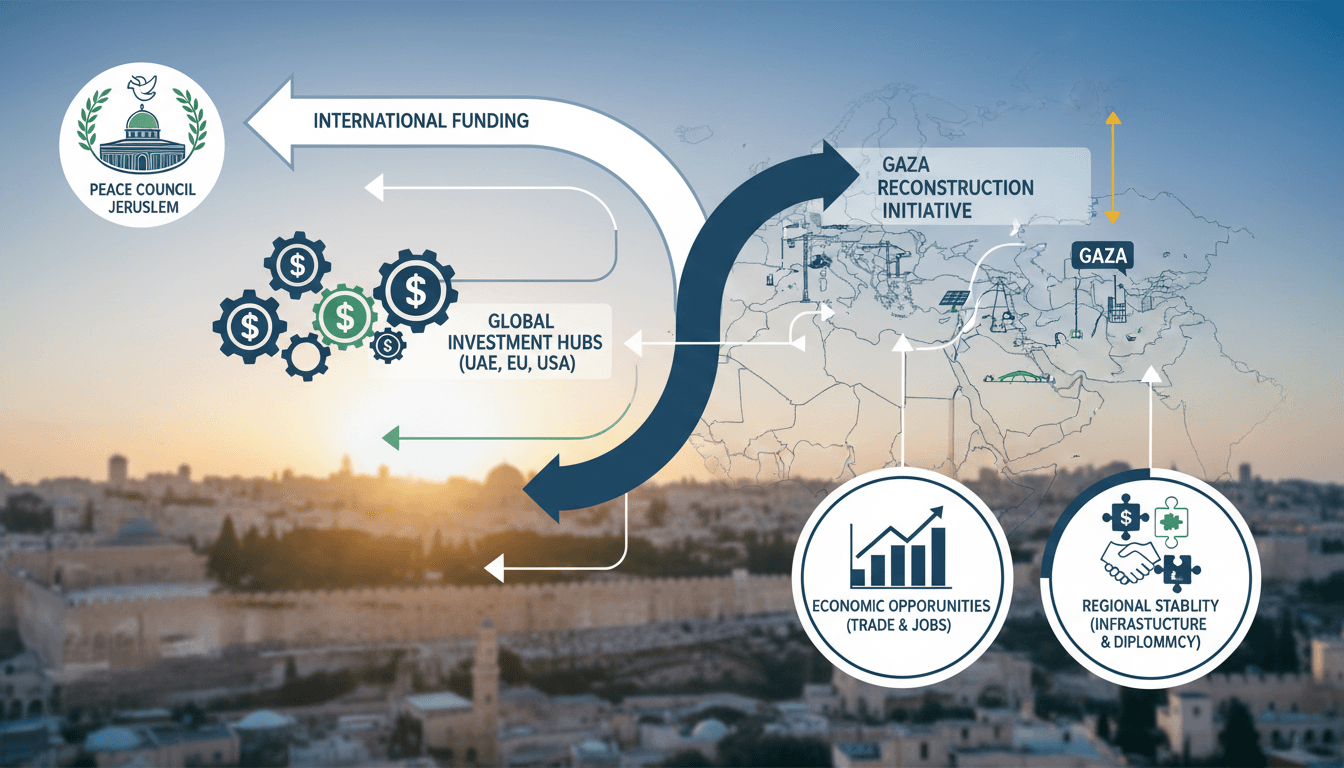
Here's what it means for you.
The ongoing discussions in Jerusalem could reshape economic dynamics in the region, potentially impacting trade and investment flows that reach your market.
Why it matters
The Peace Council's efforts to advance Gaza's reconstruction could stabilize a historically volatile region, influencing global economic conditions.
What happened (in 30 seconds)
- On August 17, 2026, the Peace Council convened in Jerusalem to discuss advancing President Trump's Gaza reconstruction plan.
- Key participants included representatives from the Trump administration and Israeli officials, focusing on disarmament of Hamas and funding mechanisms.
- Over $5 billion has been pledged by council members for humanitarian aid and reconstruction in Gaza.
The context you actually need
- The Peace Council was proposed by President Trump in September 2025 to address the Israel-Hamas conflict and manage Gaza's reconstruction.
- Permanent membership in the council requires countries to contribute at least $1 billion, with the U.S. leading coordination efforts.
- Ongoing discussions include forming working groups on Gaza and exploring economic tools like stable digital currencies for reconstruction.
What's really happening
The August 17 meeting in Jerusalem marks a significant step in the ongoing diplomatic efforts to stabilize Gaza and the broader region. The Peace Council, established in late 2025, aims to facilitate a structured approach to the reconstruction of Gaza while addressing the disarmament of Hamas. This dual focus is crucial, as it seeks to create a secure environment for international investment and aid.
The Trump administration's involvement signals a strong U.S. commitment to the initiative, which is essential for garnering support from other nations. The requirement for participating countries to pledge at least $1 billion for permanent membership underscores the financial stakes involved. With over $5 billion already pledged for humanitarian aid and reconstruction, the financial commitment reflects a collective recognition of the urgent need for stability in Gaza.
The discussions also highlight the potential for innovative economic solutions, such as the use of stable digital currencies, which could streamline funding processes and enhance transparency in reconstruction efforts. This approach not only aims to rebuild infrastructure but also to foster economic growth, which is vital for long-term peace.
However, the initiative faces challenges, particularly regarding representation and inclusivity. Palestinian factions, including Fatah, have criticized the lack of their involvement in the discussions, which could undermine the legitimacy of the council's efforts. The absence of a unified Palestinian voice may complicate the implementation of any agreements reached.
The implications of these developments extend beyond Gaza. A stable Gaza could lead to improved trade and investment flows through regional hubs, including the UAE. This potential ripple effect could influence markets and economic conditions in Dubai and beyond, although the specific impacts on residents remain unquantified.
Who feels it first (and how)
- Investors in regional markets may see new opportunities as stability increases.
- Businesses in Dubai could benefit from enhanced trade routes and economic partnerships.
- Local communities in Gaza may experience immediate changes in infrastructure and services as reconstruction efforts begin.
What to watch next
- Funding commitments: Monitor how much additional financial support is pledged by member countries, as this will determine the pace of reconstruction.
- Hamas disarmament progress: Keep an eye on developments regarding disarmament talks, as this will impact the security situation in Gaza.
- Regional diplomatic relations: Watch for shifts in diplomatic ties among Middle Eastern countries, as stability in Gaza could influence broader geopolitical dynamics.
Over $5 billion has been pledged for Gaza humanitarian aid and reconstruction.
Increased regional trade and investment flows as stability improves.
The long-term effectiveness of the Peace Council in achieving its goals without inclusive representation from Palestinian factions.
Frequently Asked Questions
- Why it matters?
- The Peace Council's efforts to advance Gaza's reconstruction could stabilize a historically volatile region, influencing global economic conditions.
- What happened (in 30 seconds)?
- On August 17, 2026, the Peace Council convened in Jerusalem to discuss advancing President Trump's Gaza reconstruction plan. Key participants included representatives from the Trump administration and Israeli officials, focusing on disarmament of Hamas and funding mechanisms. Over $5 billion has been pledged by council members for humanitarian aid and reconstruction in Gaza.
- What's really happening?
- The August 17 meeting in Jerusalem marks a significant step in the ongoing diplomatic efforts to stabilize Gaza and the broader region. The Peace Council, established in late 2025, aims to facilitate a structured approach to the reconstruction of Gaza while addressing the disarmament of Hamas. This dual focus is crucial, as it seeks to create a secure environment for international investment and aid. The Trump administration's involvement signals a strong U.S. commitment to the initiative, whic
- Who feels it first (and how)?
- Investors in regional markets may see new opportunities as stability increases. Businesses in Dubai could benefit from enhanced trade routes and economic partnerships. Local communities in Gaza may experience immediate changes in infrastructure and services as reconstruction efforts begin.
- What to watch next?
- Funding commitments: Monitor how much additional financial support is pledged by member countries, as this will determine the pace of reconstruction. Hamas disarmament progress: Keep an eye on developments regarding disarmament talks, as this will impact the security situation in Gaza. Regional diplomatic relations: Watch for shifts in diplomatic ties among Middle Eastern countries, as stability in Gaza could influence broader geopolitical dynamics.
Arabic-language coverage of international news and geopolitics.
"RT Arabic is a Russian state-funded outlet often criticized for promoting Kremlin-aligned narratives."
— A47 Editor
"مجلس السلام" يبحث في القدس دفـع خطة ترامب
U.S. President Donald Trump confirmed progress in the disarmament of Hamas, highlighting the existence of private communication channels between Washington and the group. This development was discussed during a meeting of the 'Peace Council' in Jerus...
Pan-Arab news coverage spanning politics, business, sports, and regional affairs.
"Asharq Al-Awsat reflects a broad Arab editorial perspective with strong attention to regional geopolitics."
— A47 Editor
نزع السلاح أم الانسحاب أولاً؟ عقدة تهدد خطة ترمب لغزة
Trump's plan for Gaza faces a significant challenge regarding the sequence of disarming Hamas and Israeli withdrawal, amid disagreements with Netanyahu and complexities in verifying commitments and the extent of U.S. pressure.
Arabic-language coverage of international news and geopolitics.
"RT Arabic is a Russian state-funded outlet often criticized for promoting Kremlin-aligned narratives."
— A47 Editor
مبعوثو ترامب يضغطون على نتنياهو لتنفيذ خطة غزة ونزع سلاح حماس
U.S. envoys are meeting with Israeli Prime Minister Benjamin Netanyahu to pressure Israel to advance to the next phase of the American plan for the Gaza Strip, which includes disarming Hamas. This meeting highlights the ongoing diplomatic efforts by ...
Jordanian news and regional updates.
"Roya News is a Jordanian outlet focused on breaking news and local affairs."
— A47 Editor
حماس تعلن موافقتها على خارطة طريق المرحلة الثانية من خطة ترمب وتدعو مجلس السلام إلى إلزام الاحتلال بالقبول بخطة غزة
Hamas has announced its agreement to the second phase roadmap of Trump's plan, urging the Peace Council to compel the occupation to accept the Gaza plan. This decision reflects the movement's alignment with the interests of the Palestinian people ami...