
Trump Claims Strait of Hormuz as New US Territory Amid Iran Tensions
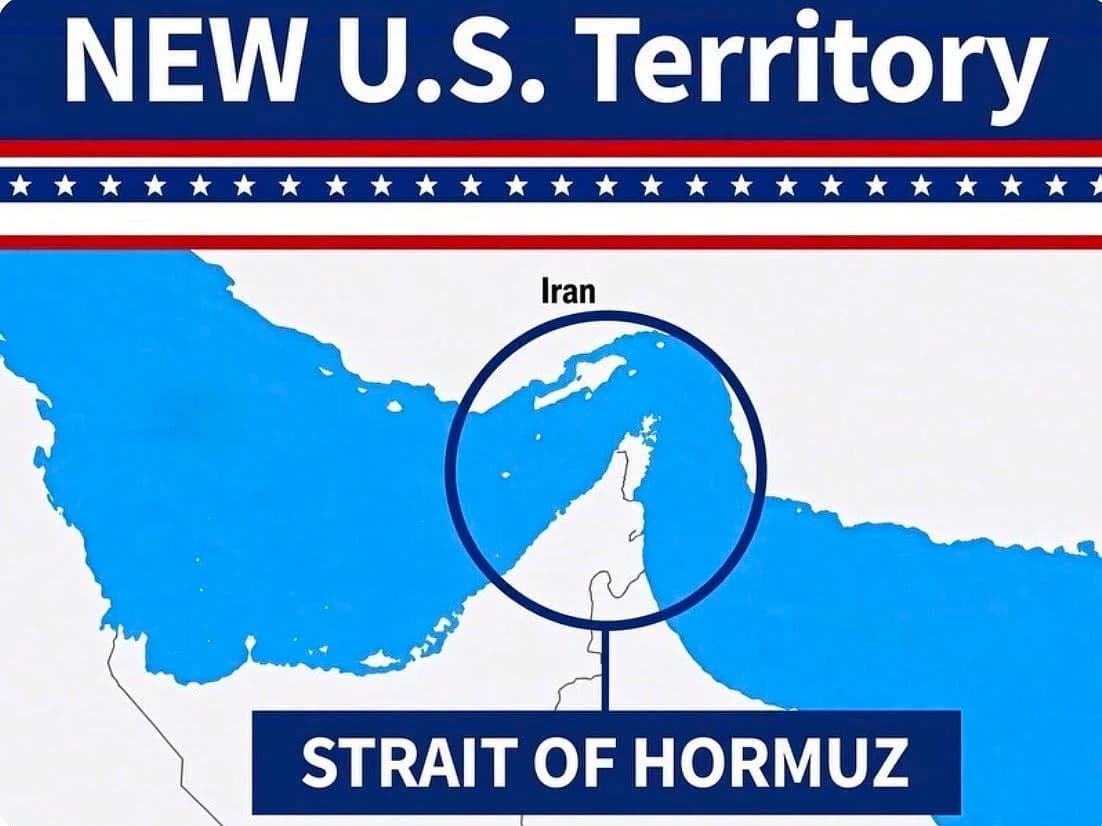
Here's what it means for you.
If you rely on global energy markets, this escalating conflict could impact oil prices and trade routes.
Why it matters
The Strait of Hormuz is a critical chokepoint for global oil transit, with 21 million barrels passing through daily.
What happened (in 30 seconds)
- On August 15, 2026, President Trump announced intentions to declare the Strait of Hormuz US territory after defeating Iran.
- On August 19, 2026, he posted a map labeling the strait as 'new US territory', escalating tensions in the region.
- Iran and Oman, which claim the strait as their territorial waters, have rejected the assertion, leading to increased geopolitical friction.
The context you actually need
- The Strait of Hormuz is vital for global energy, with approximately 21 million barrels of oil transiting daily, making it a significant economic artery.
- US-Iran relations have been strained, particularly following the expiration of a 14-point memorandum of understanding, which has led to military posturing and trade disruptions.
- Regional actors, including the UAE, have reacted by suspending trade with Iran and implementing security measures, indicating a broader impact on Middle Eastern stability.
What's really happening
The recent declaration by President Trump regarding the Strait of Hormuz is not merely a rhetorical flourish; it reflects a complex interplay of military strategy, economic interests, and geopolitical maneuvering. The strait serves as a critical transit route for oil and liquefied natural gas (LNG), with about 21 million barrels passing through daily. This volume underscores its importance not just to the countries bordering it, but to global energy markets at large.
Trump's assertion of US control over the strait follows a pattern of aggressive posturing towards Iran, particularly after the expiration of a 14-point memorandum of understanding that had temporarily eased tensions. The US has previously enforced naval blockades and conducted military exercises in the region, signaling a willingness to assert dominance over this strategic waterway. By labeling the strait as 'new US territory', Trump aims to reinforce the narrative of US supremacy in the region, potentially deterring Iranian aggression.
However, this declaration lacks formal legal backing and international recognition, which raises questions about its legitimacy and effectiveness. Iran has vehemently denied the claims, labeling them as delusional, and has indicated that it will continue to assert its territorial rights. The situation is further complicated by the involvement of other regional players, such as Oman and the UAE, who have their own interests in maintaining stability and security in the Gulf.
The economic implications are significant. The volatility in energy markets is already evident, with fluctuations in oil prices following the announcement. The UAE's suspension of trade with Iran and the issuance of missile alerts indicate a heightened state of alert among Gulf states, which could lead to further disruptions in trade and commerce. For Dubai residents, this means potential impacts on financial transactions, maritime navigation, and international flights, as security measures tighten in response to the escalating conflict.
In summary, Trump's declaration is a strategic move aimed at reinforcing US influence in a critical region, but it also risks exacerbating tensions and destabilizing an already fragile geopolitical landscape.
Who feels it first (and how)
- Energy sector professionals: Fluctuations in oil prices could impact jobs and investments.
- Maritime operators: Increased security measures may disrupt shipping routes and logistics.
- Dubai residents: Trade suspensions and missile alerts could affect daily life and business operations.
- Investors: Volatility in energy markets may lead to financial losses or opportunities depending on market reactions.
What to watch next
- US military movements: Increased naval presence in the Gulf could indicate further escalation or deterrence strategies.
- Iran's response: Any military or economic retaliation from Iran could significantly impact regional stability and global oil prices.
- International diplomatic efforts: Watch for potential negotiations or interventions from global powers aiming to de-escalate tensions.
The Strait of Hormuz is a critical global energy transit route.
Increased volatility in oil markets and regional trade disruptions.
The long-term implications of Trump's declaration on US-Iran relations and regional stability.
Frequently Asked Questions
- Why it matters?
- The Strait of Hormuz is a critical chokepoint for global oil transit, with 21 million barrels passing through daily.
- What happened (in 30 seconds)?
- On August 15, 2026, President Trump announced intentions to declare the Strait of Hormuz US territory after defeating Iran. On August 19, 2026, he posted a map labeling the strait as 'new US territory', escalating tensions in the region. Iran and Oman, which claim the strait as their territorial waters, have rejected the assertion, leading to increased geopolitical friction.
- What's really happening?
- The recent declaration by President Trump regarding the Strait of Hormuz is not merely a rhetorical flourish; it reflects a complex interplay of military strategy, economic interests, and geopolitical maneuvering. The strait serves as a critical transit route for oil and liquefied natural gas (LNG), with about 21 million barrels passing through daily. This volume underscores its importance not just to the countries bordering it, but to global energy markets at large. Trump's assertion of US con
- Who feels it first (and how)?
- Energy sector professionals: Fluctuations in oil prices could impact jobs and investments. Maritime operators: Increased security measures may disrupt shipping routes and logistics. Dubai residents: Trade suspensions and missile alerts could affect daily life and business operations. Investors: Volatility in energy markets may lead to financial losses or opportunities depending on market reactions.
- What to watch next?
- US military movements: Increased naval presence in the Gulf could indicate further escalation or deterrence strategies. Iran's response: Any military or economic retaliation from Iran could significantly impact regional stability and global oil prices. International diplomatic efforts: Watch for potential negotiations or interventions from global powers aiming to de-escalate tensions.
Arabic-language coverage of international news and geopolitics.
"RT Arabic is a Russian state-funded outlet often criticized for promoting Kremlin-aligned narratives."
— A47 Editor
ترامب: تراجع أهمية مضيق هرمز مع زيادة إنتاج النفط الأمريكي
U.S. President Donald Trump stated that the Strait of Hormuz will not hold the same significance for global oil supplies in the future, attributing this shift to the increase in oil production and exports from the United States.
Pan-Arab political news and analysis.
"Al-Quds Al-Arabi is a London-based Arabic newspaper known for political coverage."
— A47 Editor
ترامب: مضيق هرمز لن يكون مهما كما كان بسبب مسارات بديلة
On Wednesday, U.S. President Donald Trump stated that the Strait of Hormuz is likely to lose its previous significance due to the emergence of alternative oil transport routes and the establishment of numerous new pipelines. Trump made these remarks ...
Breaking news and analysis from the UAE and Gulf region.
"Khaleej Times is a long-running UAE publication with broad regional coverage."
— A47 Editor
Trump calls Hormuz 'new US territory': 3 countries he declared American in 2026
Former President Donald Trump has announced plans to declare the Strait of Hormuz a U.S. territory, a move that he claims will enhance U.S. control over this strategically vital maritime route. This declaration is part of a broader assertion of U.S. ...
Arabic-language coverage of political affairs and current events.
"Okaz political coverage typically follows mainstream Saudi framing on national and regional affairs."
— A47 Editor
ترمب يستفز إيران ويهدد بالسيطرة على «هرمز»
In a notable escalation, U.S. President Donald Trump has once again threatened to take control of the Strait of Hormuz, suggesting it could become 'American land.' Trump shared a map of the strait on his platform, Truth Social, captioned 'New America...
Pan-Arab news coverage spanning politics, business, sports, and regional affairs.
"Asharq Al-Awsat reflects a broad Arab editorial perspective with strong attention to regional geopolitics."
— A47 Editor
ترمب يصعّد بشأن مضيق «هرمز»: أرض أميركية جديدة
U.S. President Donald Trump recently shared an image on his social media platform, Truth Social, depicting the Strait of Hormuz on a map, accompanied by the caption: 'New American Land.' This post has sparked discussions regarding its implications fo...