
Trump Claims Strait of Hormuz as U.S. Territory Amid Naval Blockade of Iran
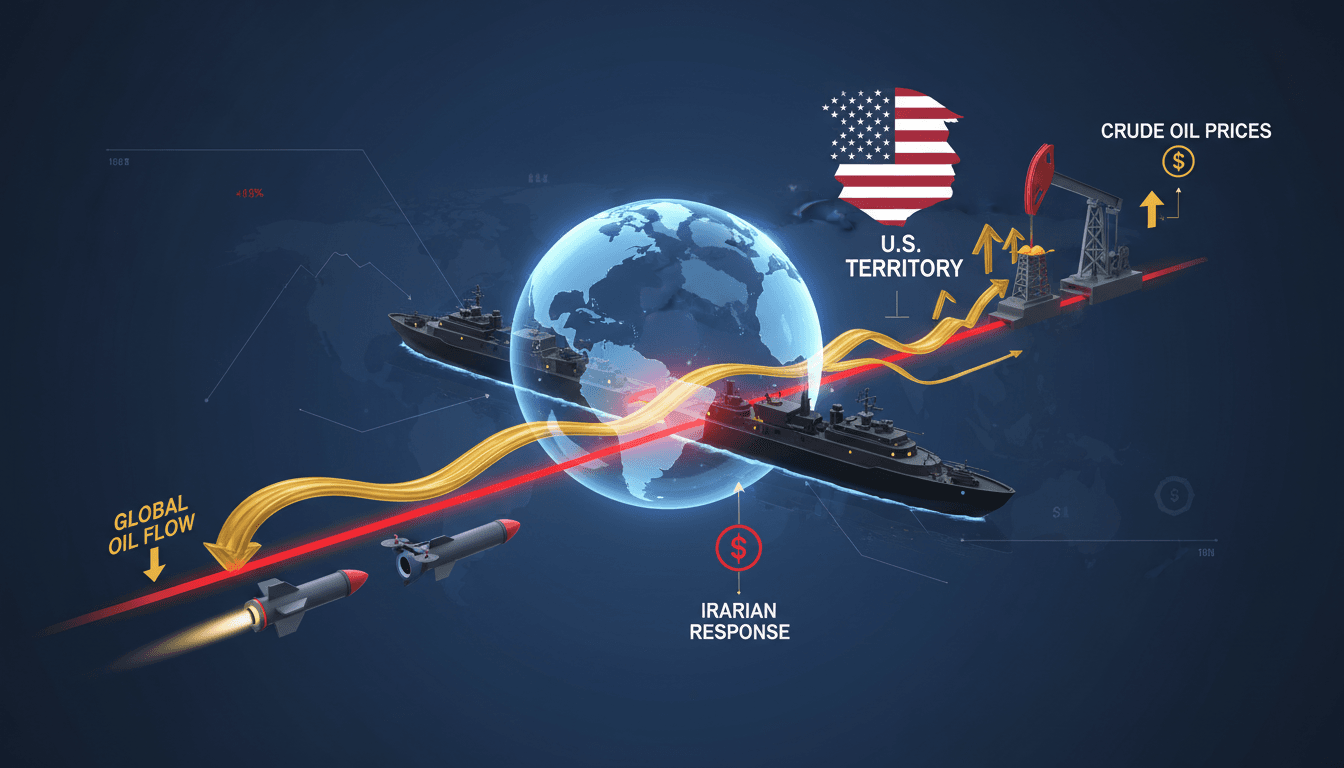
Why it matters
The Strait of Hormuz is a critical chokepoint for global oil supply, affecting energy prices worldwide.
What happened (in 30 seconds)
- Trump declared the Strait of Hormuz as U.S. territory during a naval blockade of Iran.
- Iranian officials rejected the claims, reaffirming their control over the strait.
- Global oil prices surged amid ongoing tensions and restricted shipping routes.
The context you actually need
- The U.S.-Iran conflict escalated in February 2026, leading to military actions and a blockade.
- Approximately 20% of global seaborne oil passes through the Strait of Hormuz, making it vital for energy security.
- Trump's statements have no legal standing under international law, as the strait lies in international waters.
What's really happening
The recent declaration by President Trump regarding the Strait of Hormuz reflects a significant escalation in the ongoing U.S.-Iran conflict, which began with military strikes in February 2026. The U.S. has imposed a naval blockade on Iranian ports, effectively restricting shipping traffic through this crucial waterway. Trump's assertion that he views the strait as American territory is primarily rhetorical, aimed at signaling U.S. dominance and control over a region critical for global oil supply.
The Strait of Hormuz is a strategic chokepoint, with about 20% of the world's oil passing through it. This makes it a focal point for geopolitical tensions, especially between the U.S. and Iran. Trump's statements come in the context of heightened military operations and a clear intent to deter Iranian influence in the region. By claiming the strait as U.S. territory, Trump is attempting to bolster his administration's position against Iranian nuclear ambitions and assert control over shipping routes that are vital for global energy markets.
Despite the bold rhetoric, the legal implications of such a declaration are minimal. International law does not recognize unilateral claims over international waters, and Iran has firmly rejected Trump's assertions, labeling them as delusions. Iranian officials have indicated that the strait will remain closed to U.S. shipping unless concessions are made, further complicating the situation.
The blockade has already led to increased oil prices globally, affecting economies that rely heavily on oil imports. In Dubai, for instance, residents and businesses are feeling the pinch as fuel and energy costs rise due to restricted traffic through the strait. The ongoing volatility in oil prices is likely to continue as the situation develops, with potential ripple effects across various sectors.
As the U.S. maintains its blockade and Iran continues to assert its sovereignty, the situation remains tense. The lack of formal recognition of Trump's claims by the international community underscores the precarious nature of this geopolitical standoff. The U.S. military's focus on enforcing the blockade, rather than occupying the strait, indicates a strategy aimed at exerting pressure without direct confrontation.
Who feels it first (and how)
- Energy consumers: Higher fuel prices directly impact households and businesses.
- Shipping companies: Increased costs and delays due to rerouted vessels affect logistics.
- Investors in oil markets: Volatility in oil prices can lead to financial uncertainty and risk.
- Regional economies: Countries reliant on oil exports or imports face economic strain.
What to watch next
- Oil price fluctuations: Continued volatility could signal deeper economic impacts globally.
- U.S.-Iran negotiations: Any diplomatic efforts or escalations will influence market stability.
- Military developments: Changes in U.S. military posture in the region could alter the blockade's effectiveness.
The Strait of Hormuz is vital for global oil supply, with 20% of seaborne oil transiting through it.
Oil prices will remain volatile as tensions persist between the U.S. and Iran.
The potential for diplomatic resolutions or further military escalations remains uncertain.
Frequently Asked Questions
- Why it matters?
- The Strait of Hormuz is a critical chokepoint for global oil supply, affecting energy prices worldwide.
- What happened (in 30 seconds)?
- Trump declared the Strait of Hormuz as U.S. territory during a naval blockade of Iran. Iranian officials rejected the claims, reaffirming their control over the strait. Global oil prices surged amid ongoing tensions and restricted shipping routes.
- What's really happening?
- The recent declaration by President Trump regarding the Strait of Hormuz reflects a significant escalation in the ongoing U.S.-Iran conflict, which began with military strikes in February 2026. The U.S. has imposed a naval blockade on Iranian ports, effectively restricting shipping traffic through this crucial waterway. Trump's assertion that he views the strait as American territory is primarily rhetorical, aimed at signaling U.S. dominance and control over a region critical for global oil supp
- Who feels it first (and how)?
- Energy consumers: Higher fuel prices directly impact households and businesses. Shipping companies: Increased costs and delays due to rerouted vessels affect logistics. Investors in oil markets: Volatility in oil prices can lead to financial uncertainty and risk. Regional economies: Countries reliant on oil exports or imports face economic strain.
- What to watch next?
- Oil price fluctuations: Continued volatility could signal deeper economic impacts globally. U.S.-Iran negotiations: Any diplomatic efforts or escalations will influence market stability. Military developments: Changes in U.S. military posture in the region could alter the blockade's effectiveness.
Jordanian news and regional updates.
"Roya News is a Jordanian outlet focused on breaking news and local affairs."
— A47 Editor
ترمب يعلن أعتبار مضيق هرمز أرضا أمريكية بالكامل
U.S. President Donald Trump has declared the Strait of Hormuz as entirely American territory, emphasizing that Washington will not allow Iran to exert control over this critical waterway. This statement underscores the ongoing tensions between the U....
Arabic-language coverage of international news and geopolitics.
"RT Arabic is a Russian state-funded outlet often criticized for promoting Kremlin-aligned narratives."
— A47 Editor
الكشف عن دوافع تسمية ترامب لمضيق هرمز وسواحل عُمان والإمارات وإيران بـ"أرض أمريكية جديدة"
Former President Donald Trump has referred to the Strait of Hormuz and the coasts of Oman, the UAE, and Iran as 'New American Land,' reflecting his frustration over the inability to achieve victory against Iran and his desperate attempt to assert con...
Arabic-language coverage of international news and geopolitics.
"RT Arabic is a Russian state-funded outlet often criticized for promoting Kremlin-aligned narratives."
— A47 Editor
ترامب: تراجع أهمية مضيق هرمز مع زيادة إنتاج النفط الأمريكي
U.S. President Donald Trump stated that the Strait of Hormuz will not hold the same significance for global oil supplies in the future, attributing this shift to the increase in oil production and exports from the United States.
Pan-Arab political news and analysis.
"Al-Quds Al-Arabi is a London-based Arabic newspaper known for political coverage."
— A47 Editor
ترامب: مضيق هرمز لن يكون مهما كما كان بسبب مسارات بديلة
On Wednesday, U.S. President Donald Trump stated that the Strait of Hormuz is likely to lose its previous significance due to the emergence of alternative oil transport routes and the establishment of numerous new pipelines. Trump made these remarks ...