
Iran Shifts to Offensive Strategy Amid US Negotiation Stalemate
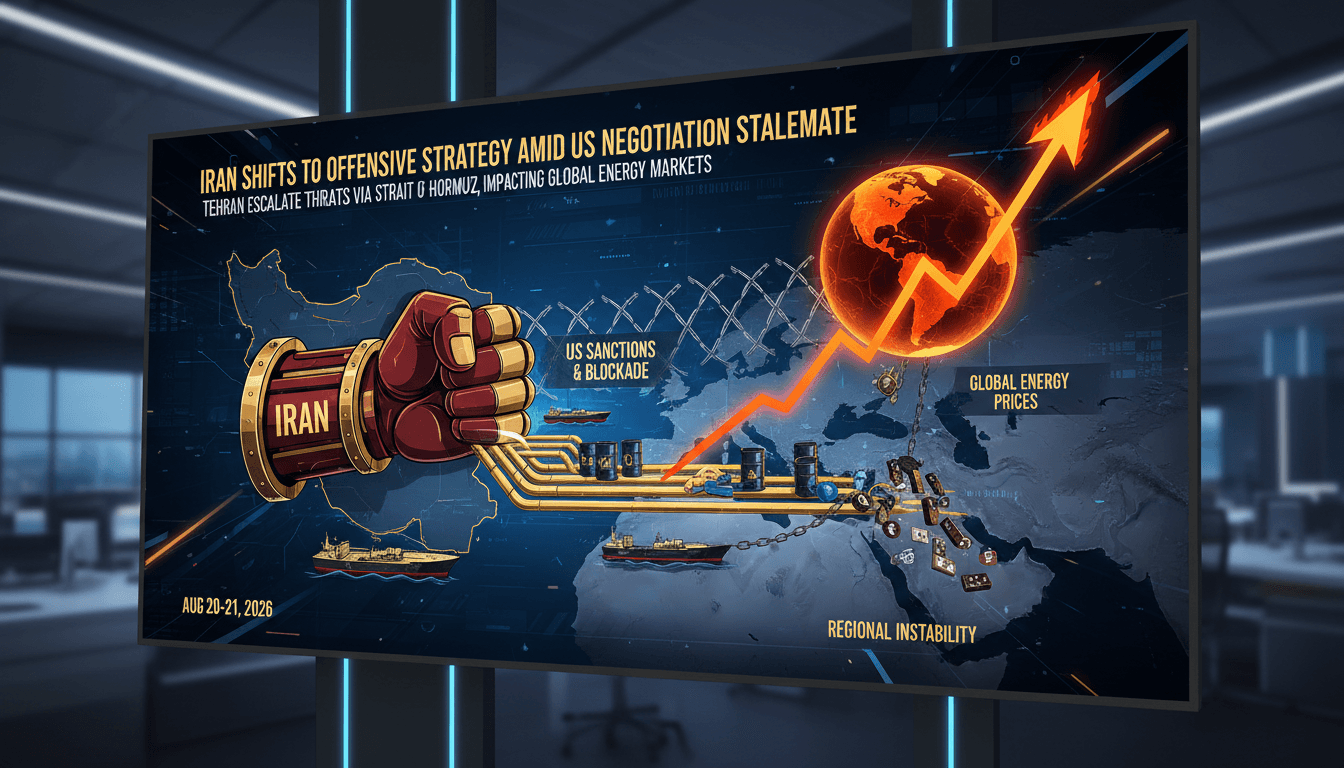
Here's what it means for you.
The evolving geopolitical landscape in the Middle East could impact global energy prices and maritime shipping routes.
Why it matters
The shift in Iran's military posture could lead to increased tensions in the Strait of Hormuz, a critical chokepoint for global oil supply.
What happened (in 30 seconds)
- Iran has adopted an offensive military posture to break a six-month negotiation deadlock with the US, following escalated conflict since February 2026.
- Leadership changes in Iran's security apparatus signal a strategic pivot towards aggression, with Mojtaba Khamenei prioritizing offensive capabilities.
- US responses include renewed maritime blockades and a focus on maintaining low energy prices amid ongoing regional instability.
The context you actually need
- The conflict began with US-Israeli strikes on February 28, 2026, which Iran initially framed as retaliatory.
- A collapsed June 2026 memorandum of understanding led to the reimposition of US sanctions and a blockade on Iranian ports and oil exports.
- Mojtaba Khamenei's leadership transition after the death of his father, Ali Khamenei, has resulted in a more aggressive military strategy.
What's really happening
Iran's recent strategic shift towards an offensive military posture is a calculated response to a prolonged negotiation stalemate with the United States. Following six months of conflict initiated by US-Israeli strikes, Tehran has signaled a reduced willingness to wait for a diplomatic resolution. Instead, it is increasing the costs of continued confrontation through threats involving the Strait of Hormuz, a vital maritime route for global oil shipments.
The leadership transition from Ali Khamenei to his son, Mojtaba Khamenei, has brought about significant changes in Iran's security leadership. Appointments of veteran figures aligned with the Iranian Revolutionary Guard Corps (IRGC) to key security positions indicate a strategic pivot towards prioritizing offensive military capabilities. This includes demands for transit permits and fees through the Strait of Hormuz, which analysts interpret as preparation for a prolonged conflict aimed at forcing US concessions.
The collapse of the June 2026 memorandum of understanding, which had aimed to de-escalate tensions, has exacerbated the situation. The reimposition of US sanctions and a maritime blockade on Iranian ports have further strained relations. Iranian officials, despite suffering significant losses, have framed their military and political responses as victories, suggesting a narrative of resilience and strength.
As Iran escalates its military posture, the risks of broader regional conflict increase. Analysts warn that heightened tensions could lead to intermittent exchanges of fire, particularly around the Strait of Hormuz, which is already experiencing disruptions due to Iranian-backed groups. The US administration, under President Donald Trump, remains focused on keeping energy prices low and preventing Iranian nuclear weapons development, but the situation is precarious.
The implications of Iran's shift extend beyond immediate military concerns. Global energy markets are likely to feel the impact, especially if maritime shipping routes are disrupted. Residents in Dubai and surrounding regions may face fluctuations in energy prices and shipping costs, as the Strait of Hormuz is a critical artery for oil transport. The interconnectedness of global supply chains means that any escalation in the region could have ripple effects felt far beyond the Middle East.
Who feels it first (and how)
- Energy sector professionals: Fluctuations in oil prices could impact jobs and investments.
- Maritime shipping companies: Increased risks in the Strait of Hormuz may lead to higher insurance costs and rerouting.
- Residents of Dubai: Potential disruptions in energy prices and shipping routes could affect daily living costs.
What to watch next
- US military movements in the region: Increased naval presence could indicate a response to Iranian threats, impacting regional stability.
- Iran's military engagements: Any escalation in military actions could lead to broader conflict, affecting global energy markets.
- Negotiation efforts: Watch for any renewed diplomatic initiatives that could either ease tensions or exacerbate the situation.
Iran has shifted to an offensive military posture.
Increased tensions in the Strait of Hormuz will affect global energy prices.
The long-term impact of leadership changes in Iran on regional stability.
Frequently Asked Questions
- Why it matters?
- The shift in Iran's military posture could lead to increased tensions in the Strait of Hormuz, a critical chokepoint for global oil supply.
- What happened (in 30 seconds)?
- Iran has adopted an offensive military posture to break a six-month negotiation deadlock with the US, following escalated conflict since February 2026. Leadership changes in Iran's security apparatus signal a strategic pivot towards aggression, with Mojtaba Khamenei prioritizing offensive capabilities. US responses include renewed maritime blockades and a focus on maintaining low energy prices amid ongoing regional instability.
- What's really happening?
- Iran's recent strategic shift towards an offensive military posture is a calculated response to a prolonged negotiation stalemate with the United States. Following six months of conflict initiated by US-Israeli strikes, Tehran has signaled a reduced willingness to wait for a diplomatic resolution. Instead, it is increasing the costs of continued confrontation through threats involving the Strait of Hormuz, a vital maritime route for global oil shipments. The leadership transition from Ali Khame
- Who feels it first (and how)?
- Energy sector professionals: Fluctuations in oil prices could impact jobs and investments. Maritime shipping companies: Increased risks in the Strait of Hormuz may lead to higher insurance costs and rerouting. Residents of Dubai: Potential disruptions in energy prices and shipping routes could affect daily living costs.
- What to watch next?
- US military movements in the region: Increased naval presence could indicate a response to Iranian threats, impacting regional stability. Iran's military engagements: Any escalation in military actions could lead to broader conflict, affecting global energy markets. Negotiation efforts: Watch for any renewed diplomatic initiatives that could either ease tensions or exacerbate the situation.
Pan-Arab news coverage spanning politics, business, sports, and regional affairs.
"Asharq Al-Awsat reflects a broad Arab editorial perspective with strong attention to regional geopolitics."
— A47 Editor
طهران تراهن على التصعيد لكسر الجمود التفاوضي
After nearly six months of conflict, Tehran appears less inclined to await a resolution with Washington and is more likely to escalate tensions by threatening offensive operations through the Strait of Hormuz.
Jordanian news and regional updates.
"Roya News is a Jordanian outlet focused on breaking news and local affairs."
— A47 Editor
حرب الميمز.. التراشق الجغرافي بين واشنطن وطهران ينتقل إلى السوشيال ميديا
The American-Iranian conflict has transitioned from military threats to a digital battleground, with both Washington and Tehran engaging in a meme war on social media platforms. This shift highlights the evolving nature of geopolitical tensions, wher...
Arabic-language coverage of international news and geopolitics.
"RT Arabic is a Russian state-funded outlet often criticized for promoting Kremlin-aligned narratives."
— A47 Editor
طهران: لن نفرط في مضيق هرمز
Iranian sources close to the negotiating team have denied U.S. claims regarding the cancellation of talks, emphasizing that Tehran suspended discussions following the United States' violation of the Islamabad memorandum.