
UAE Ministry of Higher Education Implements New Fee Structure for Institutional Reviews
Here's what it means for you.
If you're a student or parent in the UAE, expect a more reliable higher education landscape as institutions undergo standardized evaluations.
Why it matters
This regulatory shift aims to enhance the quality and recognition of UAE qualifications, aligning them with global standards.
What happened (in 30 seconds)
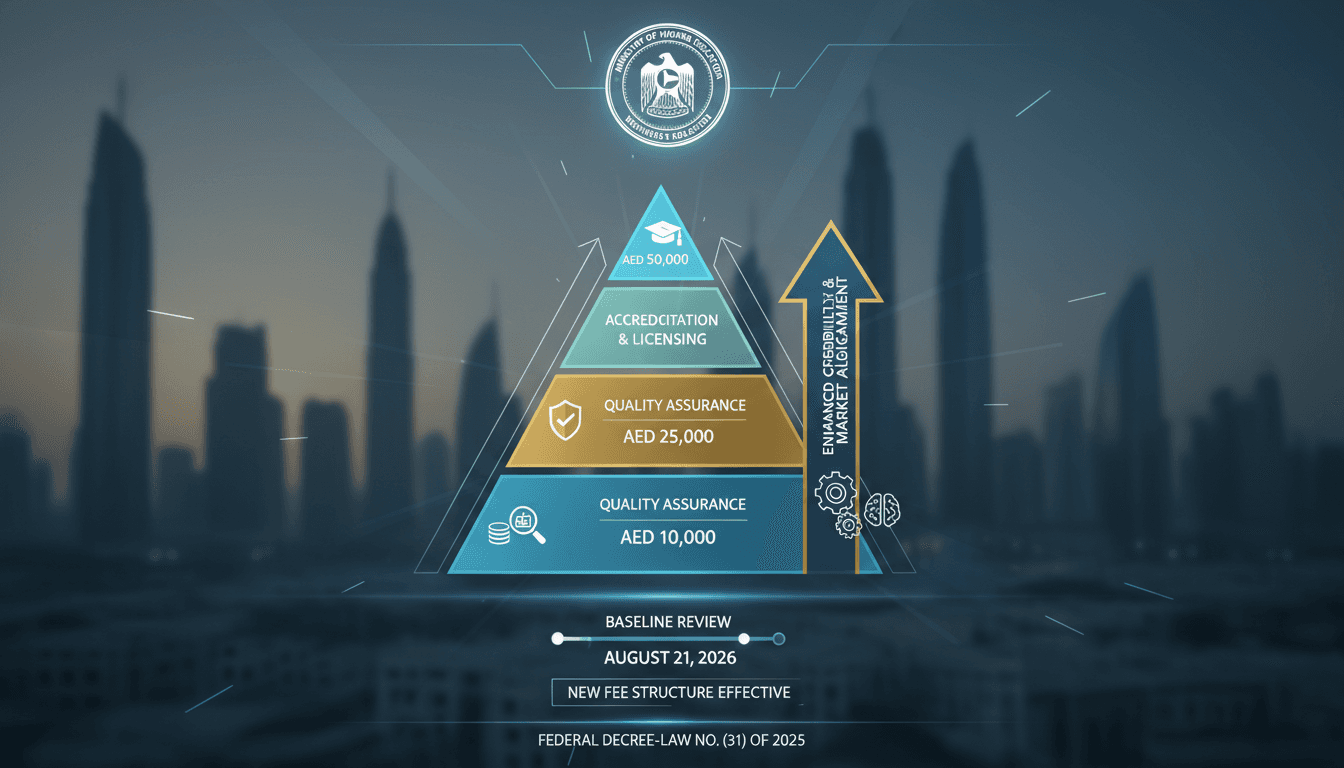
- On August 21, 2026, the UAE Ministry of Higher Education approved a new fee structure for institutional reviews.
- The fees are tiered based on the complexity of the review process, directing funds to a dedicated Review Fund.
- This initiative is part of a broader strategy to standardize higher education quality and licensing across the nation.
The context you actually need
- Prior to these regulations, there was no standardized fee system for university and college reviews, leading to inconsistencies in oversight.
- The new framework follows the Federal Decree-Law No. (31) of 2025, which established a unified federal approach to higher education governance.
- The Ministry's goal is to build confidence among students, parents, and employers in the quality of UAE qualifications, supporting the transition to a knowledge-based economy.
What's really happening
The UAE Ministry of Higher Education and Scientific Research's recent decision to implement a standardized fee structure for institutional reviews marks a significant shift in the higher education landscape. This initiative is designed to create a transparent and outcome-focused regulatory framework that channels fees into a dedicated Review Fund. The fund will cover evaluation costs and engage international specialists, ensuring that the review process aligns with global best practices.
Before these regulations, higher education institutions in the UAE faced a fragmented oversight system, lacking a standardized fee structure for operation or license renewal. The introduction of tiered fees, scaled according to the complexity of the review, aims to streamline the process and enhance the quality of education. This is particularly important as the UAE seeks to position itself as a knowledge-based economy, where the quality of education directly impacts workforce readiness and economic growth.
The Ministry has emphasized that the primary goal of these changes is not revenue generation but rather the enhancement of educational quality. By differentiating review intensity based on institution type and programs offered, the Ministry aims to ensure that educational outcomes are aligned with labor market needs. This alignment is crucial for students entering a competitive job market, as it increases the portability and recognition of their qualifications on a global scale.
Moreover, the integration of these new regulations with existing unified data platforms and accreditation pathways, established under the 2025 decree-law, suggests a cohesive approach to higher education governance. This integration is expected to facilitate smoother transitions for students and institutions alike, reducing risks associated with unaccredited programs.
As the UAE continues to invest in its educational infrastructure, the implications of these changes extend beyond immediate regulatory compliance. They signal a commitment to fostering a robust educational ecosystem that not only meets local needs but also competes on an international level. This is particularly relevant for Dubai residents and students, who stand to benefit from enhanced verification of institutional quality, ultimately leading to greater confidence in their educational credentials.
Who feels it first (and how)
- Students: Increased assurance in the quality of their education and future employability.
- Parents: Greater confidence in the educational choices available for their children.
- Higher education institutions: Need to adapt to new fee structures and compliance requirements.
- Employers: Benefit from a more qualified workforce as educational outcomes align with market needs.
What to watch next
- Implementation of the fee structure: Monitor how institutions adapt to the new regulations and the impact on their operational costs.
- Student enrollment trends: Watch for shifts in enrollment as students weigh the quality assurance against costs.
- Employer feedback: Pay attention to how employers perceive the value of UAE qualifications post-implementation.
The fee structure is approved and in effect as of August 21, 2026.
Enhanced institutional quality and alignment with labor market needs will emerge over time.
The specific financial impact on institutions and students remains to be seen.
Frequently Asked Questions
- Why it matters?
- This regulatory shift aims to enhance the quality and recognition of UAE qualifications, aligning them with global standards.
- What happened (in 30 seconds)?
- On August 21, 2026, the UAE Ministry of Higher Education approved a new fee structure for institutional reviews. The fees are tiered based on the complexity of the review process, directing funds to a dedicated Review Fund. This initiative is part of a broader strategy to standardize higher education quality and licensing across the nation.
- What's really happening?
- The UAE Ministry of Higher Education and Scientific Research's recent decision to implement a standardized fee structure for institutional reviews marks a significant shift in the higher education landscape. This initiative is designed to create a transparent and outcome-focused regulatory framework that channels fees into a dedicated Review Fund. The fund will cover evaluation costs and engage international specialists, ensuring that the review process aligns with global best practices. Before
- Who feels it first (and how)?
- Students: Increased assurance in the quality of their education and future employability. Parents: Greater confidence in the educational choices available for their children. Higher education institutions: Need to adapt to new fee structures and compliance requirements. Employers: Benefit from a more qualified workforce as educational outcomes align with market needs.
- What to watch next?
- Implementation of the fee structure: Monitor how institutions adapt to the new regulations and the impact on their operational costs. Student enrollment trends: Watch for shifts in enrollment as students weigh the quality assurance against costs. Employer feedback: Pay attention to how employers perceive the value of UAE qualifications post-implementation.
Business and economy coverage focused on Dubai, the UAE, Saudi Arabia, and the wider Middle East.
"Arabian Business is a well-known regional business outlet with strong focus on Gulf markets, leadership, and investment stories."
— A47 Editor
UAE tightens rules for universities and colleges – here’s what’s changing
The United Arab Emirates (UAE) has introduced new regulations that establish fees for the review of universities, colleges, and training institutes, aiming to enhance the consistency and quality of higher education standards across the nation.
English-language coverage focused on UAE news, government updates, and domestic affairs.
"Emirates 24|7 reflects a mainstream UAE editorial perspective with strong emphasis on official and domestic developments."
— A47 Editor
MoHESR approves resolution on Review Fees for Higher Education and TVET institutions in the UAE
The Ministry of Higher Education and Scientific Research (MoHESR) in the UAE has approved a new resolution concerning Review Fees for Higher Education and Technical and Vocational Education and Training (TVET) institutions. This initiative is part of...
UAE-based newspaper covering Gulf politics, society, and international developments.
"Gulf News is one of the UAE’s most prominent English-language publications."
— A47 Editor
UAE approves new review fees for universities and technical education institutions
The United Arab Emirates (UAE) has approved new review fees for universities and technical education institutions, a move aimed at enhancing the quality and governance of higher education in the country. This decision reflects the UAE's ongoing commi...
A curated Gulf News feed featuring major stories across news, business, opinion, and lifestyle.
"Gulf News is a major UAE newspaper whose featured stories feed reflects a broad editorial mix shaped for a Gulf audience."
— A47 Editor
UAE approves new review fees for universities and technical education institutions
The United Arab Emirates (UAE) has approved new review fees for universities and technical education institutions, a move aimed at enhancing the quality and governance of higher education in the country. This decision reflects the UAE's ongoing commi...