
Pentagon Terminates Stars and Stripes Leadership Over Editorial Independence Issues
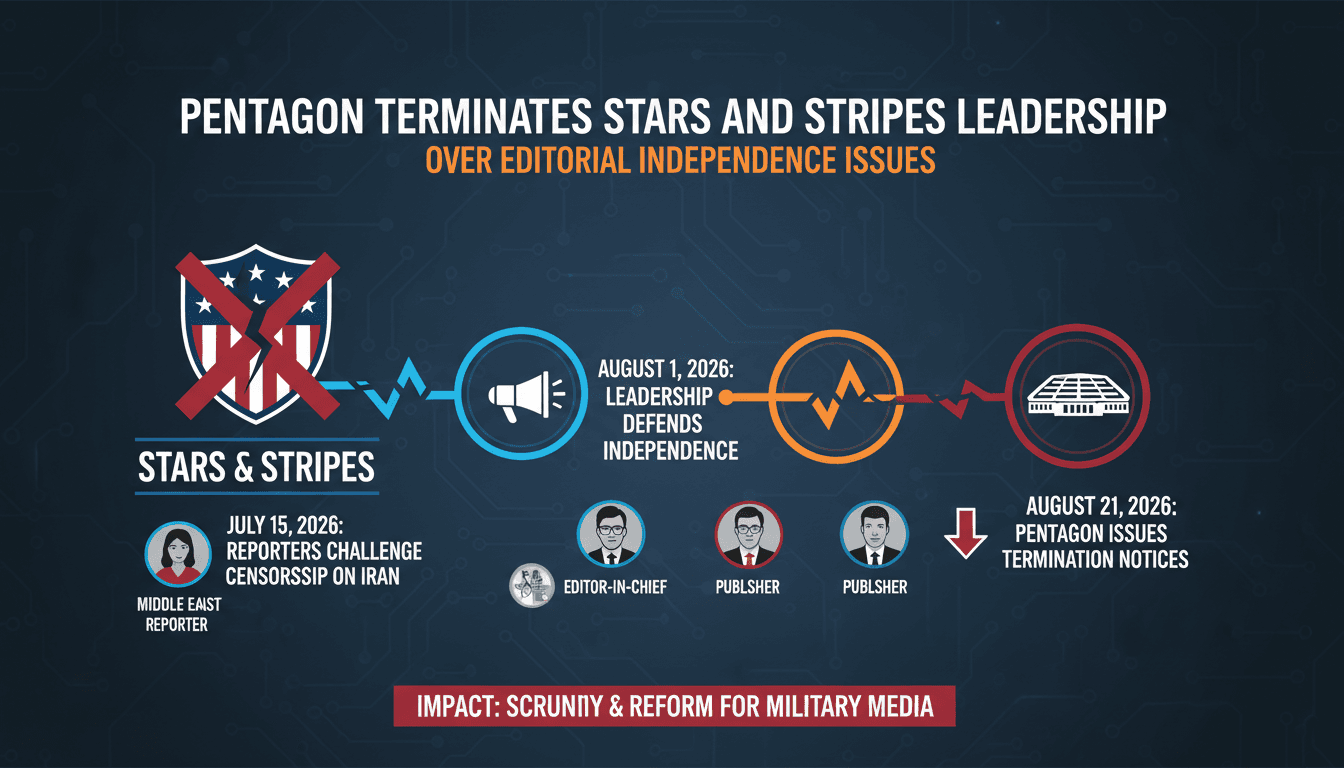
Here's what it means for you.
The Pentagon's actions against Stars and Stripes could reshape military media dynamics, impacting how military personnel receive news.
Why it matters
This incident raises critical questions about editorial independence and press freedom within military contexts.
What happened (in 30 seconds)
- On August 21, 2026, the Pentagon terminated the editor-in-chief, publisher, and a Middle East reporter of Stars and Stripes.
- The dismissals followed public statements from the staff defending their editorial independence amid coverage of U.S. military operations.
- Press freedom organizations have condemned the actions, warning of potential erosion of trust in military media.
The context you actually need
- Stars and Stripes has a long history of editorial independence, dating back to its founding in 1861, with policies reinforced during World War II.
- Recent coverage by Stars and Stripes highlighted challenges faced by U.S. military operations against Iran, including morale issues and resource shortages.
- The current administration has prioritized controlling military narratives, leading to tensions over content and editorial direction.
What's really happening
The recent dismissals at Stars and Stripes are emblematic of a broader struggle over media independence within military contexts. Established in 1861, Stars and Stripes has historically operated under a mandate to provide independent reporting to military personnel and their families. This independence is crucial, as it allows for the dissemination of information that may not align with official narratives, particularly during contentious military operations.
In July 2026, staff members publicly opposed Pentagon efforts to alter editorial policies, asserting their legal right to editorial independence. This pushback came in the wake of increasing scrutiny over military media, particularly under the Trump administration, which has emphasized a "warrior spirit" and sought to eliminate what it perceives as "woke" influences. The administration's stance has led to heightened tensions regarding content control, especially as Stars and Stripes reported on sensitive issues like extended deployments and low morale among troops.
The dismissals of Erik Slavin, Max Lederer, and Lara Korte were framed as acts of insubordination following their participation in interviews where they defended the outlet's independence. This action not only raises questions about the future of Stars and Stripes but also signals a potential shift in how military narratives are controlled. The Pentagon's decision to terminate key editorial figures could deter other journalists from speaking out against censorship, thereby stifling dissenting voices within military media.
Moreover, the fallout from these dismissals has drawn condemnation from press freedom organizations, which argue that such actions threaten the integrity of military journalism. The National Press Club and other groups have warned that these terminations could lead to an erosion of trust between military personnel and the media that serves them. As Stars and Stripes reaches approximately 1.4 million readers, the implications of this incident extend beyond the immediate personnel changes; it could reshape how military news is reported and consumed.
The Pentagon's actions reflect a broader trend of increasing control over military narratives, which could have lasting effects on the relationship between the military and the media. As the situation unfolds, it will be critical to monitor how these changes impact the reporting landscape and the flow of information to military personnel.
Who feels it first (and how)
- Military personnel: They may face limited access to independent news sources, affecting their understanding of military operations.
- Journalists: Increased scrutiny and potential repercussions for reporting on military matters could lead to self-censorship.
- Press freedom advocates: They will likely intensify efforts to protect journalistic independence in military contexts.
What to watch next
- Legal challenges: Watch for potential lawsuits from Stars and Stripes or press freedom organizations against the Pentagon, which could set precedents for military media rights.
- Public response: Monitor how military personnel and their families react to the changes in Stars and Stripes, as their support could influence future editorial policies.
- Policy shifts: Keep an eye on any new Pentagon policies regarding media access and editorial independence, which could redefine military journalism.
The Pentagon has terminated key editorial staff at Stars and Stripes.
Press freedom organizations will continue to advocate for the independence of military media.
The long-term impact on Stars and Stripes' operations and its relationship with the Pentagon remains uncertain.
Frequently Asked Questions
- Why it matters?
- This incident raises critical questions about editorial independence and press freedom within military contexts.
- What happened (in 30 seconds)?
- On August 21, 2026, the Pentagon terminated the editor-in-chief, publisher, and a Middle East reporter of Stars and Stripes. The dismissals followed public statements from the staff defending their editorial independence amid coverage of U.S. military operations. Press freedom organizations have condemned the actions, warning of potential erosion of trust in military media.
- What's really happening?
- The recent dismissals at Stars and Stripes are emblematic of a broader struggle over media independence within military contexts. Established in 1861, Stars and Stripes has historically operated under a mandate to provide independent reporting to military personnel and their families. This independence is crucial, as it allows for the dissemination of information that may not align with official narratives, particularly during contentious military operations. In July 2026, staff members publicl
- Who feels it first (and how)?
- Military personnel: They may face limited access to independent news sources, affecting their understanding of military operations. Journalists: Increased scrutiny and potential repercussions for reporting on military matters could lead to self-censorship. Press freedom advocates: They will likely intensify efforts to protect journalistic independence in military contexts.
- What to watch next?
- Legal challenges: Watch for potential lawsuits from Stars and Stripes or press freedom organizations against the Pentagon, which could set precedents for military media rights. Public response: Monitor how military personnel and their families react to the changes in Stars and Stripes, as their support could influence future editorial policies. Policy shifts: Keep an eye on any new Pentagon policies regarding media access and editorial independence, which could redefine military journalism.
RT is a Russian state-funded network covering global events from a Russian perspective.
"RT is widely criticized for promoting pro-Kremlin narratives and is considered by many to be a state propaganda outlet."
— A47 Editor
Pentagon fires Stars and Stripes chiefs after censorship row
The Pentagon has dismissed senior staff members of the military newspaper Stars and Stripes following accusations of censorship and threats to the publication's editorial independence. This action comes amid ongoing tensions between the newspaper and...
Business, investment, entrepreneurship, leadership, and innovation.
"Forbes is known for its coverage of business leaders, market trends, and entrepreneurial ventures with a pro-business editorial stance."
— A47 Editor
Stars And Stripes Editor Says He’s Worried About Military Censorship—After Pentagon Fires Him For ‘Insubordination’
The editor of Stars And Stripes has expressed concerns about military censorship following his dismissal by the Pentagon for alleged insubordination. This incident comes after the publication reported on poor living conditions aboard the USS Abraham ...
Pan-Arab news coverage spanning politics, business, sports, and regional affairs.
"Asharq Al-Awsat reflects a broad Arab editorial perspective with strong attention to regional geopolitics."
— A47 Editor
بسبب «عصيان الأوامر»... البنتاغون يقيل مسؤولي صحيفة تغطي أخبار الجيش الأميركي
The Pentagon dismissed the editor-in-chief and publisher of the newspaper 'Stars and Stripes,' which has reported on the U.S. military since the Civil War, due to allegations of insubordination. This decision was made public on Friday, marking a sign...
Macro commentary, policy analysis, growth/inflation themes, and global outlooks.
"Contextual macro coverage that complements day-to-day market headlines."
— A47 Editor
Pentagon removes Stars and Stripes newspaper leadership
The Pentagon has removed the leadership of the Stars and Stripes newspaper, a significant move that raises concerns about military oversight of media. This decision follows the dismissal of the newspaper's editor, who was reportedly fired for insubor...
Global news coverage with extensive reporting on Middle Eastern conflicts and geopolitics.
"Al Jazeera is a Qatar-based broadcaster known for wide regional coverage and alternative perspectives."
— A47 Editor
Editor of US newspaper Stars and Stripes reportedly fired under Trump
Erik Slavin, the editor-in-chief of the US military newspaper Stars and Stripes, has reportedly been fired, an action he suggests was in retaliation for advocating for editorial independence. This incident highlights ongoing tensions between the publ...
Comprehensive coverage of Middle Eastern and global issues.
"Al Jazeera is a prominent voice from the Global South, especially the Middle East, with an emphasis on underreported stories."
— A47 Editor
Editor of US newspaper Stars and Stripes reportedly fired under Trump
Erik Slavin, the editor-in-chief of the US military newspaper Stars and Stripes, has reportedly been fired, an action he suggests was in retaliation for advocating for editorial independence. This incident highlights ongoing tensions between the publ...