
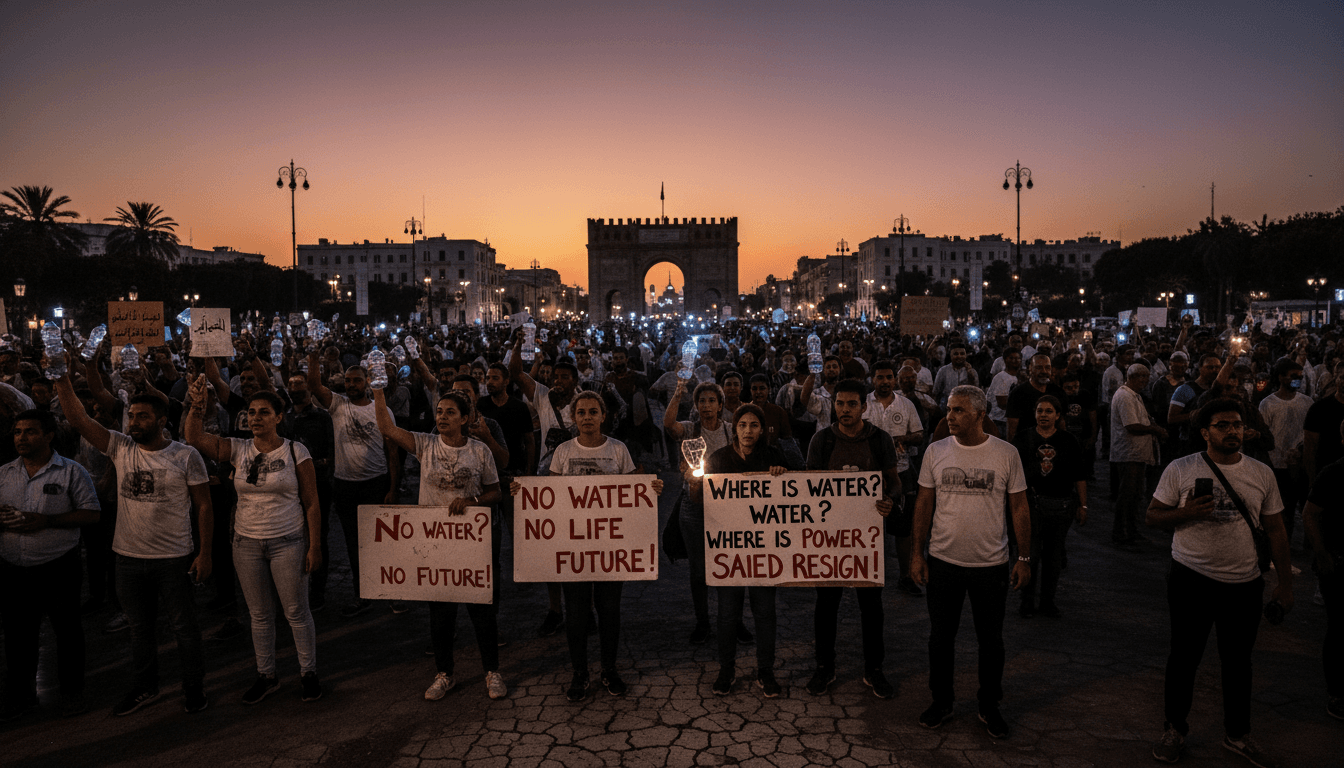
Protests Erupt in Tunisia Over Utility Shortages Amid Extreme Heat
Here's what it means for you.
The unrest in Tunisia highlights the fragility of public services and the potential for political instability in regions reliant on state utilities.
The Vibe
Protests are surging in Tunisia as citizens express their frustration over severe utility shortages, reflecting a broader discontent with governance.
What it signals
This unrest signals a critical juncture for Tunisia's political landscape and public trust in state institutions. As citizens grapple with failing infrastructure, the implications extend beyond immediate utility concerns, hinting at a potential shift in power dynamics and public accountability.
Why it's happening now
1. A record-breaking heatwave in July 2026 pushed electricity demand to an unprecedented 6,000 MW, exposing the vulnerabilities of state-run utilities STEG and SONEDE. 2. President Kais Saied's consolidation of power in 2021 has led to weakened democratic institutions, exacerbating public frustration over governance and service delivery. 3. The protests are fueled by a growing coalition of discontented citizens, including first-time protesters, indicating a shift in the political landscape and a demand for accountability.
Who it's for (and who it leaves out)
The core beneficiaries of this unrest are the citizens demanding better services and governance. However, it leaves out those who remain apathetic or disengaged from the political process, potentially widening the gap between active and passive citizens.
What to watch next
1. Monitor the government's response to the protests and any potential policy changes regarding utility management and public services. 2. Observe the evolution of the opposition movements, particularly the Nafas movement, and their impact on future political discourse in Tunisia.
Visual Directive: A striking image of protesters in Tunis demanding accountability amidst utility shortages.
Protests are ongoing with no official government response reported.
The unrest may lead to increased pressure on President Saied to address utility issues.
The long-term implications for Tunisia's political stability and public trust remain uncertain.
Regional coverage and analysis focused on politics, diplomacy, and business across the Middle East.
"Al-Monitor is known for analytical reporting on Middle East politics and policy developments."
— A47 Editor
Tunisia’s water, power crisis fuels growing protests against Saied: What to know
Tunisia is currently facing a severe utility crisis, characterized by widespread water shortages and power outages, which have sparked growing protests against President Kais Saied. Citizens are expressing their dissatisfaction with the government's ...
Regional coverage and analysis focused on politics, diplomacy, and business across the Middle East.
"Al-Monitor is known for analytical reporting on Middle East politics and policy developments."
— A47 Editor
Hundreds of Tunisians protest against government, water shortages
Hundreds of Tunisians protested in the capital on Thursday against President Kais Saied, voicing their frustrations over severe power cuts and drinking water shortages amid extreme heat. Protesters displayed signs highlighting their plight, with form...
Conservative-leaning political and national coverage.
"The Washington Times is a conservative-leaning newspaper known for its political coverage and advocacy of right-of-center viewpoints."
— A47 Editor
New opposition group plans protest in Tunisia after extreme heat-driven power and water cuts
A new opposition group in Tunisia is organizing a protest in the capital, Tunis, in response to severe power and water shortages caused by extreme summer heat. This situation has led to widespread frustration among the population towards the country'...