
AI Infrastructure Expansion Faces Political Backlash as OpenAI Falls Behind Anthropic
Here's what it means for you.
If you're in tech or finance, the evolving landscape of AI infrastructure could impact your investments and job security.
Why it matters
The political and competitive dynamics surrounding AI data centers are reshaping the tech landscape, influencing investment strategies and regulatory frameworks.
What happened (in 30 seconds)
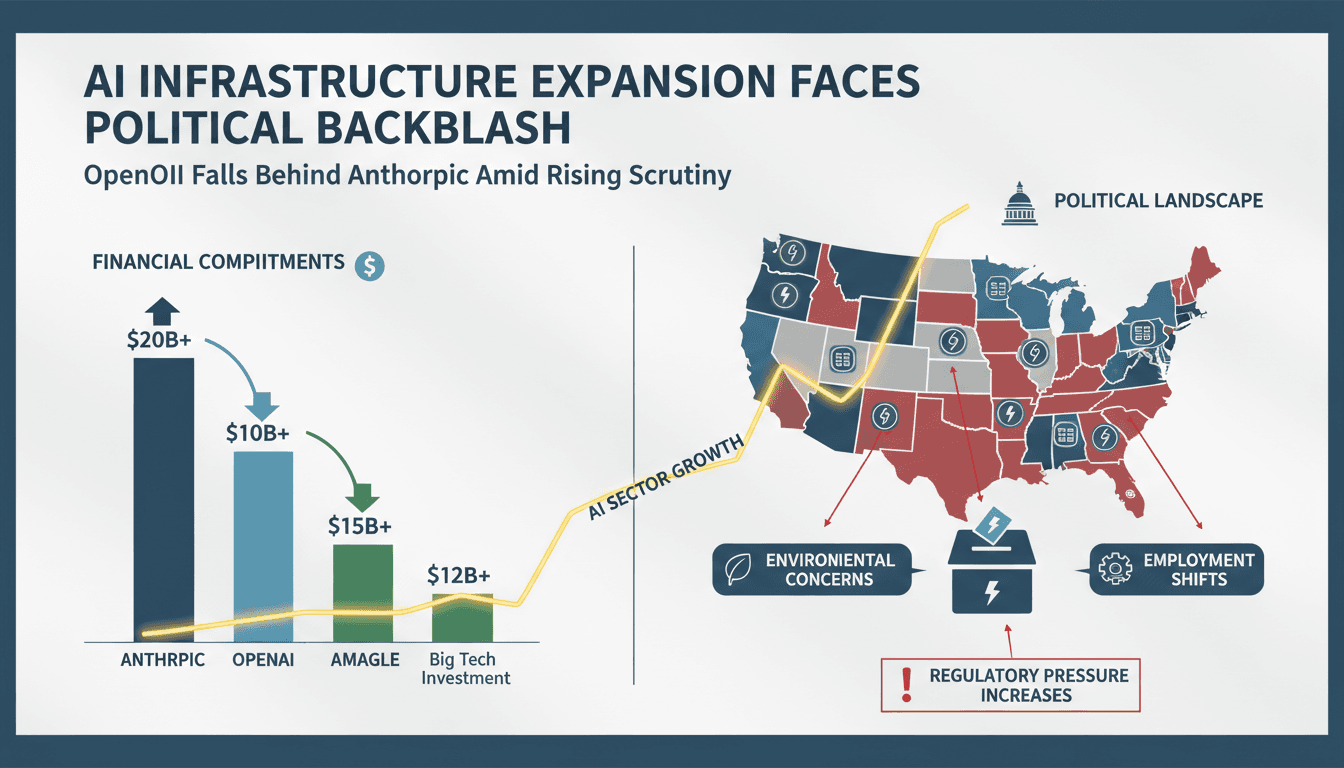
- Data centers have become a political flashpoint ahead of the U.S. midterm elections, with concerns over environmental impact and job displacement.
- OpenAI is experiencing lagging revenue growth compared to Anthropic, which is poised for a potentially record-setting IPO.
- Big Tech's off-balance-sheet AI investments have reached $3 trillion, raising alarms about financial and societal risks.
The context you actually need
- AI data centers have rapidly expanded since 2023, driven by the adoption of generative AI, leading to increased power consumption and land use.
- Political opposition is rising, with the GOP urging AI firms to address public concerns about data centers and their societal implications.
- Major acquisitions are reshaping the competitive landscape, including Stripe's $7.5 billion purchase of OpenRouter, which focuses on AI model routing.
What's really happening
The AI infrastructure buildout is at a critical juncture, marked by significant political resistance and competitive realignment. As data centers proliferate, they have become a focal point for environmental and employment concerns, particularly as the U.S. midterm elections approach. The GOP has intensified its scrutiny of AI firms, urging them to mitigate negative perceptions surrounding data centers. This political pressure is compounded by the reality that these facilities are essential for the ongoing expansion of AI capabilities.
OpenAI's disappointing revenue growth has raised eyebrows, especially as Anthropic positions itself for a potentially record-setting IPO. This competitive dynamic is not just about market share; it reflects deeper structural issues within the AI sector. OpenAI's struggles highlight the challenges of scaling operations in a politically charged environment, where public sentiment can shift rapidly.
Moreover, the financial implications of AI investments are staggering. Big Tech's off-balance-sheet commitments have reached $3 trillion, a figure that underscores the scale of investment in AI infrastructure. This spending is not merely a reflection of corporate ambition; it represents a strategic bet on the future of technology. However, it also raises questions about sustainability and the long-term viability of such investments, especially in light of growing political scrutiny.
The acquisition landscape is also evolving, with companies like Stripe making significant moves to enhance their AI capabilities. The $7.5 billion acquisition of OpenRouter is a prime example of how firms are positioning themselves to capitalize on the burgeoning AI market. This trend of consolidation is likely to continue as companies seek to bolster their competitive edge amid rising costs and regulatory pressures.
In summary, the AI buildout is becoming too large to fail, but it is also fraught with risks. The intersection of political resistance, competitive dynamics, and financial commitments creates a complex environment that will shape the future of AI technology and its societal implications.
Who feels it first (and how)
- Tech companies: Facing increased scrutiny and potential regulatory hurdles.
- Investors: Adjusting strategies based on shifting competitive landscapes and financial disclosures.
- Local communities: Experiencing environmental impacts and job displacement concerns related to data center expansions.
- Employees in AI sectors: Navigating job security issues amid fears of automation and AI-driven changes.
What to watch next
- Upcoming earnings reports from Nvidia: These will provide insights into the financial health of major players in the AI sector and could influence market sentiment.
- Anthropic's IPO: A successful launch could shift competitive dynamics and investor focus within the AI landscape.
- Political developments regarding AI regulations: Any new policies or statements from the GOP could impact public perception and operational strategies for AI firms.
AI data centers are facing political resistance due to environmental and employment concerns.
Competitive pressures will continue to reshape the AI landscape, with major acquisitions and IPOs influencing market dynamics.
The long-term sustainability of off-balance-sheet AI investments amid rising scrutiny and potential regulatory changes.
Frequently Asked Questions
- Why it matters?
- The political and competitive dynamics surrounding AI data centers are reshaping the tech landscape, influencing investment strategies and regulatory frameworks.
- What happened (in 30 seconds)?
- Data centers have become a political flashpoint ahead of the U.S. midterm elections, with concerns over environmental impact and job displacement. OpenAI is experiencing lagging revenue growth compared to Anthropic, which is poised for a potentially record-setting IPO. Big Tech's off-balance-sheet AI investments have reached $3 trillion, raising alarms about financial and societal risks.
- What's really happening?
- The AI infrastructure buildout is at a critical juncture, marked by significant political resistance and competitive realignment. As data centers proliferate, they have become a focal point for environmental and employment concerns, particularly as the U.S. midterm elections approach. The GOP has intensified its scrutiny of AI firms, urging them to mitigate negative perceptions surrounding data centers. This political pressure is compounded by the reality that these facilities are essential for
- Who feels it first (and how)?
- Tech companies: Facing increased scrutiny and potential regulatory hurdles. Investors: Adjusting strategies based on shifting competitive landscapes and financial disclosures. Local communities: Experiencing environmental impacts and job displacement concerns related to data center expansions. Employees in AI sectors: Navigating job security issues amid fears of automation and AI-driven changes.
- What to watch next?
- Upcoming earnings reports from Nvidia: These will provide insights into the financial health of major players in the AI sector and could influence market sentiment. Anthropic's IPO: A successful launch could shift competitive dynamics and investor focus within the AI landscape. Political developments regarding AI regulations: Any new policies or statements from the GOP could impact public perception and operational strategies for AI firms.
AI news with an enterprise and cloud focus.
"Covers AI in the context of data infrastructure, cloud, and enterprise stacks."
— A47 Editor
Politics hits data centers, OpenAI falls behind Anthropic and now AI is too big to fail… quietly
Data centers have emerged as a significant political issue ahead of the midterm elections, with both the GOP and Democrats recognizing the potential impact of public sentiment against AI data centers. This concern is particularly pronounced in Ohio, ...
Business and tech news excluding paywalled content.
"High-volume business/tech outlet with frequent AI coverage."
— A47 Editor
Overcoming the bad vibes around data centers is a battle on multiple fronts
Americans are increasingly pushing back against data centers, posing significant challenges for tech companies that are heavily investing in the expansion of artificial intelligence (AI). This resistance is rooted in growing concerns over the environ...
Global business headlines with AI angles.
"General business outlet that frequently covers AI."
— A47 Editor
The GOP Is Warning AI Companies Over Data Center Backlash. The Ohio Senate Race Could Be A Test.
A private memo from the Senate Republican campaign arm indicates that opposition to data centers is negatively impacting Sen. Jon Husted's standing in Ohio, potentially influencing political support for AI infrastructure projects nationwide.