
Syrian Foreign Minister Indicates Willingness to Restart Security Talks with Israel
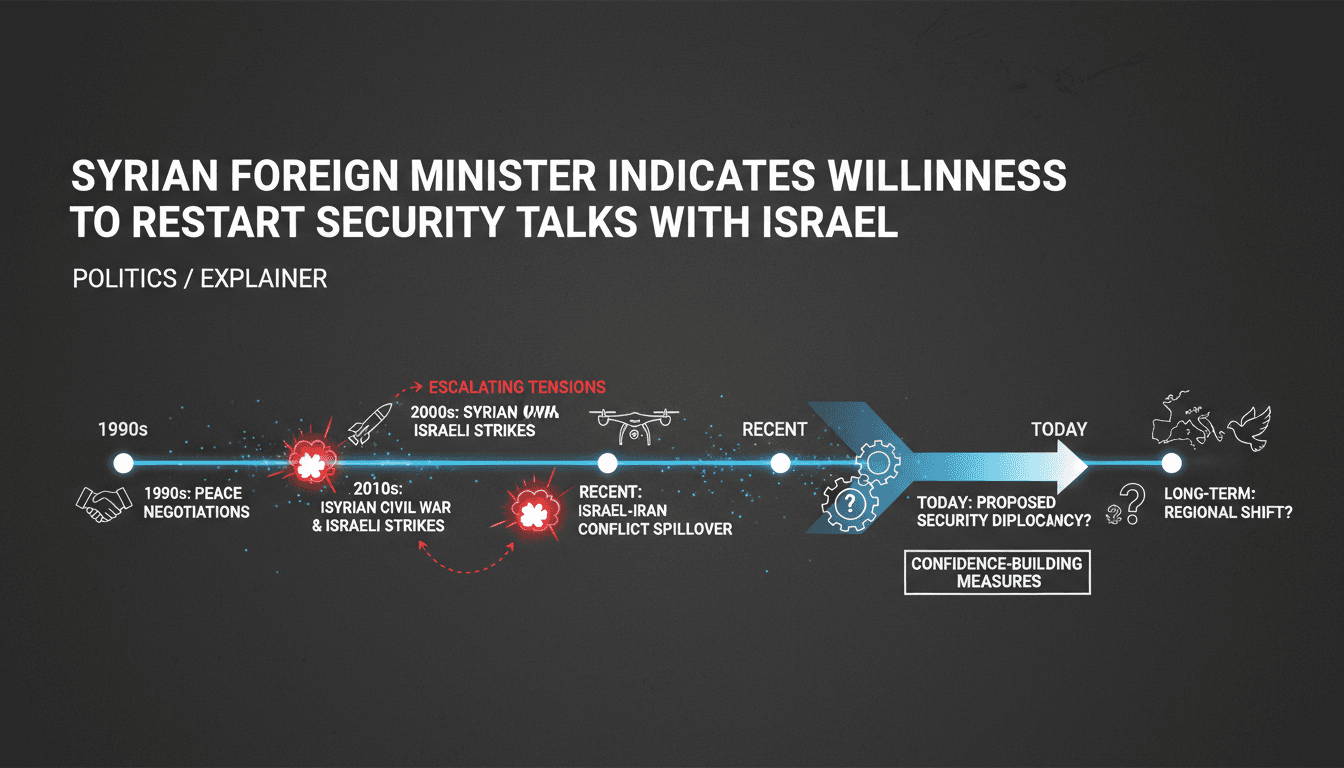
Here's what it means for you.
The potential thaw in Syrian-Israeli relations could reshape regional stability, impacting global markets and energy flows.
Why it matters
This diplomatic shift could influence Middle Eastern stability, affecting trade routes and energy prices globally.
What happened (in 30 seconds)
- Syrian Foreign Minister Asaad al-Shaibani announced on August 23, 2026, that Syria is open to resuming security talks with Israel.
- Negotiations have been frozen since February 2026 due to the US-Israel war on Iran and recent Israeli military actions in Syria.
- The US has been brokering a potential security agreement for over a year, aiming to address territorial disputes and military tensions.
The context you actually need
- Syria's political landscape changed dramatically after the ousting of President Bashar al-Assad in December 2024, leading to Israeli territorial seizures.
- Israel's military actions in Syria have been framed as necessary for national security, complicating diplomatic efforts.
- The US's role as a broker has been critical, but ongoing conflicts in the region have stalled progress on negotiations.
What's really happening
The recent statement by Syrian Foreign Minister Asaad al-Shaibani marks a significant moment in the long-standing tension between Syria and Israel. Following the fall of Bashar al-Assad in December 2024, Israel seized territory in southwest Syria, citing security threats from the new Syrian regime. This territorial acquisition has been accompanied by military strikes on Syrian military sites, further complicating the already fraught relationship.
The backdrop to this diplomatic overture is a year of stalled negotiations, primarily brokered by the United States. These talks aimed to establish a security framework that would include the creation of security zones and a UN buffer area near the border. However, the onset of the US-Israel war on Iran in February 2026 halted these discussions, exacerbated by Israeli strikes, such as the one on the Abu al-Duhur airbase on August 18, 2026.
Al-Shaibani's remarks suggest that while there is a lack of trust between the two nations, Syria is willing to engage in dialogue if it leads to tangible results. He emphasized the need for confidence-building measures, particularly the cessation of Israeli military actions, as a prerequisite for any meaningful negotiations. This reflects a broader strategy by Syria under President Ahmed al-Sharaa, who is focused on rebuilding the nation while navigating complex relationships with neighboring countries and the US.
The US continues to apply pressure for the resumption of talks, recognizing that a stable Syrian-Israeli relationship could contribute to regional de-escalation. The implications of this potential thaw extend beyond the immediate parties involved; a more stable Middle East could lead to improved energy markets and trade routes, which are particularly relevant for economies like Dubai's that rely on regional stability.
Who feels it first (and how)
- Energy sector professionals: Changes in regional stability could affect oil and gas prices.
- Expatriate communities in Dubai: Increased stability may enhance trade and economic opportunities.
- Investors in Middle Eastern markets: Shifts in diplomatic relations could influence market confidence and investment flows.
What to watch next
- US diplomatic efforts: Continued engagement by the US could signal a serious commitment to resolving tensions.
- Israeli military actions: Any changes in Israel's military strategy in Syria will be critical to the success of renewed talks.
- Regional responses: Reactions from neighboring countries, particularly Turkey and Iran, could impact the dynamics of Syrian-Israeli relations.
The US has been actively brokering a security deal for over a year.
Renewed talks will depend on Israel's military posture and Syria's willingness to engage.
The long-term impact of these negotiations on regional stability and economic conditions.
Frequently Asked Questions
- Why it matters?
- This diplomatic shift could influence Middle Eastern stability, affecting trade routes and energy prices globally.
- What happened (in 30 seconds)?
- Syrian Foreign Minister Asaad al-Shaibani announced on August 23, 2026, that Syria is open to resuming security talks with Israel. Negotiations have been frozen since February 2026 due to the US-Israel war on Iran and recent Israeli military actions in Syria. The US has been brokering a potential security agreement for over a year, aiming to address territorial disputes and military tensions.
- What's really happening?
- The recent statement by Syrian Foreign Minister Asaad al-Shaibani marks a significant moment in the long-standing tension between Syria and Israel. Following the fall of Bashar al-Assad in December 2024, Israel seized territory in southwest Syria, citing security threats from the new Syrian regime. This territorial acquisition has been accompanied by military strikes on Syrian military sites, further complicating the already fraught relationship. The backdrop to this diplomatic overture is a ye
- Who feels it first (and how)?
- Energy sector professionals: Changes in regional stability could affect oil and gas prices. Expatriate communities in Dubai: Increased stability may enhance trade and economic opportunities. Investors in Middle Eastern markets: Shifts in diplomatic relations could influence market confidence and investment flows.
- What to watch next?
- US diplomatic efforts: Continued engagement by the US could signal a serious commitment to resolving tensions. Israeli military actions: Any changes in Israel's military strategy in Syria will be critical to the success of renewed talks. Regional responses: Reactions from neighboring countries, particularly Turkey and Iran, could impact the dynamics of Syrian-Israeli relations.
Global news coverage with extensive reporting on Middle Eastern conflicts and geopolitics.
"Al Jazeera is a Qatar-based broadcaster known for wide regional coverage and alternative perspectives."
— A47 Editor
Syria’s foreign minister says door open for diplomacy with Israel
Syrian Foreign Minister Asaad al-Shaibani has expressed that the door remains open for diplomatic relations with Israel, urging the nation to take advantage of what he describes as a historic opportunity for dialogue. This statement reflects a potent...
Comprehensive coverage of Middle Eastern and global issues.
"Al Jazeera is a prominent voice from the Global South, especially the Middle East, with an emphasis on underreported stories."
— A47 Editor
Syria’s foreign minister says door open for diplomacy with Israel
Syrian Foreign Minister Asaad al-Shaibani has expressed that the door remains open for diplomatic relations with Israel, urging the nation to take advantage of what he describes as a historic opportunity for dialogue. This statement reflects a potent...
Arabic-language coverage of political affairs and current events.
"Okaz political coverage typically follows mainstream Saudi framing on national and regional affairs."
— A47 Editor
أكد أن المفاوضات مجمّدة.. وزير خارجية سورية: لا نثق في إسرائيل
Syrian Foreign Minister Assad al-Shaybani stated that negotiations with Israel are currently frozen, expressing a lack of trust in the Israeli government. He emphasized the need for diplomatic communication to build trust, particularly following rece...
Pan-Arab news coverage spanning politics, business, sports, and regional affairs.
"Asharq Al-Awsat reflects a broad Arab editorial perspective with strong attention to regional geopolitics."
— A47 Editor
الشيباني: نتوقع استئناف المفاوضات مع إسرائيل قريباً... وأولويتنا وقف الهجمات
Syrian Foreign Minister Asad Al-Shibani announced that Damascus expects to resume negotiations with Israel soon regarding a security agreement, which they hope will lead to Israel's withdrawal from Syrian territories.