
Pakistan Army Chief Asim Munir to Mediate Peace Talks in Tehran Amid U.S.-Iran Tensions
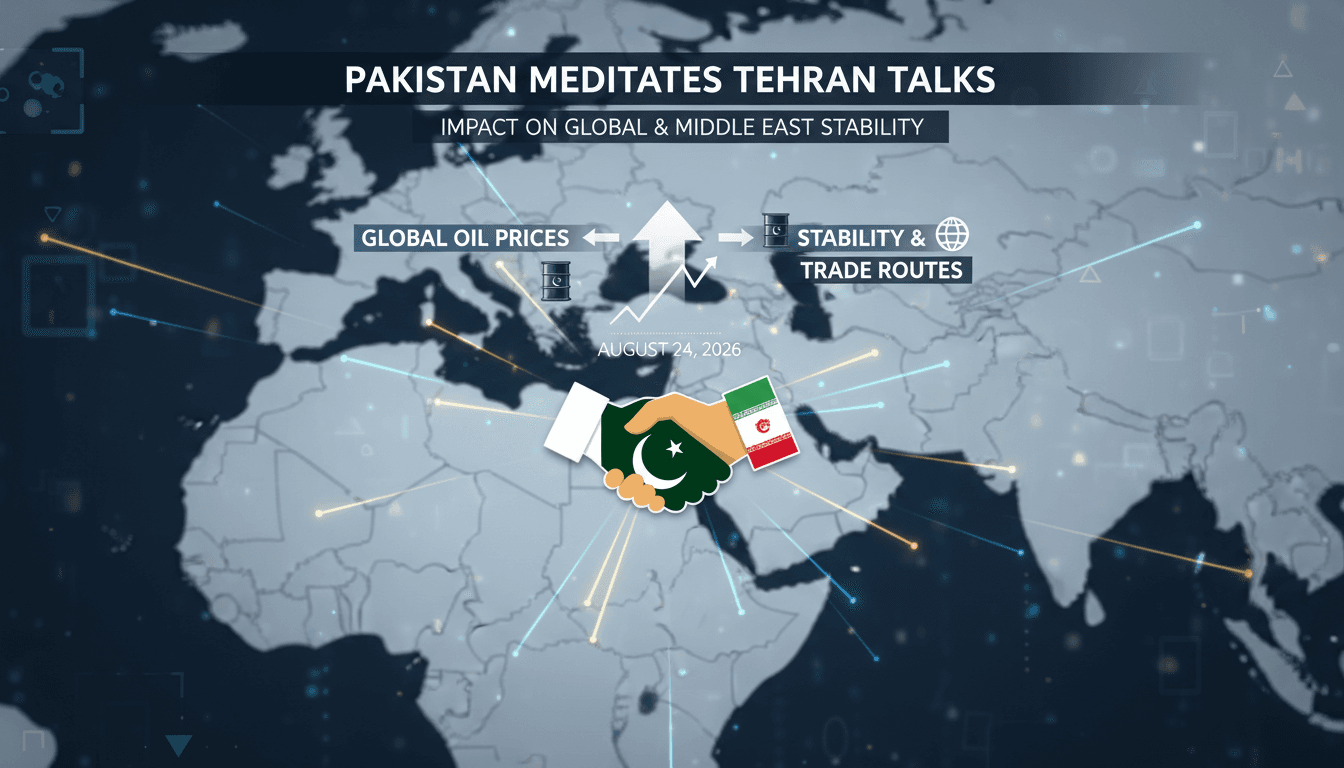
Here's what it means for you.
The outcome of this diplomatic visit could influence energy prices and trade routes that directly affect your cost of living and business operations.
Why it matters
This visit underscores Pakistan's emerging role as a mediator in a volatile region, impacting global energy markets and geopolitical stability.
What happened (in 30 seconds)
- Pakistan Army Chief Asim Munir is set to visit Tehran on August 24, 2026, to mediate peace talks.
- Iran's Foreign Ministry confirmed the visit amid escalating tensions following U.S. and Israeli strikes on Iran.
- Key agenda items include discussions on U.S. sanctions, the Pakistan-Turkey-Saudi Arabia Agreement, and Houthi issues.
The context you actually need
- U.S.-Iran conflict: The current hostilities began with military strikes in February 2026, leading to heightened tensions and threats of retaliation.
- Pakistan's mediation role: Pakistan has positioned itself as a neutral party, leveraging its relationships with both Iran and the U.S. to facilitate dialogue.
- Economic implications: The Strait of Hormuz is a critical oil shipping route; any instability could lead to fluctuations in global oil prices, affecting economies worldwide.
What's really happening
The scheduled visit of Pakistan Army Chief Asim Munir to Tehran is a significant diplomatic maneuver in a region fraught with tension. Following the U.S. and Israeli strikes on Iran in February 2026, the geopolitical landscape has shifted dramatically, with Iran threatening military responses and the U.S. poised to impose what has been described as potentially the toughest sanctions in history.
Pakistan's involvement as a mediator is not merely a diplomatic gesture; it reflects a strategic positioning that could reshape regional alliances and economic interactions. By facilitating talks between Iran and the U.S., Pakistan aims to stabilize a situation that could spiral into broader conflict, impacting not just the immediate parties but also global markets, particularly in energy.
The timing of Munir's visit is critical. With U.S. President Donald Trump warning against third-party support for Iran, the stakes are high. The discussions are expected to cover not only sanctions but also broader regional agreements, including the Pakistan-Turkey-Saudi Arabia Agreement, which could influence the dynamics of power in the Middle East.
Moreover, the implications of this visit extend beyond immediate diplomatic outcomes. Should Pakistan successfully mediate a reduction in hostilities, it could lead to a more stable environment in the Strait of Hormuz, a vital corridor for oil shipments. This stability is crucial for global energy markets, particularly for countries like the UAE and Saudi Arabia, which rely heavily on oil exports.
In essence, the visit is a balancing act, with Pakistan seeking to maintain its relationships with both Iran and the U.S. while navigating the complexities of regional politics. The outcome of these talks could set the tone for future interactions and agreements, influencing everything from military alliances to economic partnerships.
Who feels it first (and how)
- Energy sector professionals: Fluctuations in oil prices could directly impact jobs and investments.
- Expatriate communities in Dubai: Changes in sanctions and regional stability may affect living costs and job security.
- Businesses reliant on trade routes: Companies engaged in shipping and logistics may face disruptions or opportunities based on the outcomes of these talks.
What to watch next
- U.S. sanctions announcements: The nature and severity of any new sanctions will be crucial in determining Iran's response and the overall stability of the region.
- Reactions from Iran and the U.S.: Monitoring official statements and actions following Munir's visit will provide insights into the effectiveness of Pakistan's mediation.
- Oil price fluctuations: Keep an eye on market reactions to any developments in the talks, as they could signal broader economic impacts.
Munir's visit is confirmed and will focus on peace mediation.
The discussions will influence regional stability and economic conditions.
The immediate impact of the visit on U.S.-Iran relations and global oil prices remains to be seen.
Frequently Asked Questions
- Why it matters?
- This visit underscores Pakistan's emerging role as a mediator in a volatile region, impacting global energy markets and geopolitical stability.
- What happened (in 30 seconds)?
- Pakistan Army Chief Asim Munir is set to visit Tehran on August 24, 2026, to mediate peace talks. Iran's Foreign Ministry confirmed the visit amid escalating tensions following U.S. and Israeli strikes on Iran. Key agenda items include discussions on U.S. sanctions, the Pakistan-Turkey-Saudi Arabia Agreement, and Houthi issues.
- What's really happening?
- The scheduled visit of Pakistan Army Chief Asim Munir to Tehran is a significant diplomatic maneuver in a region fraught with tension. Following the U.S. and Israeli strikes on Iran in February 2026, the geopolitical landscape has shifted dramatically, with Iran threatening military responses and the U.S. poised to impose what has been described as potentially the toughest sanctions in history. Pakistan's involvement as a mediator is not merely a diplomatic gesture; it reflects a strategic pos
- Who feels it first (and how)?
- Energy sector professionals: Fluctuations in oil prices could directly impact jobs and investments. Expatriate communities in Dubai: Changes in sanctions and regional stability may affect living costs and job security. Businesses reliant on trade routes: Companies engaged in shipping and logistics may face disruptions or opportunities based on the outcomes of these talks.
- What to watch next?
- U.S. sanctions announcements: The nature and severity of any new sanctions will be crucial in determining Iran's response and the overall stability of the region. Reactions from Iran and the U.S.: Monitoring official statements and actions following Munir's visit will provide insights into the effectiveness of Pakistan's mediation. Oil price fluctuations: Keep an eye on market reactions to any developments in the talks, as they could signal broader economic impacts.
Oil, metals, and agriculture: supply/demand headlines, OPEC chatter, inventories, and price action.
"Solid tape for energy and metals traders tracking macro and micro catalysts."
— A47 Editor
Iran says Pakistan’s army chief to visit Tehran on Monday
Iran has announced that Pakistan's army chief is scheduled to visit Tehran on Monday, highlighting ongoing military and diplomatic engagements between the two neighboring countries.
Pan-Arab news coverage spanning politics, business, sports, and regional affairs.
"Asharq Al-Awsat reflects a broad Arab editorial perspective with strong attention to regional geopolitics."
— A47 Editor
قائد الجيش الباكستاني يزور طهران غداً
The spokesperson for the Iranian Foreign Ministry, Ismail Baqaei, announced that the Chief of Army Staff of Pakistan, Asim Munir, will visit Tehran tomorrow, Monday. This visit highlights ongoing diplomatic and military engagements between Iran and P...
Arabic-language coverage of political affairs and current events.
"Okaz political coverage typically follows mainstream Saudi framing on national and regional affairs."
— A47 Editor
يزور طهران غداً.. هل يحمل قائد الجيش الباكستاني رسائل أمريكية لكسر الجمود؟
The Chief of Army Staff of Pakistan, General Asim Munir, is set to visit Tehran tomorrow, accompanied by an official delegation, to engage with senior Iranian officials. This visit is part of Pakistan's diplomatic efforts to revive negotiations betwe...
Regional and international reporting focused on Middle Eastern politics, diplomacy, and economics.
"Asharq Al-Awsat is a Saudi-owned international newspaper reflecting mainstream Gulf political perspectives."
— A47 Editor
Iran: Pakistan's Army Chief to Visit Tehran on Monday
Pakistan's Army Chief, Asim Munir, is set to visit Tehran on Monday, as confirmed by Iran's foreign ministry spokesperson, Esmaeil Baghaei. This visit underscores ongoing diplomatic efforts between Iran and Pakistan aimed at enhancing regional peace ...
Arabic-language coverage of international news and geopolitics.
"RT Arabic is a Russian state-funded outlet often criticized for promoting Kremlin-aligned narratives."
— A47 Editor
عقب اتصال تمهيدي بعراقجي.. قائد الجيش الباكستاني يزور طهران على رأس وفد رفيع
The Iranian Foreign Ministry announced that General Asim Munir, the Chief of Army Staff of Pakistan, is visiting Tehran on Monday at the head of a high-level military and political delegation to discuss shared security and regional issues.