
US Claims Full Control of Strait of Hormuz Following Military Operations Against Iran
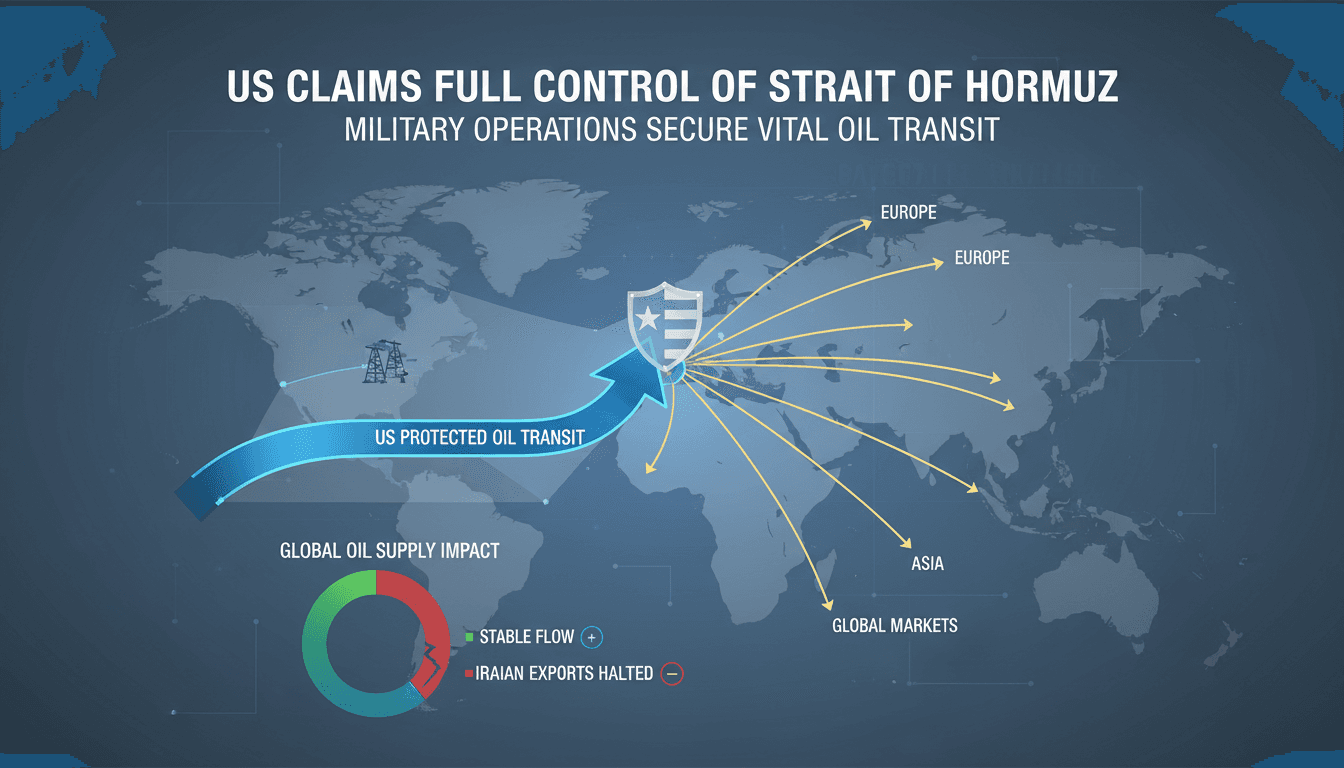
Here's what it means for you.
If you rely on global oil markets, the US's control over the Strait of Hormuz could stabilize prices and ensure supply continuity.
Why it matters
This development directly impacts global oil supply chains and pricing, affecting economies and consumers worldwide.
What happened (in 30 seconds)
- On August 29, 2026, the US announced full control of the Strait of Hormuz, a critical oil transit route.
- Iran's naval and air capabilities were reportedly dismantled, blocking its oil exports since July 2026.
- Approximately 1,500 vessels carrying 750 million barrels of oil are now under US protection, ensuring safe passage.
The context you actually need
- The Strait of Hormuz is a vital chokepoint for global oil transit, with about 20% of the world's oil passing through it.
- US-Iran tensions escalated in February 2026, leading to military actions that aimed to secure energy flows and limit Iranian revenue.
- US policy has focused on naval blockades and military operations to maintain control over this strategic region.
What's really happening
The US's recent declaration of control over the Strait of Hormuz marks a significant escalation in the ongoing conflict with Iran, which has been simmering since early 2026. The US has strategically targeted Iranian military assets to degrade their operational capabilities, effectively neutralizing threats to international shipping lanes. This military action aligns with a broader US strategy to secure energy flows from the Gulf, which is crucial for global markets.
The Strait of Hormuz is not just a regional concern; it is a global artery for oil transport. With approximately 750 million barrels of oil now moving under US protection, the implications for global oil supply are profound. The US's ability to ensure the safe passage of vessels through this chokepoint could stabilize oil prices, which have been volatile due to previous tensions and threats of closure by Iran.
Moreover, the US's operational dominance in the region serves as a deterrent against further Iranian aggression. By asserting control, the US aims to prevent Iran from leveraging its position to disrupt oil exports, which could have cascading effects on global energy prices and availability. The blockade of Iranian oil exports not only limits Tehran's revenue but also shifts the balance of power in the region, potentially leading to a recalibration of alliances and economic strategies among Gulf states.
As the US maintains its military presence and operational readiness in the Persian Gulf, the likelihood of further confrontations remains. However, the current situation also opens avenues for diplomatic negotiations, as Iran may seek to engage in talks to lift the blockade and stabilize its economy. The interplay between military action and diplomatic efforts will be crucial in shaping the future of US-Iran relations and the broader geopolitical landscape.
Who feels it first (and how)
- Oil producers: Countries reliant on oil exports will see shifts in revenue and market dynamics.
- Consumers: Fluctuations in oil prices will directly impact fuel costs and consumer goods.
- Shipping companies: Increased security and stability in the Strait may lower insurance costs and operational risks.
- Investors: Market volatility may affect investment strategies in energy sectors and related industries.
What to watch next
- Iran's response: Watch for any diplomatic overtures or military escalations from Iran as it navigates its reduced oil export capacity.
- Global oil prices: Monitor fluctuations in oil prices as the market adjusts to the new dynamics of supply and demand.
- US military presence: Keep an eye on any changes in US military operations in the region, which could signal shifts in strategy or further escalations.
The US has claimed full control of the Strait of Hormuz and has blocked Iranian oil exports.
Iran may seek negotiations to lift the blockade and stabilize its economy.
The long-term implications for US-Iran relations and regional stability remain uncertain.
Frequently Asked Questions
- Why it matters?
- This development directly impacts global oil supply chains and pricing, affecting economies and consumers worldwide.
- What happened (in 30 seconds)?
- On August 29, 2026, the US announced full control of the Strait of Hormuz, a critical oil transit route. Iran's naval and air capabilities were reportedly dismantled, blocking its oil exports since July 2026. Approximately 1,500 vessels carrying 750 million barrels of oil are now under US protection, ensuring safe passage.
- What's really happening?
- The US's recent declaration of control over the Strait of Hormuz marks a significant escalation in the ongoing conflict with Iran, which has been simmering since early 2026. The US has strategically targeted Iranian military assets to degrade their operational capabilities, effectively neutralizing threats to international shipping lanes. This military action aligns with a broader US strategy to secure energy flows from the Gulf, which is crucial for global markets. The Strait of Hormuz is not
- Who feels it first (and how)?
- Oil producers: Countries reliant on oil exports will see shifts in revenue and market dynamics. Consumers: Fluctuations in oil prices will directly impact fuel costs and consumer goods. Shipping companies: Increased security and stability in the Strait may lower insurance costs and operational risks. Investors: Market volatility may affect investment strategies in energy sectors and related industries.
- What to watch next?
- Iran's response: Watch for any diplomatic overtures or military escalations from Iran as it navigates its reduced oil export capacity. Global oil prices: Monitor fluctuations in oil prices as the market adjusts to the new dynamics of supply and demand. US military presence: Keep an eye on any changes in US military operations in the region, which could signal shifts in strategy or further escalations.
Jordanian news and regional updates.
"Roya News is a Jordanian outlet focused on breaking news and local affairs."
— A47 Editor
هرمز لنا ومغلق عليهم.. البيت الأبيض يعلن القضاء على سلاح إيران الجوي والبحري وإغلاق المضيق بوجه طهران
The White House has announced the neutralization of Iran's air and naval capabilities, declaring that the Strait of Hormuz is open to them and closed to Tehran. This development indicates a significant shift in military dynamics in the region, as the...
Pan-Arab news coverage spanning politics, business, sports, and regional affairs.
"Asharq Al-Awsat reflects a broad Arab editorial perspective with strong attention to regional geopolitics."
— A47 Editor
أميركا تعلن فتح «هرمز»... وبعض حلفائها يتحفظون
U.S. President Donald Trump announced that the Strait of Hormuz is now open for navigation, asserting that Iran's ability to threaten vessels in this strategic maritime passage has diminished.
Arabic-language coverage of international news and geopolitics.
"RT Arabic is a Russian state-funded outlet often criticized for promoting Kremlin-aligned narratives."
— A47 Editor
"فارس": "القوات الشعبية" الإيرانية تتوجه بالقوارب نحو مضيق هرمز ردا على "ترهات" ترامب (فيديو)
Iranian state media reported that the Iranian Popular Forces have deployed boats towards the Strait of Hormuz in response to what they termed the 'nonsense' of U.S. President Donald Trump regarding the waterway. This action highlights ongoing tension...
Arabic-language coverage of Saudi, regional, and international affairs.
"Al Bilad offers mainstream Saudi newspaper coverage across domestic and broader Arab topics."
— A47 Editor
ترامب: مضيق هرمز مفتوح وإيران فقدت أوراق قوتها
U.S. President Donald Trump announced that the Strait of Hormuz is open for navigation, asserting that Iran's ability to threaten vessels has significantly diminished. American officials believe that Washington has successfully altered the strategic ...
Arabic-language coverage of political affairs and current events.
"Okaz political coverage typically follows mainstream Saudi framing on national and regional affairs."
— A47 Editor
ترمب يؤكد مجدداً: هرمز أرض أمريكية
U.S. President Donald Trump reiterated his stance on the strategic Strait of Hormuz by sharing an image on his Truth Social account, categorizing it as U.S. territory amidst rising tensions with Iran. The image, labeled 'U.S. Territories,' features a...
Arabic-language coverage of international news and geopolitics.
"RT Arabic is a Russian state-funded outlet often criticized for promoting Kremlin-aligned narratives."
— A47 Editor
ترامب: مضيق هرمز "أرض أمريكية"
U.S. President Donald Trump has claimed that the Strait of Hormuz is now considered American territory, amidst threats to close the strait and Iran's insistence on continuing oil exports through it. This ongoing dispute highlights the escalating tens...
Jordanian news and regional updates.
"Roya News is a Jordanian outlet focused on breaking news and local affairs."
— A47 Editor
ترمب ينشر صورة لمضيق هرمز معتبره إقليماً أمريكياً برفقة الأقاليم الأمريكية الأخرى
On Friday, U.S. President Donald Trump sparked media controversy by sharing an image of the Strait of Hormuz, labeling it as an American territory alongside other U.S. regions. This statement has drawn attention due to the strategic significance of t...
Egyptian politics, economy, and society coverage.
"Al Masry Al Youm is a major Egyptian newspaper with broad national coverage."
— A47 Editor
ترامب: مضيق هرمز مفتوح بالكامل وخال من الألغام.. ولا نسعى لأي تفاوض مع إيران
U.S. President Donald Trump stated that the Strait of Hormuz is fully open and free of mines, asserting that Iran is in a significant predicament and struggling to pay its soldiers. He emphasized that U.S. actions towards Iran do not indicate a withd...
Arabic-language coverage of international news and geopolitics.
"RT Arabic is a Russian state-funded outlet often criticized for promoting Kremlin-aligned narratives."
— A47 Editor
تقارير إعلامية: ترامب قد يعلن النصر بعد فتح مضيق هرمز
Reports from the magazine 'Atlantic' indicate that U.S. President Donald Trump has privately suggested he may declare victory in the conflict with Iran following the reopening of the Strait of Hormuz. This statement reflects a potential shift in U.S....