
Saudi Arabia and Eurojust Enhance Cooperation Against Transnational Corruption
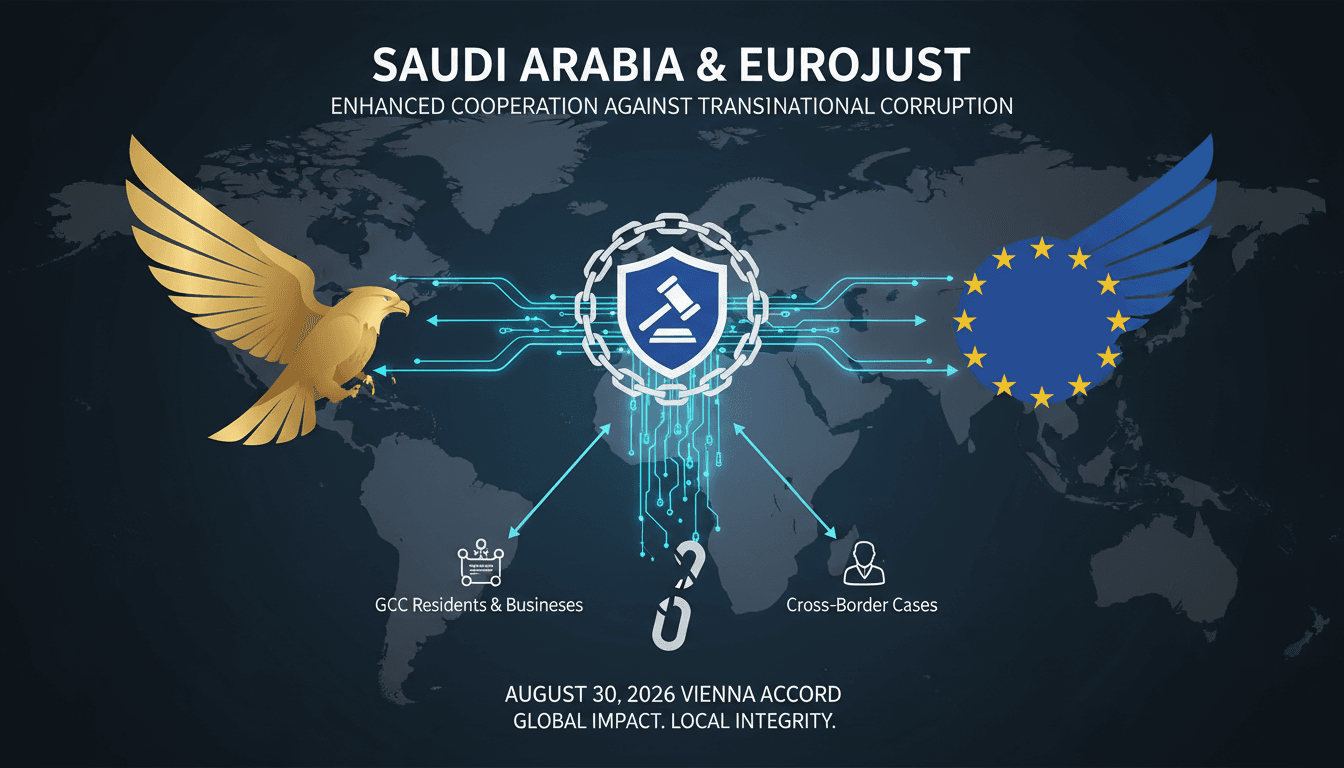
Here's what it means for you.
If you operate in or with businesses in the GCC, enhanced judicial cooperation could streamline cross-border transactions and reduce corruption risks.
Why it matters
This meeting signals a commitment to tackling transnational corruption, which can impact international business operations and investment climates.
What happened (in 30 seconds)
- Saudi Nazaha President Mazin bin Ibrahim Al-Kahmous met Eurojust President Michael Schmid in Vienna to discuss criminal justice cooperation.
- The focus was on transnational corruption, aligning with Saudi Arabia's Vision 2030 anti-corruption reforms and Eurojust's EU-wide judicial coordination.
- No formal agreement was announced, but discussions on information sharing and joint efforts are ongoing.
The context you actually need
- Saudi Arabia's Vision 2030 emphasizes anti-corruption as a key component of economic and governance reforms.
- Eurojust coordinates investigations and prosecutions across EU member states, making it a crucial player in cross-border criminal matters.
- Nazaha's presidency of the GlobE Network highlights its role in international law enforcement collaboration, with 252 law enforcement authorities from 137 countries involved.
What's really happening
The meeting between Mazin bin Ibrahim Al-Kahmous and Michael Schmid represents a significant step in Saudi Arabia's ongoing efforts to modernize its judicial system and enhance its international standing in the fight against corruption. As part of Vision 2030, Saudi Arabia has prioritized anti-corruption measures through the Oversight and Anti-Corruption Authority (Nazaha). This initiative aims to improve governance, attract foreign investment, and foster a more transparent business environment.
The discussions in Vienna were not merely ceremonial; they reflect a strategic alignment between Saudi Arabia and the European Union in addressing corruption that transcends borders. By sharing information and best practices, both entities can bolster their capabilities to investigate and prosecute complex corruption cases. This collaboration is particularly relevant given the increasing globalization of financial crimes, where illicit activities often span multiple jurisdictions.
The absence of a formal agreement does not diminish the significance of the meeting. Instead, it indicates a willingness to explore avenues for cooperation without the constraints of bureaucratic formalities. The ongoing discussions may lead to future agreements that could facilitate smoother judicial processes and enhance the effectiveness of anti-corruption measures.
Moreover, the meeting aligns with Saudi Arabia's recent signing of a GlobE Network information-sharing agreement, which underscores its commitment to international cooperation in law enforcement. This network includes 252 law enforcement authorities from 137 countries, highlighting the global nature of the fight against corruption.
For businesses operating in or with the GCC, these developments could lead to a more predictable and transparent regulatory environment. Enhanced judicial cooperation may reduce the risks associated with cross-border transactions, making it easier for companies to navigate the complexities of international trade and investment.
Who feels it first (and how)
- Business leaders in the GCC, who may benefit from a more transparent regulatory environment.
- Legal professionals involved in cross-border transactions, who will need to adapt to new cooperation frameworks.
- Investors looking for stable markets, as reduced corruption risks can enhance investment attractiveness.
What to watch next
- Future agreements between Nazaha and Eurojust: These could formalize cooperation and enhance operational effectiveness in tackling corruption.
- Implementation of Vision 2030 reforms: Monitoring the progress of anti-corruption initiatives will provide insights into Saudi Arabia's commitment to transparency.
- Impact on cross-border transactions: Observing changes in the regulatory landscape will indicate how these discussions translate into practical benefits for businesses.
Saudi Arabia is committed to anti-corruption reforms as part of Vision 2030.
Enhanced cooperation with Eurojust will lead to improved handling of transnational corruption cases.
The specific outcomes of ongoing discussions and their impact on future agreements.
Frequently Asked Questions
- Why it matters?
- This meeting signals a commitment to tackling transnational corruption, which can impact international business operations and investment climates.
- What happened (in 30 seconds)?
- Saudi Nazaha President Mazin bin Ibrahim Al-Kahmous met Eurojust President Michael Schmid in Vienna to discuss criminal justice cooperation. The focus was on transnational corruption, aligning with Saudi Arabia's Vision 2030 anti-corruption reforms and Eurojust's EU-wide judicial coordination. No formal agreement was announced, but discussions on information sharing and joint efforts are ongoing.
- What's really happening?
- The meeting between Mazin bin Ibrahim Al-Kahmous and Michael Schmid represents a significant step in Saudi Arabia's ongoing efforts to modernize its judicial system and enhance its international standing in the fight against corruption. As part of Vision 2030, Saudi Arabia has prioritized anti-corruption measures through the Oversight and Anti-Corruption Authority (Nazaha). This initiative aims to improve governance, attract foreign investment, and foster a more transparent business environment.
- Who feels it first (and how)?
- Business leaders in the GCC, who may benefit from a more transparent regulatory environment. Legal professionals involved in cross-border transactions, who will need to adapt to new cooperation frameworks. Investors looking for stable markets, as reduced corruption risks can enhance investment attractiveness.
- What to watch next?
- Future agreements between Nazaha and Eurojust: These could formalize cooperation and enhance operational effectiveness in tackling corruption. Implementation of Vision 2030 reforms: Monitoring the progress of anti-corruption initiatives will provide insights into Saudi Arabia's commitment to transparency. Impact on cross-border transactions: Observing changes in the regulatory landscape will indicate how these discussions translate into practical benefits for businesses.
Arabic-language local and national news coverage from Saudi Arabia.
"Al-Jazirah is a major Saudi daily with strong emphasis on domestic reporting and official developments."
— A47 Editor
المملكة تعزز تعاونها مع الاتحاد الأوروبي في مجال العدالة الجنائية
The President of the Saudi Anti-Corruption Authority, Mazen bin Ibrahim Al-Kahmos, met with Michael Schmid, the head of the European Union Agency for Criminal Justice Cooperation (Eurojust), at the United Nations headquarters in Vienna. They discusse...
English-language reporting on Saudi politics, policy, and society.
"Saudi Gazette reflects mainstream Saudi institutional perspectives."
— A47 Editor
Nazaha, Eurojust presidents discuss stronger cooperation to combat corruption
The President of the Oversight and Anti-Corruption Authority (Nazaha), Mazin Al-Kahmous, met with Eurojust President Michael Schmid at the United Nations headquarters in Vienna to discuss enhancing cooperation in combating corruption. The meeting foc...
English-language reporting focused on Saudi Arabia and regional affairs.
"Saudi Gazette provides English-language coverage that often aligns with mainstream Saudi news priorities."
— A47 Editor
Nazaha, Eurojust presidents discuss stronger cooperation to combat corruption
The President of the Oversight and Anti-Corruption Authority (Nazaha), Mazin Al-Kahmous, met with Eurojust President Michael Schmid at the United Nations headquarters in Vienna to discuss enhancing cooperation in combating corruption. The meeting foc...
Arabic-language reporting focused on domestic developments in Saudi Arabia.
"Okaz is a mainstream Saudi newspaper that often reflects domestic priorities and official-facing coverage."
— A47 Editor
الكهموس يبحث مع رئيس «يوروجست» مكافحة جرائم الفساد العابرة للحدود
Mazen bin Ibrahim Al-Kahmos, the head of the Saudi Anti-Corruption Authority (Nazaha), met with Michael Schmid, the head of Eurojust, at the United Nations headquarters in Vienna. They discussed collaborative efforts to combat transnational corruptio...