
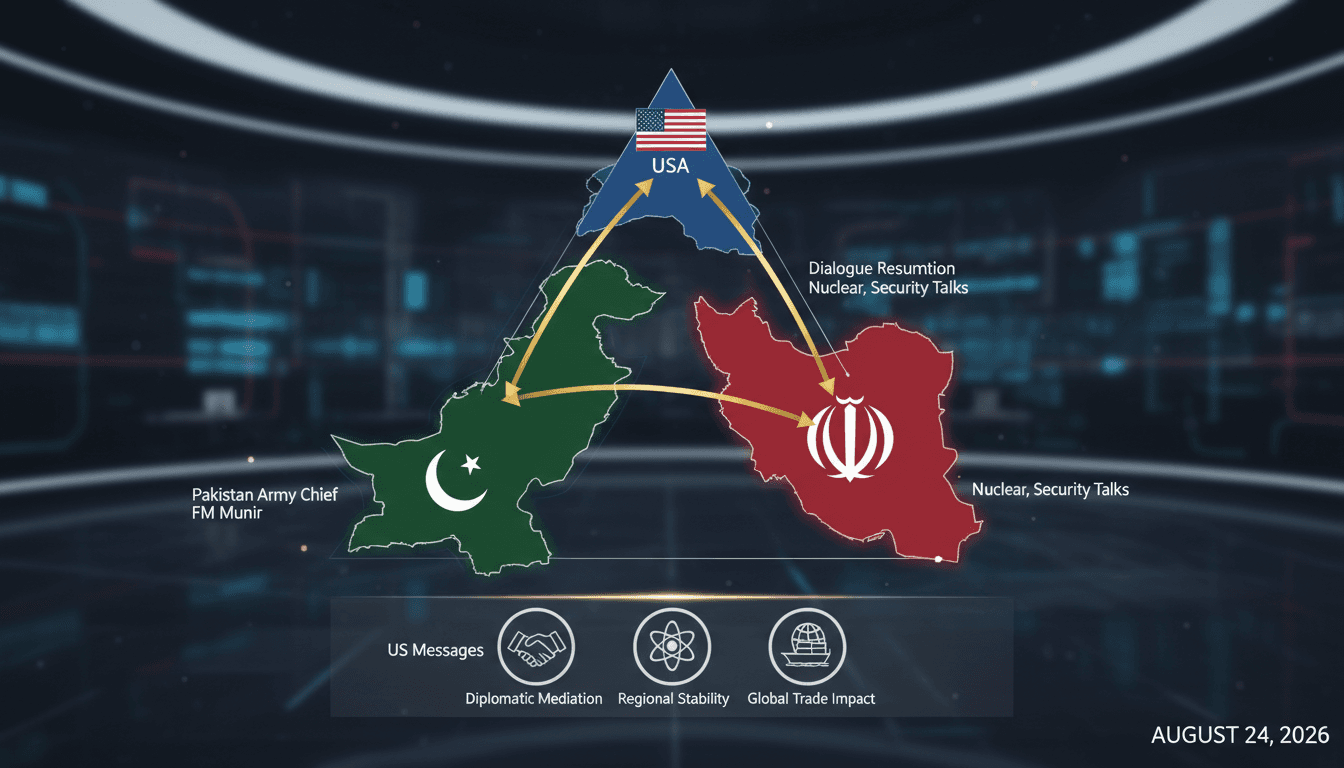
Pakistan Army Chief Asim Munir Visits Tehran to Facilitate Iran-US Dialogue Resumption
Here's what it means for you.
The outcome of these diplomatic efforts could directly impact global energy prices and trade routes critical to your business.
Why it matters
This mediation could reshape geopolitical dynamics, influencing energy markets and security in the Middle East.
What happened (in 30 seconds)
- Field Marshal Asim Munir of Pakistan arrived in Tehran on August 24, 2026, to facilitate dialogue between Iran and the US.
- High-level meetings are underway with Iranian officials, including Foreign Minister Abbas Araghchi, to discuss de-escalation and stability.
- Pakistan's role as a mediator follows previous attempts to broker peace amid rising tensions over nuclear issues and regional security.
The context you actually need
- Pakistan's historical role: Pakistan has intermittently mediated US-Iran tensions, previously facilitating a ceasefire framework in June 2026.
- Escalating tensions: Recent US economic pressures and Iranian nuclear ambitions have heightened the urgency for dialogue.
- Strategic significance: The Strait of Hormuz is a critical shipping lane for global oil trade, making stability in the region vital for international markets.
What's really happening
Field Marshal Asim Munir's visit to Tehran is a strategic maneuver aimed at breaking the deadlock in Iran-US negotiations, which have been stalled due to escalating tensions over nuclear capabilities and maritime security. The backdrop of this visit includes a series of US economic sanctions against Iran and military actions that have exacerbated hostilities. Munir's delegation is tasked with delivering messages from the US, specifically aimed at creating a conducive environment for dialogue.
This mediation effort is not just about immediate negotiations; it reflects a broader strategy by Pakistan to position itself as a key player in West Asian geopolitics. The Pakistani military has a vested interest in regional stability, as prolonged conflict could spill over into its borders, affecting trade and security. The Iranian Foreign Ministry has indicated a willingness to engage in discussions, but it remains firm on its core positions regarding nuclear development and maritime rights.
The implications of this visit extend beyond diplomatic niceties. If successful, it could lead to a de-escalation of tensions in the region, which has significant ramifications for global energy markets. The Strait of Hormuz, through which approximately 20% of the world's oil passes, is a focal point of these discussions. Any instability in this region can lead to fluctuations in oil prices, impacting economies worldwide, including Dubai's, which relies heavily on stable energy prices for its logistics and trade sectors.
Moreover, the visit underscores the importance of backchannel diplomacy in resolving complex international disputes. The preparatory phone call between Munir and Araghchi prior to the visit indicates a level of trust and communication that is essential for any successful negotiation. This approach could serve as a model for future diplomatic efforts in other regions facing similar tensions.
As the situation unfolds, the focus will be on how both Iran and the US respond to the messages conveyed by Munir. The potential for renewed dialogue could pave the way for a more stable regional environment, but it also hinges on the willingness of both parties to compromise on contentious issues.
Who feels it first (and how)
- Energy sector professionals: Fluctuations in oil prices could directly impact jobs and investments.
- Logistics and trade companies: Stability in the Strait of Hormuz is crucial for shipping routes, affecting supply chains.
- Regional governments: Neighboring countries may experience shifts in security dynamics and economic opportunities.
What to watch next
- Iran's response: Monitor how Iranian officials react to the US messages delivered by Munir, as this will indicate the likelihood of resumed negotiations.
- US policy shifts: Watch for any changes in US sanctions or military posture in the region, which could influence Iran's willingness to engage.
- Market reactions: Keep an eye on oil prices and shipping rates in the Strait of Hormuz, as these will reflect the immediate economic impact of any diplomatic breakthroughs.
Pakistan is actively mediating between Iran and the US.
There will be ongoing discussions regarding nuclear and maritime issues.
The extent to which either party is willing to compromise on core positions.
Frequently Asked Questions
- Why it matters?
- This mediation could reshape geopolitical dynamics, influencing energy markets and security in the Middle East.
- What happened (in 30 seconds)?
- Field Marshal Asim Munir of Pakistan arrived in Tehran on August 24, 2026, to facilitate dialogue between Iran and the US. High-level meetings are underway with Iranian officials, including Foreign Minister Abbas Araghchi, to discuss de-escalation and stability. Pakistan's role as a mediator follows previous attempts to broker peace amid rising tensions over nuclear issues and regional security.
- What's really happening?
- Field Marshal Asim Munir's visit to Tehran is a strategic maneuver aimed at breaking the deadlock in Iran-US negotiations, which have been stalled due to escalating tensions over nuclear capabilities and maritime security. The backdrop of this visit includes a series of US economic sanctions against Iran and military actions that have exacerbated hostilities. Munir's delegation is tasked with delivering messages from the US, specifically aimed at creating a conducive environment for dialogue. T
- Who feels it first (and how)?
- Energy sector professionals: Fluctuations in oil prices could directly impact jobs and investments. Logistics and trade companies: Stability in the Strait of Hormuz is crucial for shipping routes, affecting supply chains. Regional governments: Neighboring countries may experience shifts in security dynamics and economic opportunities.
- What to watch next?
- Iran's response: Monitor how Iranian officials react to the US messages delivered by Munir, as this will indicate the likelihood of resumed negotiations. US policy shifts: Watch for any changes in US sanctions or military posture in the region, which could influence Iran's willingness to engage. Market reactions: Keep an eye on oil prices and shipping rates in the Strait of Hormuz, as these will reflect the immediate economic impact of any diplomatic breakthroughs.
Arabic-language coverage of Saudi, regional, and international affairs.
"Al Bilad offers mainstream Saudi newspaper coverage across domestic and broader Arab topics."
— A47 Editor
لتهيئة ظروف استئناف الحوار.. قائد الجيش الباكستاني إلى طهران برسائل أمريكية
Pakistani Army Chief Asim Munir is set to visit Tehran today in a diplomatic effort aimed at easing rising tensions between Iran and the United States, as well as reviving stalled negotiations between the two nations. The Iranian Foreign Ministry has...
Arabic-language coverage of international news and geopolitics.
"RT Arabic is a Russian state-funded outlet often criticized for promoting Kremlin-aligned narratives."
— A47 Editor
تقرير: قائد الجيش الباكستاني يحمل رسائل أمريكية لطهران
The Chief of the Pakistani Army, Asim Munir, is set to visit Tehran on Monday, carrying American messages and proposals aimed at reducing tensions between Washington and Tehran and preparing the ground for the resumption of negotiations.
Pan-Arab news coverage spanning politics, business, sports, and regional affairs.
"Asharq Al-Awsat reflects a broad Arab editorial perspective with strong attention to regional geopolitics."
— A47 Editor
قائد الجيش الباكستاني يزور طهران غداً
The Chief of Army Staff of Pakistan, General Asim Munir, is set to visit Tehran on Monday as part of Islamabad's efforts to mediate an end to the ongoing conflict between Iran and the United States. This visit underscores Pakistan's role in regional ...
Arabic-language coverage of political affairs and current events.
"Okaz political coverage typically follows mainstream Saudi framing on national and regional affairs."
— A47 Editor
يزور طهران غداً.. هل يحمل قائد الجيش الباكستاني رسائل أمريكية لكسر الجمود؟
The Chief of Army Staff of Pakistan, General Asim Munir, is set to visit Tehran tomorrow, accompanied by an official delegation, to engage with senior Iranian officials. This visit is part of Pakistan's diplomatic efforts to revive negotiations betwe...
Arabic-language coverage of international news and geopolitics.
"RT Arabic is a Russian state-funded outlet often criticized for promoting Kremlin-aligned narratives."
— A47 Editor
عقب اتصال تمهيدي بعراقجي.. قائد الجيش الباكستاني يزور طهران على رأس وفد رفيع
The Iranian Foreign Ministry announced that General Asim Munir, the Chief of Army Staff of Pakistan, is visiting Tehran on Monday at the head of a high-level military and political delegation to discuss shared security and regional issues.