
Former Syrian Grand Mufti Ahmad Badreddine Hassoun Sentenced to Life Imprisonment for War Crimes
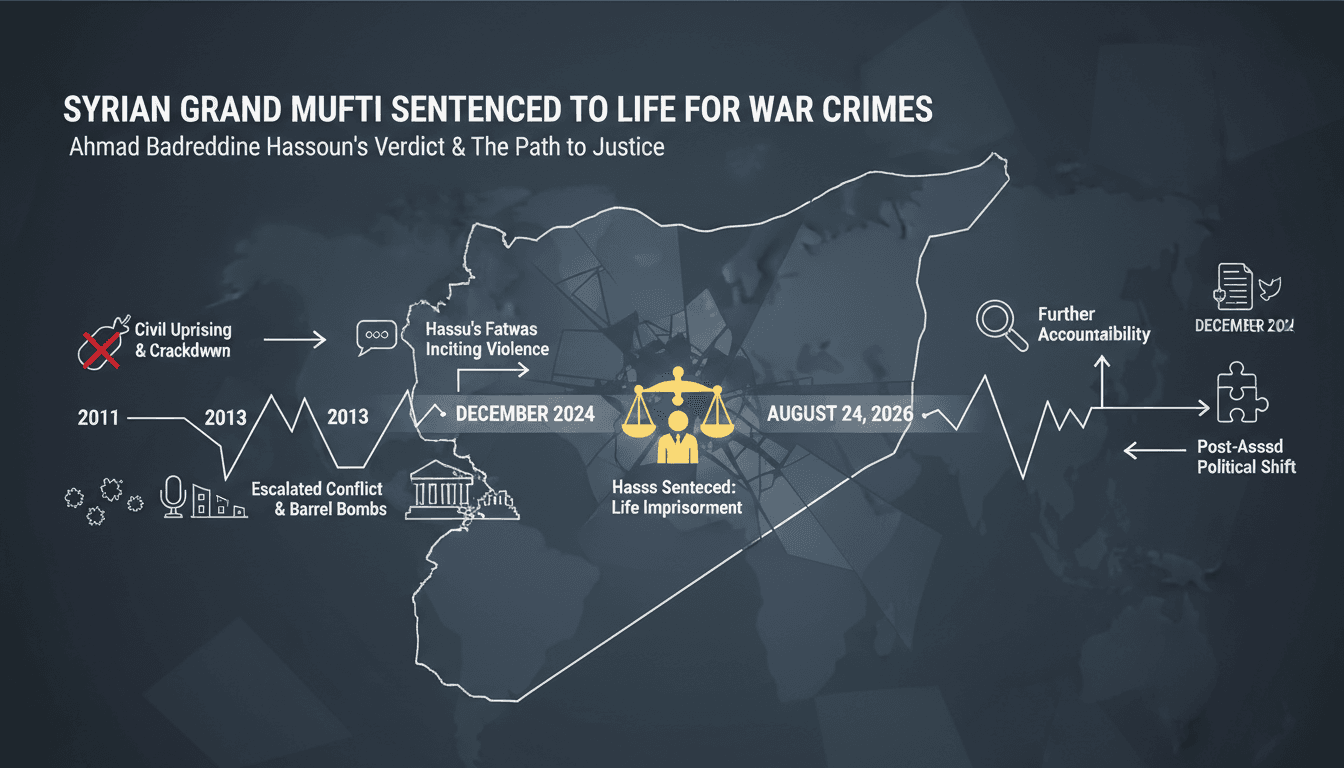
Here's what it means for you.
As global citizens, the accountability for war crimes in Syria may influence international relations and humanitarian policies that affect global stability.
Why it matters
This sentencing signals a shift towards accountability in post-Assad Syria, impacting international perceptions and policies regarding war crimes.
What happened (in 30 seconds)
- On August 24, 2026, former Grand Mufti Ahmad Badreddine Hassoun was sentenced to life imprisonment for war crimes.
- Hassoun was convicted of inciting violence and justifying the use of barrel bombs against civilians during the Syrian civil war.
- This ruling is part of ongoing transitional justice efforts following the collapse of the Assad regime in December 2024.
The context you actually need
- The Syrian civil war, which began in 2011, has resulted in over 580,000 deaths and millions displaced, with extensive use of barrel bombs by the Assad regime.
- Hassoun's role as Grand Mufti involved endorsing regime actions and framing opposition as terrorism, providing religious justification for violence.
- Following Assad's flight to Russia in December 2024, new authorities in Syria initiated trials against former regime figures, marking a significant shift in governance.
What's really happening
The sentencing of Ahmad Badreddine Hassoun represents a critical moment in Syria's ongoing struggle for justice and accountability. As the former Grand Mufti, Hassoun played a pivotal role in legitimizing the Assad regime's violent tactics during the civil war, which has left a devastating impact on the Syrian population. His conviction is not merely a legal outcome; it reflects a broader societal demand for accountability and a rejection of impunity for war crimes.
Hassoun's trial and subsequent life sentence are part of a larger transitional justice framework being established in Syria after the regime's collapse. This framework aims to address the atrocities committed during the civil war, which has been characterized by widespread human rights violations, including the use of barrel bombs against civilian populations. The court's ruling underscores the importance of holding individuals accountable for their actions, particularly those in positions of power who have incited violence and justified atrocities.
The implications of this ruling extend beyond Syria's borders. It sends a message to other nations grappling with similar issues of accountability and justice. The international community is watching closely, as this case could influence future actions regarding war crimes and humanitarian interventions. Furthermore, the trial's proceedings and the public's reaction highlight a growing demand for justice among Syrian citizens and victims' groups, who have long sought recognition for their suffering.
As the new Syrian government continues to pursue trials against former regime officials, including in-absentia sentences for Bashar al-Assad and others, the landscape of accountability in Syria is evolving. This shift may encourage further legal actions against individuals implicated in war crimes, fostering a culture of accountability that could reshape the country's future.
In summary, the sentencing of Ahmad Badreddine Hassoun is a significant step towards addressing the legacy of violence in Syria. It reflects a commitment to transitional justice and the pursuit of accountability, which may have lasting effects on both domestic and international levels.
Who feels it first (and how)
- Syrian citizens: Victims and families of those affected by the war may feel a sense of justice and hope for future accountability.
- Human rights organizations: Groups advocating for justice may see this as a validation of their efforts and a potential increase in support for similar cases.
- International policymakers: Governments and organizations involved in humanitarian aid and conflict resolution may need to adjust their strategies in light of evolving accountability measures.
What to watch next
- Further trials of former regime officials: The outcomes of these trials will indicate the commitment to accountability and could influence international relations.
- Public response in Syria: Monitoring how the Syrian populace reacts to these legal proceedings will provide insight into the societal impact of accountability efforts.
- International community's stance: Watch for shifts in how countries engage with Syria, particularly regarding humanitarian aid and diplomatic relations, based on the progress of transitional justice.
Ahmad Badreddine Hassoun has been sentenced to life imprisonment for war crimes.
Additional trials of former regime officials will continue as part of Syria's transitional justice efforts.
The long-term impact of these trials on Syria's political landscape and international relations remains uncertain.
Frequently Asked Questions
- Why it matters?
- This sentencing signals a shift towards accountability in post-Assad Syria, impacting international perceptions and policies regarding war crimes.
- What happened (in 30 seconds)?
- On August 24, 2026, former Grand Mufti Ahmad Badreddine Hassoun was sentenced to life imprisonment for war crimes. Hassoun was convicted of inciting violence and justifying the use of barrel bombs against civilians during the Syrian civil war. This ruling is part of ongoing transitional justice efforts following the collapse of the Assad regime in December 2024.
- What's really happening?
- The sentencing of Ahmad Badreddine Hassoun represents a critical moment in Syria's ongoing struggle for justice and accountability. As the former Grand Mufti, Hassoun played a pivotal role in legitimizing the Assad regime's violent tactics during the civil war, which has left a devastating impact on the Syrian population. His conviction is not merely a legal outcome; it reflects a broader societal demand for accountability and a rejection of impunity for war crimes. Hassoun's trial and subseque
- Who feels it first (and how)?
- Syrian citizens: Victims and families of those affected by the war may feel a sense of justice and hope for future accountability. Human rights organizations: Groups advocating for justice may see this as a validation of their efforts and a potential increase in support for similar cases. International policymakers: Governments and organizations involved in humanitarian aid and conflict resolution may need to adjust their strategies in light of evolving accountability measures.
- What to watch next?
- Further trials of former regime officials: The outcomes of these trials will indicate the commitment to accountability and could influence international relations. Public response in Syria: Monitoring how the Syrian populace reacts to these legal proceedings will provide insight into the societal impact of accountability efforts. International community's stance: Watch for shifts in how countries engage with Syria, particularly regarding humanitarian aid and diplomatic relations, based on the pr
Global news coverage with extensive reporting on Middle Eastern conflicts and geopolitics.
"Al Jazeera is a Qatar-based broadcaster known for wide regional coverage and alternative perspectives."
— A47 Editor
‘Barrel bomb mufti’ sentenced to life in Syria
Ahmad Hassoun, known as the 'barrel bomb mufti' for his association with the Assad regime, has been sentenced to life in prison by a Syrian court for inciting violence and other crimes. This ruling reflects the ongoing legal repercussions for individ...
Comprehensive coverage of Middle Eastern and global issues.
"Al Jazeera is a prominent voice from the Global South, especially the Middle East, with an emphasis on underreported stories."
— A47 Editor
‘Barrel bomb mufti’ sentenced to life in Syria
Ahmad Hassoun, known as the 'barrel bomb mufti' for his association with the Assad regime, has been sentenced to life in prison by a Syrian court for inciting violence and other crimes. This ruling reflects the ongoing legal repercussions for individ...
UAE-based English-language newspaper covering regional politics, economics, and global affairs.
"The National reflects Emirati policy perspectives while maintaining international editorial standards."
— A47 Editor
Former Mufti of Syria sentenced to life in prison
The former Mufti of Syria has been sentenced to life in prison, marking a significant legal development in the region. This ruling reflects the ongoing judicial actions against prominent figures associated with the Syrian conflict and highlights the ...
Regional and international reporting focused on Middle Eastern politics, diplomacy, and economics.
"Asharq Al-Awsat is a Saudi-owned international newspaper reflecting mainstream Gulf political perspectives."
— A47 Editor
Syria Sentences Assad-Era Top Muslim Cleric to Life Imprisonment
A Syrian court has sentenced Ahmad Hassoun, a prominent Muslim cleric known for his allegiance to the Assad regime, to life imprisonment for inciting violence and other crimes. This ruling reflects ongoing legal actions against figures associated wit...